 0
0
 0
0
You still show up. You still open the verse-of-the-day app, still bow your head before dinner, still sit in the same pew you always have. Nobody watching you would know anything is different. But somewhere in the last few weeks or months, the lights went out on the inside. Prayer feels like reciting an old phone number — you can still say the words, but nothing lands. You keep checking whether you actually believe any of it, and you honestly can’t tell anymore.
If that’s where you are, you’ve probably already run through the usual explanations. Maybe you’ve backslidden. Maybe you’re depressed. Maybe you’re losing your faith. But there’s an older, more specific word for exactly this feeling — one the church quietly stopped using centuries ago, even though the condition never left. The desert fathers called it acedia, and understanding what they meant by it might be the most useful thing that happens to your faith this year.
What Acedia Actually Means
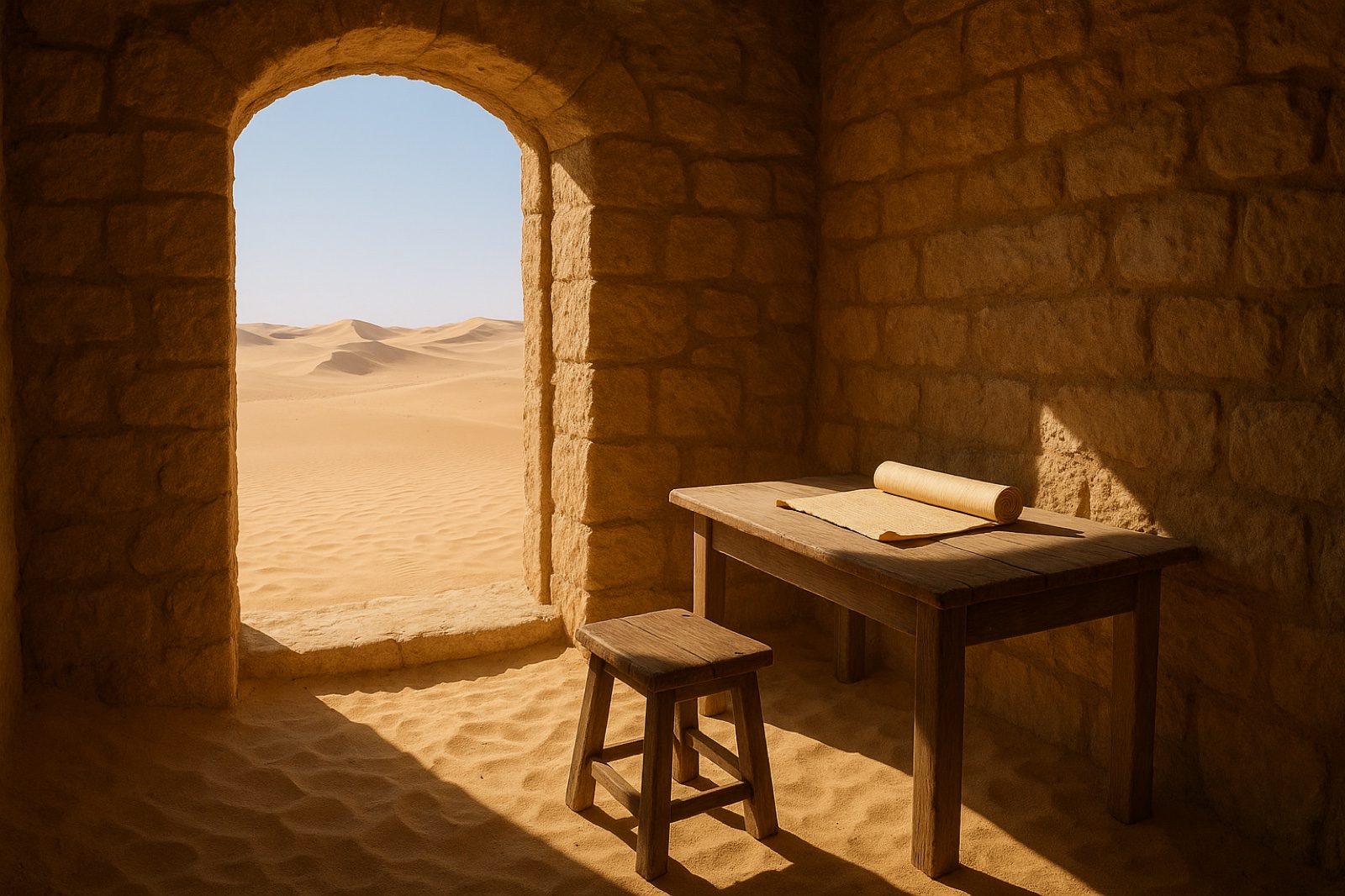
Acedia (pronounced uh-SEE-dee-uh) comes from a group of Christians in fourth-century Egypt who left ordinary town life to pursue prayer in the desert wilderness. Living alone in small stone cells, with nothing to distract them from their own inner life, they became remarkably precise observers of exactly what tempts a person toward God — and what pulls them away. They wrote it all down. And one particular affliction showed up in those writings more than almost any other: a heaviness that made the cell feel unbearable, made prayer feel dry and mechanical, and made a person want to be anywhere else, doing anything else, except the one thing they’d come to the desert to do.
One of the earliest and sharpest writers on this, a monk named Evagrius Ponticus, gave it a memorable nickname: “the noonday demon.” He borrowed the phrase from Psalm 91, which in the old translations warns of “the destruction that wasteth at noonday” (Psalm 91:6). Evagrius chose that verse deliberately. Acedia, he noticed, rarely struck in the dramatic dark of night, when temptation feels like it should. It struck at noon — in the flat, ordinary middle of the day, when nothing was technically wrong, and the heaviness settled in anyway.
This is worth sitting with, because it’s exactly what makes acedia so easy to misdiagnose. It isn’t laziness — a lazy person doesn’t want to do anything. Someone under acedia will happily reorganize a closet, answer emails, scroll for an hour, do almost anything productive-looking — just not the one thing in front of them, especially if that thing is prayer, Scripture, or worship. It’s a very specific weariness, aimed at the things of God in particular, dressed up as ordinary distraction.
If this sounds familiar, you’re in good company — even Mother Teresa wrote privately about decades of this exact kind of spiritual dryness, describing prayer that felt utterly empty even as she continued it faithfully.
The Bible Already Names This — Just Without the Word
The desert fathers didn’t invent this experience; they gave a name to something Scripture had already described. Psalm 42 was likely written by temple musicians during a season when they could no longer worship the way they used to — cut off from the temple, from the crowd, from the feeling that used to come easily. Listen to how the psalmist opens: “As the hart panteth after the water brooks, so panteth my soul after thee, O God” (Psalm 42:1). He’s not describing indifference. He’s describing someone who remembers wanting God badly, and now can’t find that same want anywhere inside himself.
Then comes the line that matters most for anyone living through acedia right now. Rather than scolding himself for the flatness, or trying to manufacture more feeling through sheer effort, the psalmist does something almost strange — he turns and addresses his own soul directly, like it’s a separate person he’s allowed to question: “Why art thou cast down, O my soul? and why art thou disquieted within me? hope thou in God: for I shall yet praise him, who is the health of my countenance, and my God” (Psalm 42:11).
Notice what he doesn’t do. He doesn’t fake a feeling he doesn’t have. He doesn’t shame himself for not feeling close to God anymore. He interrogates the flatness honestly, and then answers it with a specific, deliberate act: remembering. A few verses earlier, he writes, “these things I remember… how I had gone with the multitude… with the voice of joy and praise” (Psalm 42:4). The cure he reaches for isn’t more spiritual effort in the present. It’s the specific memory of a real moment when God was undeniably close.
Why Remembering Works Where Trying Harder Doesn’t
Here’s the discovery that should feel like relief rather than more pressure: the desert fathers’ actual prescription for acedia wasn’t to pray longer, fast harder, or leave the monastery to go find God somewhere more exciting. It was almost absurdly simple. Stay in the cell. Do the next small thing. And — this part mattered most to them — never make a major decision while acedia has its fog over you, because acedia lies convincingly about permanence. It insists this flatness is simply how things are now, forever, when in every documented case it was actually a season with an edge to it.
That’s the real Turn here: acedia isn’t solved by intensifying your spiritual effort, because effort was never the missing ingredient. It’s solved the way Psalm 42 solves it — by interrupting the numbness with something concrete and specific to remember, and by staying faithful to the small practice even when it feels dead, because feeling reliably returns to the person who stays, not to the person who leaves to go chase it down somewhere else.
It’s the same quiet reframing at work when Mary’s response in Luke 1:46 shows what it looks like to notice what God has actually done, rather than what the day currently feels like.
Three Things You Can Do About It Today
- Write down one specific memory tonight — not the vague “I used to feel close to God,” but the actual scene: where you were, what was happening, what it felt like in that exact moment. This is Psalm 42:4 in practice, and it takes less than ten minutes.
- Don’t quit the small practice, even flat. If you say a one-line prayer before bed, say it tonight, even if it feels like reading a phone number out loud. The desert fathers’ whole strategy rested on staying, not on feeling better first.
- Say Psalm 42:11 out loud to your own soul — like you’re talking to a discouraged friend, not scolding yourself. “Why are you cast down? Hope in God. You will praise Him again.” Out loud changes something silent repetition doesn’t.
Questions Worth Sitting With
- When did you first notice the flatness — what was actually happening in your life right before it started?
- What’s one small practice you’ve quietly stopped doing since it began, and what made you stop?
- If your soul could honestly answer Psalm 42:11’s question — “why art thou cast down?” — what would it actually say back to you?
A Prayer for When Prayer Feels Empty
God, I don’t feel You right now, and I’m tired of pretending that I do. I don’t need another rule about trying harder — I need to remember the times You were real to me, so bring those back to my mind. Meet me in the flatness instead of waiting for me to fix it first. I’ll stay in the room even when it feels empty. Amen.
If restoration is what you’re after, this prayer for healing and renewal is a good place to keep sitting after this one.
A Question Worth Answering
Have you ever gone through a season where faith felt flat rather than false — not gone, just quiet? What actually helped, or what are you still waiting on? I’d genuinely like to know — leave a comment and tell me.
Share This
- “Just learned there’s a word for the flatness I’ve been feeling in my faith — acedia. Not doubt. Not laziness. Just flat. Turns out the desert fathers wrote about it 1,600 years ago, and the fix isn’t ‘try harder.'”
- “Acedia: the desert fathers’ word for when prayer goes flat and nothing’s technically wrong. Psalm 42 has the same feeling in it — and the fix is remembering, not effort.”
- “If prayer has felt like reciting an old phone number lately, you’re probably not losing your faith. You might just be in the fog the desert fathers called acedia. Here’s what actually helps.”
Acedia: Quick Answers
What does acedia mean?
Acedia (uh-SEE-dee-uh) is the word Christian monks in the fourth-century Egyptian desert used for a specific spiritual flatness — a weariness toward prayer, Scripture, and worship that isn’t the same as laziness or losing your faith.
Is acedia the same as depression?
They can overlap, but they aren’t identical. Depression is a broader mental and emotional condition; acedia specifically describes a soul-weariness aimed at spiritual practice — prayer and worship feeling dry or pointless even when the rest of life seems fine.
Why did Evagrius call acedia “the noonday demon”?
Evagrius Ponticus, a fourth-century monk who wrote extensively about the desert temptations, borrowed the phrase from Psalm 91:6, which describes “the destruction that wasteth at noonday” — because he noticed this particular heaviness usually struck in the ordinary middle of the day, not during dramatic nighttime temptation.
What does the Bible say about spiritual flatness?
Psalm 42 describes almost this exact experience — a soul that used to pant after God and no longer feels that closeness. The psalmist’s response isn’t self-blame; it’s an honest question aimed at his own soul, followed by a deliberate decision to remember specific times God was real to him.
What actually helps when prayer feels pointless?
The desert fathers’ answer, echoed in Psalm 42, is to keep showing up to the small practice even without feeling anything, and to deliberately recall specific memories of God’s presence rather than waiting to manufacture new feeling first.
“Acedia isn’t losing your faith. It’s the fog before remembering finds you again.”