 0
0
 0
0
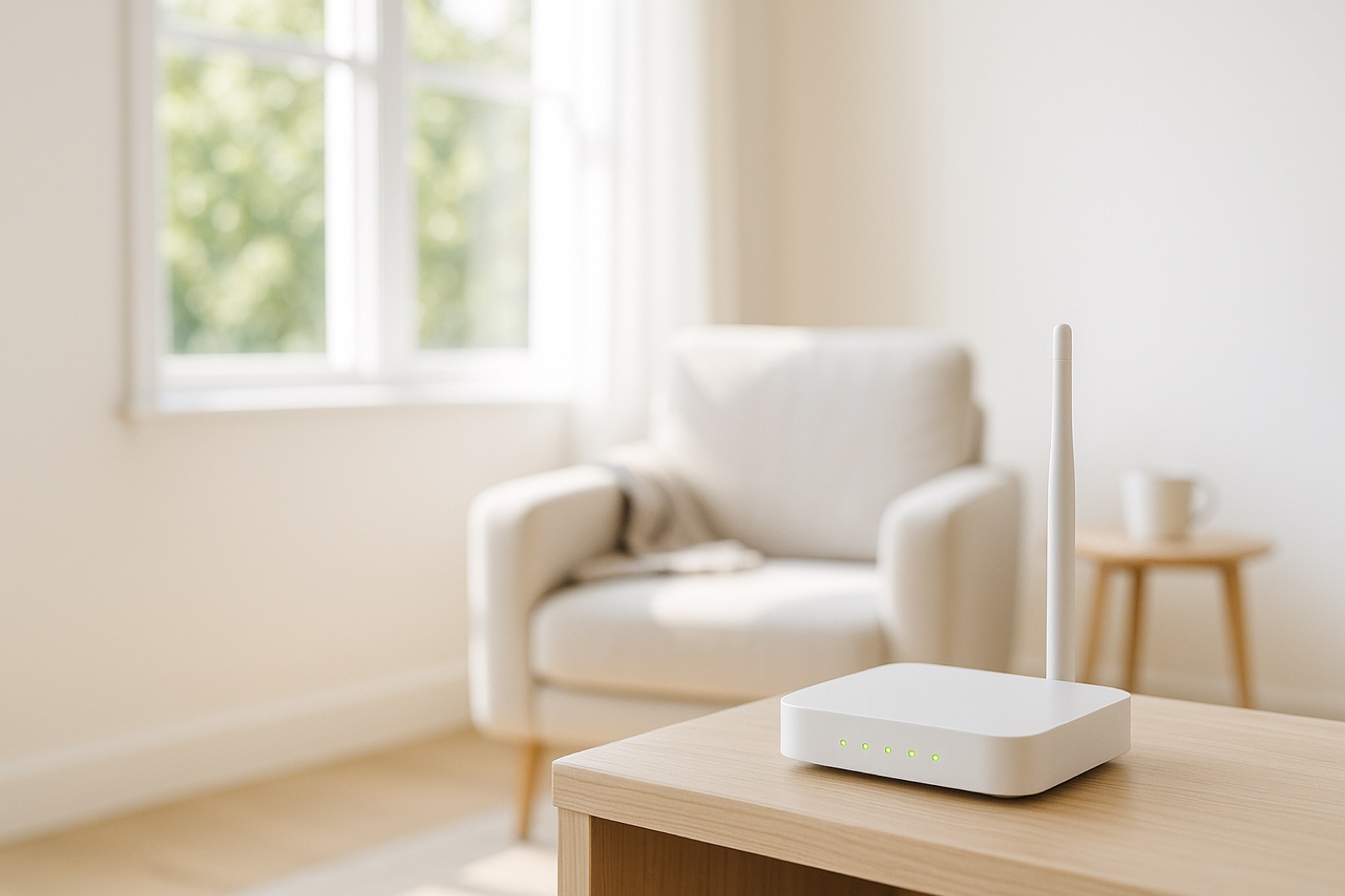
Somewhere in your home there is a small plastic box with a few lights on it. You walk past it a dozen times a day and never once think about it.
A team of researchers in Germany has now shown that a box like that can work out which person just walked past. Not that someone walked past — which one. In their tests it did this with almost perfect accuracy, using no camera, no microphone, and no phone in anyone’s pocket.
Here is how it works, what the researchers were careful to say about it, and the odd thing it leaves you thinking about afterwards.
How ordinary WiFi can identify you without a camera
Your router does not just fire signal in every direction and hope for the best. It aims.
To aim well, it needs to know how its signal is arriving at your laptop or your phone. So your devices tell it, constantly. That little status report is called beamforming feedback information, or BFI. It is sent in the clear — not encrypted — because nobody ever treated it as private. It is housekeeping.
But radio waves bounce off everything in a room, including bodies. A body of a particular height and shape and posture bends those waves in a particular way. The housekeeping report carries that shape without meaning to.
Researchers at the Karlsruhe Institute of Technology, working in its KASTEL institute for information security, built a system to read it. They called the work BFId. Across 197 participants, they report identifying individuals with almost 100% accuracy — and it held up regardless of the angle a person was seen from, or how they happened to be walking that day.
“By observing the propagation of radio waves, we can create an image of the surroundings and of persons who are present,” said Thorsten Strufe, one of the researchers, in the announcement of the work.
The part that surprises most people is this: the person being identified does not have to be carrying anything at all. No connected phone. No watch. No tag. It is enough that other WiFi devices nearby are switched on and talking to a router.
The signal that gives you away is not yours. It belongs to the room.
What the researchers themselves were careful to say
This part got left out of almost all the coverage, and it is the part that makes the study more trustworthy rather than less.
The team pointed out that there are, right now, simpler ways to watch people. Cameras are cheap. Phones already broadcast. Nobody today needs to decode radio reflections to follow someone around.
Their concern was about what comes next. WiFi sensing is being written into the standard itself — a coming version of WiFi is designed to detect movement and presence on purpose, as a feature people will pay for. The researchers argued that privacy protections need to be built into that standard now, while it is still being drafted, rather than bolted on after millions of devices have already shipped.
So the honest version of this story is not “you are being tracked through your walls.” It is closer to this: a group of security researchers found a door that is currently unlocked, and said so loudly, early, while it is still cheap to fix.
That is the system working the way it is supposed to.
It also means the fix is not really in your hands. There is no setting for this. You cannot switch off the physics of a room.
Being identified is not the same as being known
Here is the thing that stayed with me.
The information that gives a person away is the same information their device sends so that the connection will be better. That feedback exists to serve you. Being catalogued is a side effect of being helped.
And even at almost perfect accuracy, look at what the system actually has. It can pick one person out of 197 by the way they disturb a room. It does not know whether they slept last night. It does not know what they are dreading on Monday. It does not know one single thing they would say to a friend at midnight.
It has a signature. It does not have a person.
We live with a lot of that now. We are measured constantly and known rarely, and whole habits have grown up in the gap — the careful performance of effortless cool for an audience, and the quiet suspicion that what people see of you is not the real thing and would not survive a closer look. There is even a name and a free self-check for that particular fear.
Being visible has never been the same as being seen.
What we actually want is stranger than privacy
If being visible were the whole problem, the answer would be simple. Less of it. Curtains, fewer devices, go quiet.
But almost nobody wants that all the way down. The loneliest people are rarely the most observed ones. They are usually the ones nobody has looked at closely in years.
There is an old Hebrew poem, written long before anyone imagined a radio wave, that walks straight into this. The writer describes being completely mapped. Sitting down and standing up. Thoughts read from a long way off. Surrounded behind and in front, every path already known.
Read cold, it sounds like surveillance. It has all the same features.
And then it ends the opposite way from how you would expect. Not with a plea for privacy. With a request for more of it: Search me, O God, and know my heart.
Which is a strange thing to ask — unless the one doing the searching is for you.
That turns out to be the whole difference, and it has almost nothing to do with how much is seen. It is about who is doing the looking, and what they want with what they find.
Back to the box on the shelf
Nothing in the German study needs to keep you awake tonight. It is a demonstration, published on purpose, by people trying to get a standard fixed before it hardens into a billion devices.
But it is a fair moment to notice something about ourselves. We flinch at being identified, and we ache at being unknown, and those are not the same nerve at all. One is about exposure. The other is about whether what would be found is worth staying for — and that ache, for what it is worth, is a feeling and not a verdict.
The little box on the shelf can tell you apart from 196 other people. That is genuinely impressive. It is also almost nothing.
Being counted is not the same as being wanted.
What do you think?
If a technology can recognise you perfectly but understand you not at all, is that surveillance — or is it just a very good doorbell? Where would you draw the line, and why? Tell us in the comments.
Share this
- Ordinary WiFi can now pick one person out of a room with almost perfect accuracy — no camera, no phone in your pocket. The strangest part: the signal that identifies you is the one your device sends so you get served better. https://bgodinspired.com/index.php/social-issues-and-justice/wifi-can-identify-you/
- 197 people. Almost 100% accuracy. No camera anywhere. Turns out being identified and being known are completely different things, and most of us are only getting the first one. https://bgodinspired.com/index.php/social-issues-and-justice/wifi-can-identify-you/
- Read this today and cannot stop thinking about the last line: being counted is not the same as being wanted. https://bgodinspired.com/index.php/social-issues-and-justice/wifi-can-identify-you/
Questions people are asking
Can WiFi identify a specific person?
Researchers at the Karlsruhe Institute of Technology in Germany demonstrated a system called BFId that identified individual people using ordinary WiFi signals with almost 100% accuracy across 197 participants. It reads beamforming feedback information (BFI) — the unencrypted status reports devices send to a router so the router can aim its signal accurately. Human bodies reflect radio waves in individual ways, and that shows up in the feedback. This is a research demonstration, not a product on sale.
Does WiFi identification still work if my phone is switched off?
According to the researchers, yes. The person being identified does not need to be carrying a connected device at all. It is sufficient that other WiFi devices nearby are switched on and communicating with a router. The identifying signal comes from the room, not from the individual’s own phone.
What is beamforming feedback information (BFI)?
BFI is data a WiFi device sends back to a router describing how the signal is arriving, so the router can aim its transmissions more precisely at that device. It is transmitted unencrypted, because it was designed as routine technical housekeeping rather than private information. Because radio waves reflect off human bodies, that feedback can carry a physical signature of whoever is in the room.
Should I be worried about WiFi surveillance right now?
The researchers themselves noted that simpler surveillance methods already exist, so this is not currently the most likely way anyone would be watched. Their stated concern was the future: WiFi sensing is being written deliberately into an upcoming WiFi standard, and they argued that privacy safeguards should be designed in while that standard is still being drafted rather than added afterwards.
Can I stop my WiFi from identifying me?
There is no simple consumer setting that prevents it, because the effect comes from how radio waves reflect inside a physical space rather than from an app or an account you control. The researchers framed the solution as a standards-level fix — privacy protections built into WiFi itself — rather than something an individual user can configure at home.