 0
0
 0
0
You used to be able to do almost anything without leaving your couch. Groceries, delivered. Dates, swiped. Workouts, streamed. Friends, texted instead of visited. For a while, that felt like winning. Every bit of friction between you and what you wanted got engineered away, one app at a time.
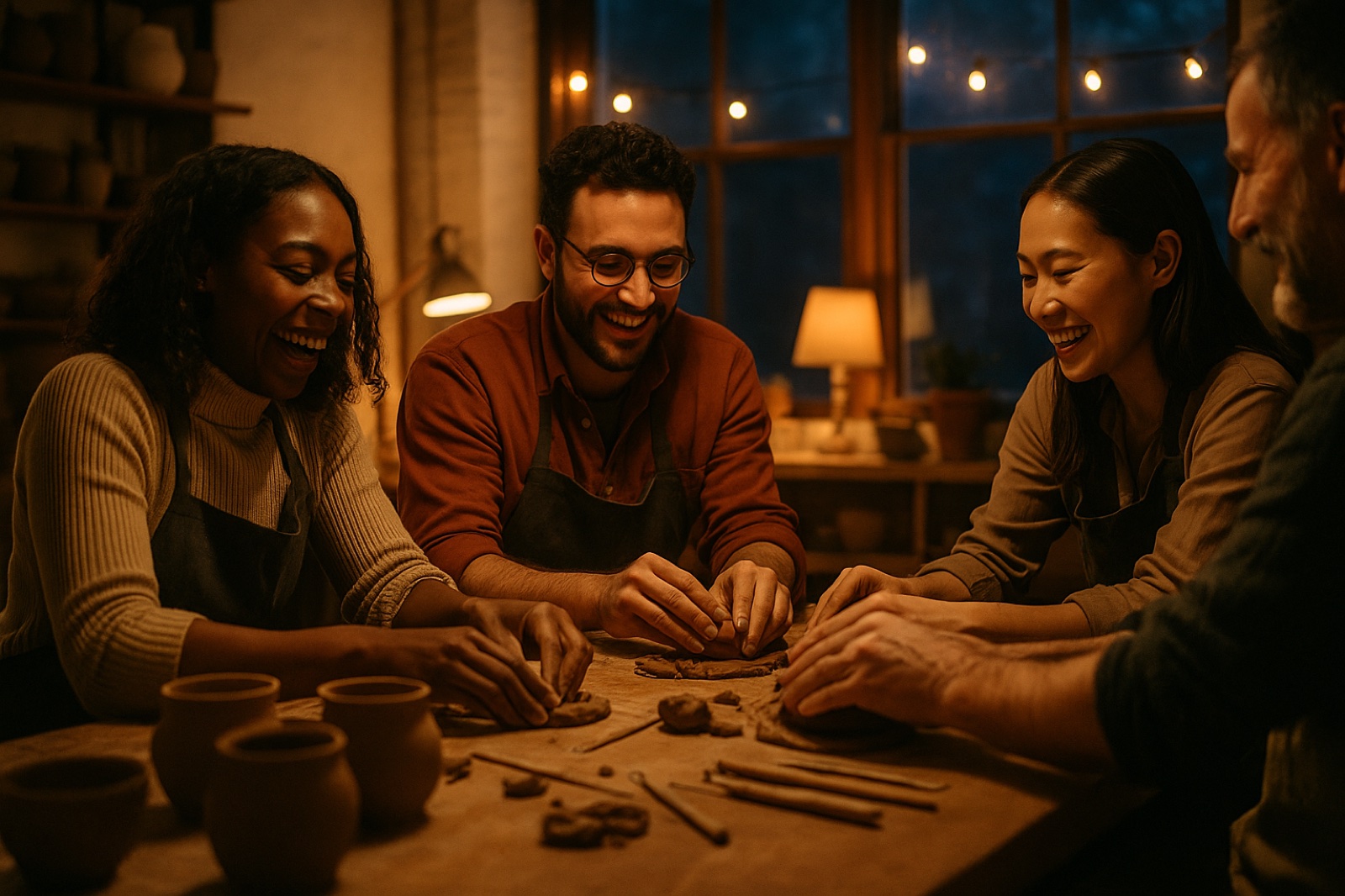
Now a growing number of people are doing something that looks, on paper, like going backward. They’re signing up for pottery classes that require driving across town. Joining run clubs that meet at 6 a.m. in the cold. Buying board games instead of downloading them. Some are even trading smartphones for “dumb phones” on purpose. There’s a name for it now: friction-maxxing — deliberately choosing the harder, slower, more inconvenient version of something, on purpose, because the easy version stopped delivering what it promised.
What Is Friction-Maxxing, Exactly?
Friction-maxxing is the opposite of the last two decades of tech design. Silicon Valley spent that time chasing “frictionless” — fewer clicks, faster checkout, one-tap everything. The goal was always to remove effort between a person and what they wanted.
Friction-maxxing puts some of that effort back in, by choice. It shows up as in-person classes instead of YouTube tutorials, handwritten letters instead of texts, film cameras instead of phone cameras, walking to a bookstore instead of one-click ordering. The common thread isn’t nostalgia. It’s a hunch that something got lost in all that optimizing — and that the friction itself might have been doing a job nobody noticed until it was gone.
We Optimized the Friction Out of Everything — Including Each Other
Here’s the part that stings a little: the technology that removed friction from getting a meal or a movie also removed friction from relationships. Dating apps turned people into a stack of profiles to swipe past. Social feeds turned friendship into a like or a comment instead of a visit. Group chats let you feel “caught up” with people you haven’t actually spoken to in months.
The convenience was real. So was the cost. In 2023, the U.S. Surgeon General issued a formal advisory declaring loneliness a public health epidemic, warning that its effect on the body can rival smoking fifteen cigarettes a day. That’s not a metaphor — it’s a measured health risk, and it’s been climbing for years, right alongside every app that promised to keep us more “connected” than ever. Loneliness in a crowd of people turns out to be one of the most common versions of this — you can be surrounded by faces and still feel like no one actually knows you’re there.
Researchers have started connecting the dots on why. One recent study following more than 175,000 adults across 18 countries found that chronic loneliness is tied to faster cognitive decline and earlier death — a body treating disconnection almost like a physical wound. That research on loneliness and the aging brain is part of a growing pile of evidence that connection isn’t a nice-to-have. It’s closer to a biological need, the way sleep or food is.
Why Effort Might Be the Point
This is where friction-maxxing gets interesting, because it isn’t really about phones or pottery. It’s about a pattern that keeps showing up: the things that mean the most to us are almost always the things that cost us something to get.
Think about the difference between a text that says “thinking of you” and a friend who drove forty minutes in traffic to sit with you on a bad day. Both are kind. Only one required them to give up something — time, comfort, a Tuesday evening — to prove it. Psychologists call this the “effort heuristic”: we unconsciously value things more when we know what they cost to make or give. A frictionless relationship, one that asks nothing of you, quietly starts to feel worth nothing in return.
That’s part of why dating apps have started to feel so hollow to so many people. Dating app burnout isn’t really about running out of matches. It’s the slow realization that when a person costs you nothing to find and nothing to replace, you start treating them — and yourself — like they’re disposable too. Friction wasn’t the enemy of connection. It might have been the proof of it.
People Have Known This for a Very Long Time
What’s strange is that none of this is actually new. Long before frictionless apps ever made it optional to skip gathering with other people in person, ancient wisdom was already pointing at exactly this. Old texts about community don’t talk about convenience at all — they talk about showing up, in person, on purpose, especially when it would be easier not to. The instruction wasn’t “stay in touch when it’s easy.” It was closer to “don’t get out of the habit of meeting together” — write it down as something you have to actively guard, because the pull toward isolation is real and it’s old.
It turns out the people who wrote that down understood something modern engineers had to relearn the hard way: community that costs nothing rarely holds anything. The habit of physically being present for each other — cooking a meal together, sitting in the same room, showing up even when it’s inconvenient — was never a workaround for a lack of better technology. It was the technology. It’s just one that never needed an update.
What Friction-Maxxing Could Look Like for You
You don’t need to throw your phone in a lake to try this. A few low-stakes ways people are putting friction back into their week:
- Trade one scrolling session a week for a class, club, or group that meets in person — even if it’s just once.
- Call someone instead of texting, or better, show up at their door instead of calling.
- Pick one relationship and give it something that costs you real time this month — not a like, an afternoon.
- Say yes to the inconvenient invitation before your brain talks you out of it.
None of it needs to be dramatic. The point isn’t suffering for its own sake. It’s choosing, on purpose, the version of connection that actually costs you something — because that cost seems to be exactly what makes it real.
Discussion Question
Where in your own life have you noticed convenience quietly replacing real connection — and what would it look like to trade a little of that ease back for something that actually costs you time? Drop your answer in the comments below.
Share This
- “Friction-maxxing” is the new term for people ditching frictionless apps for real, in-person community — and honestly, it explains a lot. 🧡
- Turns out the effort in a relationship isn’t the obstacle to connection. It might be the whole point.
- The Surgeon General called loneliness a health risk on par with smoking. Meanwhile people are quietly choosing pottery class over their phone. Coincidence? Read this.
Questions People Are Asking
What does “friction-maxxing” mean?
Friction-maxxing means deliberately choosing the harder, less convenient version of an activity or relationship — like an in-person class instead of an app, or a phone call instead of a text — because the added effort brings back a sense of value and connection that frictionless options often lose.
Why are people rejecting convenience and frictionless technology?
Many people report that frictionless technology, while efficient, left them feeling more isolated. Removing effort from relationships and daily life also seemed to remove some of their meaning, so people are reintroducing friction on purpose to feel more present and connected.
Is loneliness actually a health risk?
Yes. The U.S. Surgeon General issued an advisory in 2023 declaring loneliness a public health epidemic, noting that chronic loneliness and social isolation carry health risks comparable to smoking fifteen cigarettes a day, including increased risk of heart disease, dementia, and early death.
How can I start friction-maxxing in my own life?
Start small: replace one convenient, low-effort habit each week with an in-person or higher-effort alternative — join a local class, call a friend instead of texting, or say yes to an inconvenient invitation. The goal is consistency, not intensity.
Is this idea connected to anything in the Bible?
The instinct behind friction-maxxing echoes something much older than modern psychology: ancient wisdom has long emphasized the importance of physically gathering with others rather than drifting into isolation, treating in-person community as something worth actively protecting, not a convenience to optimize away.