 0
0
 0
0
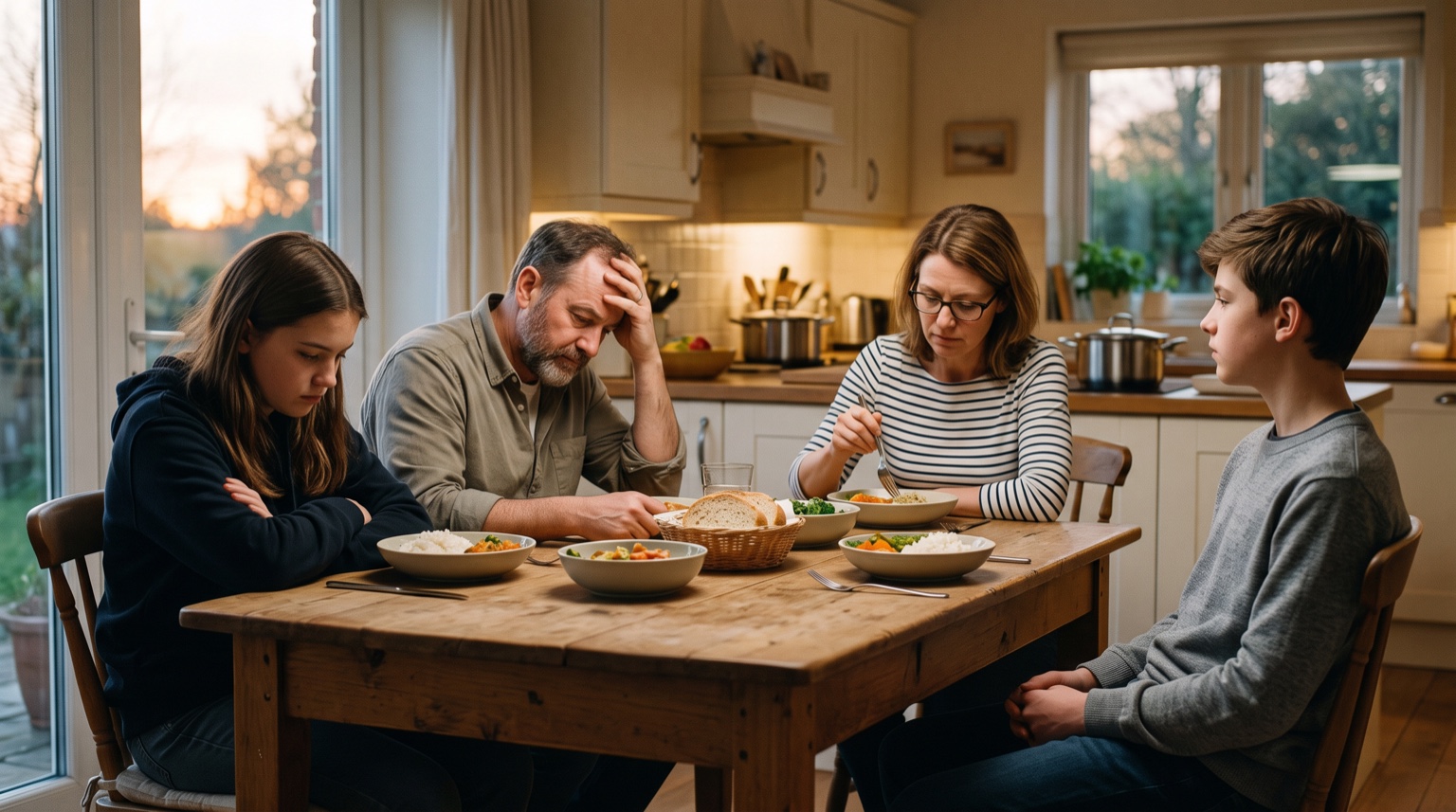
You spent an hour on the food. Maybe longer. You timed it so everyone would be home. And ten minutes in, someone is staring at their plate, someone else has asked about homework in that tone, and you can feel the whole table tighten like a jar lid. By the time the dishes are in the sink, you are wondering why you bothered.
If you have ever asked yourself why family dinners are so stressful, when they are supposed to be the good part of the day, you are not strange and your family is not broken. This is one of the most common quiet disappointments in any home, anywhere. And the reason for it is not the one most people guess.
Why Are Family Dinners So Stressful?
The usual answers are easy to find. Everyone is tired. Kids are picky. Phones are on the table. Someone had a bad day. All true, and all fixable in small ways. But families fix those things and the tension stays. That is the clue that something else is going on underneath.
The table has become the family’s only meeting room. Think about it. When is everyone in one place, sitting still, unable to walk away? Dinner. So everything that needs saying gets saved for dinner. The school report. The money worry. The chore that did not get done. The thing someone said yesterday. Nobody plans it this way. It just happens, because that is the only moment everyone is there. So the meal quietly turns into a meeting, and nobody likes a meeting they cannot leave.
The effort raises the stakes. Here is the part almost nobody says out loud. The harder someone works on the food, the more they need the meal to go well. That need is completely human. But everyone at the table can feel it. The cook is watching for a thank-you. The kids are watching the cook. A shrug at the vegetables stops being a shrug and starts feeling like a verdict. The better the dinner, the more fragile it gets.
Put those two together and you get the pattern so many homes live with: a lot of love poured into the food, and a lot of tension poured into the room.
What People Actually Remember About a Meal
Try this. Think of a meal from your childhood that you remember warmly. Not a famous one. Just one that stuck.
For a lot of people, the food is not what comes back first. What comes back is who was laughing. The night the power went out and everyone ate bread by candlelight. The time it rained and the whole family squeezed under one roof eating something plain out of a pot. The food in those memories is often simple, sometimes even bad. What made it good was the air in the room.
Now think of a meal you remember badly. The food might have been lovely. You just could not taste it, because your stomach was tight.
That is the turn. A meal is not really the food. It is the feeling people eat inside of. Your family is not rating your cooking. They are soaking up the mood. So when dinner goes wrong, working harder on the food is like repainting a house to fix a leaking roof. It is effort in the wrong place.
That idea is much older than it sounds. It turns up in Proverbs, of all places: “Better is a dinner of herbs where love is, than a stalled ox and hatred therewith.” A stalled ox was an animal kept in a stall and fattened for the table, about the richest meal an ordinary household could put out. A dinner of herbs was a plate of greens, what you ate when there was nothing else. The line does not say plain food is holy or fancy food is wrong. It just says, very calmly, which one people would actually choose if they were honest. It does not need a religious framework to be true. It is quiet good sense that happens to have ancient roots.
And notice what it does not say. It does not say “better is a good dinner where everyone behaves.” It says where love is. The love is located in the room, not on the plate. That is good news, because the room is something you can change tonight, for free.
How to Make Family Dinner Less Stressful
Make the food simpler on purpose. This is not giving up. It is moving your energy to where it counts. On a hard night, eggs, rice, bread and soup, or whatever is cheap and easy where you live, is enough. When less of you is tied up in the food, less of you needs it to be praised, and the whole table can breathe. Save the big effort for nights when there is room for it.
Move the business away from the plate. Pick a different time for the hard talks: the walk to school, the washing up, ten minutes before bed. Then say it plainly: “At dinner we don’t do report cards, money, or chores.” The first few nights will feel odd, like something is missing. What is missing is the meeting. Let it go.
Ask one easy question that nobody can fail. Not “how was school?” which gets a grunt. Try “What was the funniest thing you saw today?” or “What would you eat if you could only have one food for a week?” Let everyone answer, including you. The point is not the answer. The point is that for a few minutes, the table is a place where nobody is being checked on.
Let the cook off duty from judgment. If you cook, try this for one week: do not ask if people like it, and do not watch their faces while they eat. If someone leaves food, let it be information for next time, not a hurt for tonight. If you do not cook, say one small true thing about the meal without being asked. Both moves take the pressure out of the plate.
When it goes wrong anyway, shrink it, don’t scold it. Some nights will still turn sour. That is normal. Instead of a speech about how dinner should go, just lower the volume: “Let’s just eat. We can sort that out later.” Then actually sort it out later. And if you said something sharp, it helps to read how to stop saying things you regret when you’re angry, because a lot of dinner fights are really leftover fights from somewhere else.
If your family tends to clash in the same way again and again, the free What Is My Conflict Style? quiz can help you see your own part in it without blaming anyone. It takes a few minutes and costs nothing.
A Question to Take to the Table
None of this will make dinner perfect. Families are families. But it can make the table feel like a place people want to come back to, even on the nights the food is plain.
So here is the question to sit with before your next meal: if your family could only remember one thing about tonight’s dinner, what would you want the room to feel like? Start there, and let the food be as simple as it needs to be.
What is one meal you still remember, years later, and what made it good? Tell us in the comments. It might be exactly what someone else needs to hear before they sit down tonight.
Questions People Ask About Stressful Family Dinners
Why are family dinners so stressful?
Family dinners often become stressful because the dinner table is the only time the whole household sits together, so difficult topics like school, money and chores get saved for the meal. On top of that, the person who cooked usually needs the meal to go well, and everyone can feel that pressure. The tension usually comes from the mood in the room rather than from the food itself.
How can I make family meals less tense?
Family meals become less tense when the table stops being used for serious conversations. Move talks about grades, money and chores to another time, keep the food simple on hard nights, and ask one light question everyone can answer, such as what the funniest part of their day was. Small changes to the mood of the table usually matter more than changes to the menu.
Is it okay to serve simple food for family dinner?
Yes. Simple, cheap food is completely fine for family dinner. People tend to remember how a meal felt far more than what was served. A plain meal eaten in a warm, relaxed room is usually remembered more fondly than an impressive meal eaten while everyone is tense.
Should you talk about problems at the dinner table?
It is usually better not to bring up problems like bad grades, bills or unfinished chores during family dinner. When the dinner table becomes the place where problems are discussed, people start to dread it. Choosing another time for hard conversations, such as a walk or while washing up, keeps mealtimes safe and relaxed.
Share This
“A meal is not really the food. It is the feeling people eat inside of.” Simpler dinners, softer table. Trying this tonight.
I always thought our dinners were stressful because of the kids or the phones. Turns out we’d made the table our only meeting room. No more report cards at dinner.
The richest meal and the plainest meal can go either way. What decides it is the mood in the room, not the menu. This changed how I think about cooking for my family.