 0
0
 0
0
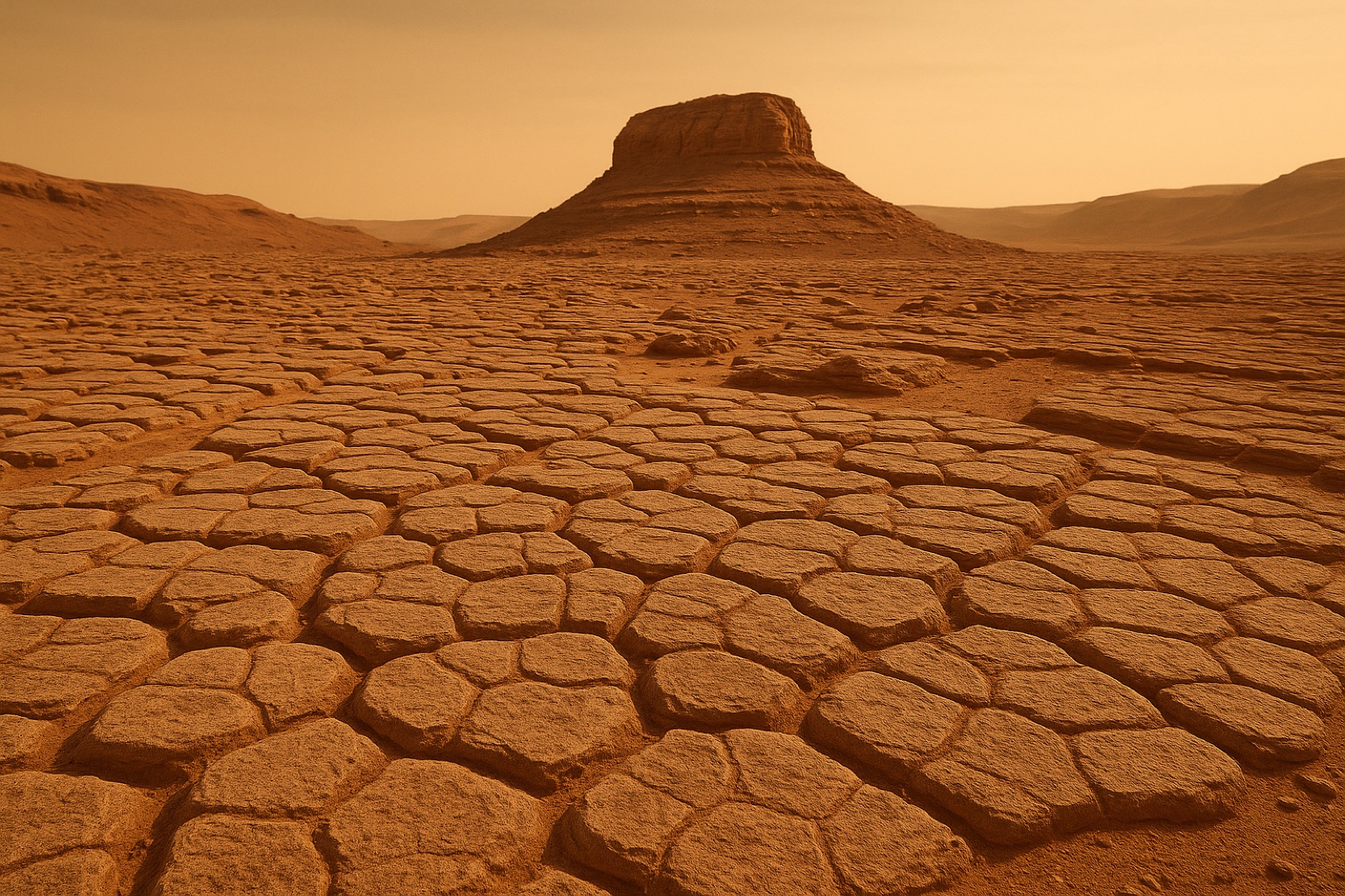
On June 19, 2026, NASA’s Curiosity rover was climbing a Martian valley called Valle Grande when it looked down and stopped scientists in their tracks. The ground wasn’t just cracked. It was patterned — thousands of raised rock ridges fitting together into a honeycomb that stretched across the entire valley floor, wrapping right up the sides of a nearby rock formation the team nicknamed “Miraflores.”
Curiosity has been driving across Mars for fourteen years. In all that time, the rover has spotted small patches of this kind of texture before — a few here, a few there. Nothing like this. Nothing valley-wide.
What NASA’s Curiosity Rover Actually Found
The shapes are called polygonal fractures, and up close they look almost too perfect to be natural — tight, repeating hexagons and pentagons, each one just 1.5 to 3 inches across, tiled edge to edge like the floor of an actual honeycomb. From orbit, the pattern would be invisible. It took a rover on the ground, with wheels in the dust, to notice it at all.
Mission scientists captured the full scene in a 360-degree panorama over two Martian days — sols 4,930 and 4,931 of the mission, for anyone counting. The polygons don’t stop at flat ground, either. They climb the 20-foot butte at Miraflores like the rock simply grew that way, cap of wind-blown sand and all.
Here’s the part that matters most: this kind of fracture pattern doesn’t form in dry rock doing nothing. It forms because something was there and then wasn’t. Water, almost certainly — ancient, long evaporated, but not gone without a trace. It left its signature written directly into the stone.
Why This Stumped Scientists After 14 Years on Mars
Geologists have three working theories for how a pattern like this gets carved into rock, and none of them cancel each other out — they may all be true in different corners of the same valley.
- Wet-dry cycling. Sediment repeatedly soaked and dried out over vast stretches of time, and each cycle shrank the material a little more, cracking it into the same kind of hexagonal pattern you’d see in a dried-up lakebed on Earth, just scaled and hardened by hundreds of millions of years.
- Thermal cycling. Mars swings from freezing nights to warmer days, and that constant expansion and contraction stresses rock the same way it stresses old pavement — except on Mars, nobody’s been around to repave it since.
- Compression. As layers of sediment piled up and pressed down, water trapped inside got physically squeezed out, deforming the rock as it escaped and leaving these ridges behind as the record of its exit.
Curiosity’s onboard instruments are now aimed directly at the ridges, trying to read the mineral chemistry closely enough to figure out which mechanism actually did this — or whether it took all three, working together over an almost unimaginable stretch of time.
Mars keeps doing this to scientists lately. Just weeks earlier, a separate team using data from a rocky exoplanet confirmed the first atmosphere ever detected on a habitable-zone world outside our solar system — another quiet reminder that the universe keeps handing us more questions than it answers, and somehow that’s the fun part.
What Doesn’t Wash Away
Here’s the detail worth sitting with. The water that made this honeycomb is gone. It’s been gone for what scientists estimate is billions of years. Mars today is bone dry, wind-scoured, one of the most hostile environments in the solar system. And yet the evidence of that water didn’t leave when the water did. It’s still there, pressed into the rock, plain enough for a rover to photograph from ground level and send home.
The season passed. What it left behind didn’t.
It’s the same quiet promise older than any rover mission: that provision leaves fingerprints. That a dry season — the kind Mars has been living in for eons, the kind a person can live in for a much shorter but no less real stretch of time — doesn’t erase what came before it. Something bigger than the drought writes it into the ground anyway, and it stays legible long after the water’s gone, waiting for whoever’s paying attention to notice it.
A Valley That Remembers
Nobody on the Curiosity team set out looking for a metaphor. They were doing geology, reading rock chemistry, trying to solve an engineering-grade puzzle about how sediment behaves under three different kinds of stress. That’s exactly why the honeycomb lands the way it does — it wasn’t built to mean anything. It just does.
Whatever finally explains those ridges — wet-dry cycling, thermal stress, buried compression, or some mix of all three — the valley itself has already made its point. Some things leave a mark permanent enough to outlast the thing that made it. Mars just happened to leave its proof where a camera could find it.
That hollowed-out feeling of a season that’s clearly over — the kind that shows up in ordinary life too, not just on a Martian valley floor — is worth sitting with rather than rushing past. If that quiet ache sounds familiar, it turns out it’s been named before. And there’s an old word for exactly the kind of love that doesn’t quit just because the season did.
Something to Think About
If a 3.5-billion-year-old riverbed can still prove there was once water here, what do you think still shows the fingerprints of a good season in your own life, even now that the season’s over? Drop your answer below — someone else reading this might need to hear it.
Share This
- NASA just found a honeycomb pattern the size of a whole Martian valley — proof water left permanent marks on ground that’s been bone dry for billions of years. wild. 🪐 https://bgodinspired.com/index.php/nature-and-creation/nasa-mars-honeycomb-pattern-valle-grande/
- Curiosity rover has spent 14 years on Mars and just found something it’s never seen before. A honeycomb-shaped rock pattern stretching across an entire valley, climbing right up the side of a butte. Wild stuff. https://bgodinspired.com/index.php/nature-and-creation/nasa-mars-honeycomb-pattern-valle-grande/
- the water that carved this pattern into Mars has been gone for billions of years. the pattern’s still there. that hit different than I expected it to. 🧵 https://bgodinspired.com/index.php/nature-and-creation/nasa-mars-honeycomb-pattern-valle-grande/
Questions People Are Asking
What did NASA’s Curiosity rover actually find on Mars?
Curiosity photographed a valley-wide field of polygonal rock fractures — small, tightly packed hexagon and pentagon shapes, each about 1.5 to 3 inches across — covering the floor of a Martian valley nicknamed Valle Grande and climbing up the sides of a nearby rock butte called Miraflores. The discovery was captured in a 360-degree panorama on June 19-20, 2026.
What causes the honeycomb pattern on Mars?
Scientists have three leading theories: repeated wet-dry cycles that shrank and cracked sediment over time, thermal cycling from Mars’ extreme day-night temperature swings, or compression that squeezed water out of buried layers of sediment as they were pressed down. All three could have contributed in different parts of the valley, and Curiosity’s instruments are now analyzing the rock chemistry to find out which mechanism actually shaped it.
Does this prove there was water on Mars?
Yes — this kind of polygonal fracture pattern is strong physical evidence that ancient Mars had significant water present in this region, most likely as part of repeated wet-dry cycles or water trapped within buried sediment. The water itself is long gone, but the fractures it left behind in the rock are a lasting, readable record of it.
Why hadn’t scientists seen this before in 14 years on Mars?
Curiosity has spotted small, isolated patches of similar polygon texture during its mission, but nothing on this scale. A honeycomb pattern covering an entire valley floor and wrapping around a rock formation is unprecedented for the mission, which is why the discovery caught the science team by surprise.
Where is Valle Grande on Mars?
Valle Grande is a valley within Gale Crater, the region Curiosity has been exploring and climbing since it landed on Mars in 2012. The rover photographed the honeycomb pattern while ascending the valley in June 2026.