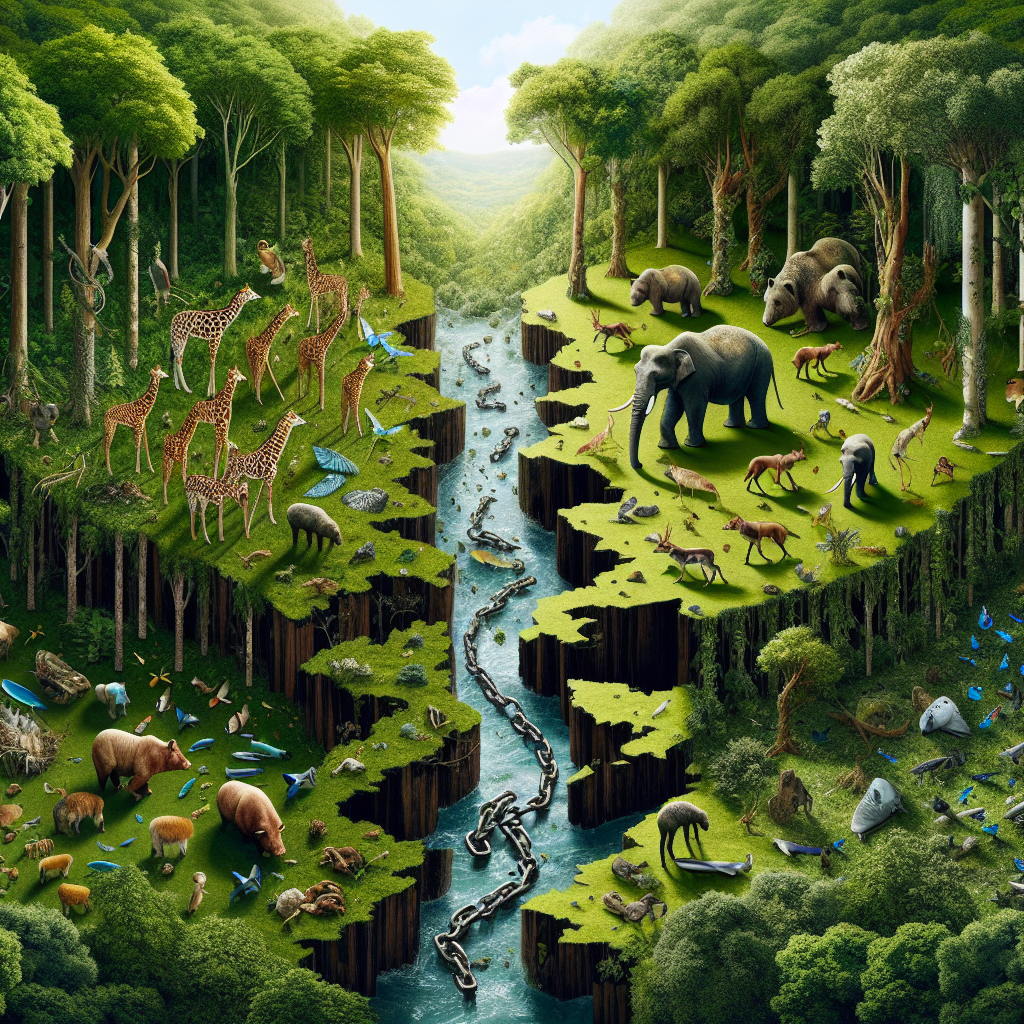
Devotional: Breaking the Chains – Understanding the Impacts of Habitat Fragmentation on Biodiversity and Ecosystem Health
Scripture Reading:
“For since the creation of the world God’s invisible qualities—his eternal power and divine nature—have been clearly seen, being understood from what has been made, so that people are without excuse.”
— Romans 1:20 (NIV)
Reflection:
Have you ever walked through a beautiful forest and noticed how the trees seem to whisper the secrets of creation? Each tree, bird, and stream contributes to a larger story—a story that God has woven into the fabric of our planet. Unfortunately, we live in a time when this story is increasingly disrupted by habitat fragmentation.
Habitat fragmentation occurs when large, continuous habitats are divided into smaller, isolated patches—often due to human actions like urban development, agriculture, and resource extraction. This disruption doesn’t merely alter landscapes; it can have profound effects on biodiversity and ecosystem health.
Imagine a vibrant tapestry, rich with color and depth, suddenly cut into small pieces. Habitat fragmentation does just that to our ecosystems. It limits the movement of animals, disrupts migration patterns, and isolates populations, leading to decreased genetic diversity. Species that once thrived in interconnected environments now struggle, their existence threatened by the chains of truly fragmented habitats.
God’s fingerprints are evident in the intricate balance of life. He created ecosystems in which every organism plays a vital role—bees pollinate flowers, trees sequester carbon, and predators help maintain the health of their prey populations. When we break these habitats apart, we risk diminishing this divine harmony.
Inspiration:
Yet, despite these challenges, we serve a God of restoration. He has given us the tools, the compassion, and the creativity to heal the earth. Just as God commands us to care for the least of these, we have a responsibility to protect our natural world.
What Can You Do?
-
Educate Yourself and Others:
Take time to read and learn more about habitat fragmentation and its impacts on biodiversity. Share this knowledge with friends, family, or your community. Consider organizing a local seminar or discussion group to raise awareness.
-
Support Conservation Efforts:
Look into local and global organizations working to restore fragmented habitats. Volunteer your time or consider contributions to financial campaigns focused on habitat conservation.
-
Create Wildlife-Friendly Spaces:
Transform your own yard into a sanctuary for wildlife. Plant native species that provide food and shelter for local animals. Consider creating wildlife corridors that allow critters to move through urban environments safely.
-
Advocate for Sustainable Development:
Support policies and practices that prioritize ecosystem health in your community. Engage with local decision-makers and let them know that preserving natural spaces is crucial for both the environment and human well-being.
-
Pray for Restoration:
Commit to praying for the healing of our planet. Pray for wisdom for policymakers, and for scientists and conservationists working tirelessly to rebalance our ecosystems. Pray for the creatures affected by fragmentation, that God’s creation may thrive once more.
Closing Prayer:
Heavenly Father, thank You for the intricate beauty of Your creation. Help us recognize the impacts of our actions and inspire us to cherish and protect the habitats that make life possible. May we be good stewards of the earth, breaking the chains of fragmentation through our awareness, action, and love. Transform our hearts to reflect Your compassion for all living things. Amen.
As we move forward, let us embrace our role as caretakers of God’s creation, working together to mend the broken bonds of our ecosystems and witness the beauty of restoration unfold.
Explore and dig up answers yourself with our BGodInspired Bible Tools! Be careful – each interaction is like a new treasure hunt… you can get lost for hours 🙂