 0
0
 0
0
You’ve probably held your tongue in an argument you knew you’d already won. Maybe it was a family debate, a coworker who was sure they were right, or an online comment thread you almost didn’t walk away from. You had the winning point. You just didn’t feel like it was your place to say it with an edge.
Elijah didn’t have that problem.
On top of Mount Carmel, standing in front of an entire nation and 450 prophets of a god that didn’t exist, Elijah didn’t just win the argument. He mocked the other side while he did it. And Scripture records the joke.
The Setup: A Nation That Couldn’t Decide
By the time we get to 1 Kings 18, Israel had been drifting for years. King Ahab and his wife Jezebel had built up the worship of Baal, a storm-and-fertility god, right alongside — and eventually instead of — the worship of the LORD. Nobody had officially renounced God. They’d just quietly started hedging their bets.
Elijah called the whole nation out for it directly: “How long halt ye between two opinions? if the LORD be God, follow him: but if Baal, then follow him” (1 Kings 18:21, KJV). The people, the text says, answered him not a word. That’s the picture — a crowd that wanted to keep both options open, standing in silence because nobody wanted to commit.
So Elijah proposed a test. Two altars, two sacrifices, no fire lit by human hands. Whichever God — Baal or the LORD — sent fire from heaven to consume the offering was the real one. The prophets of Baal went first.
The Dig: What Actually Happened at Noon
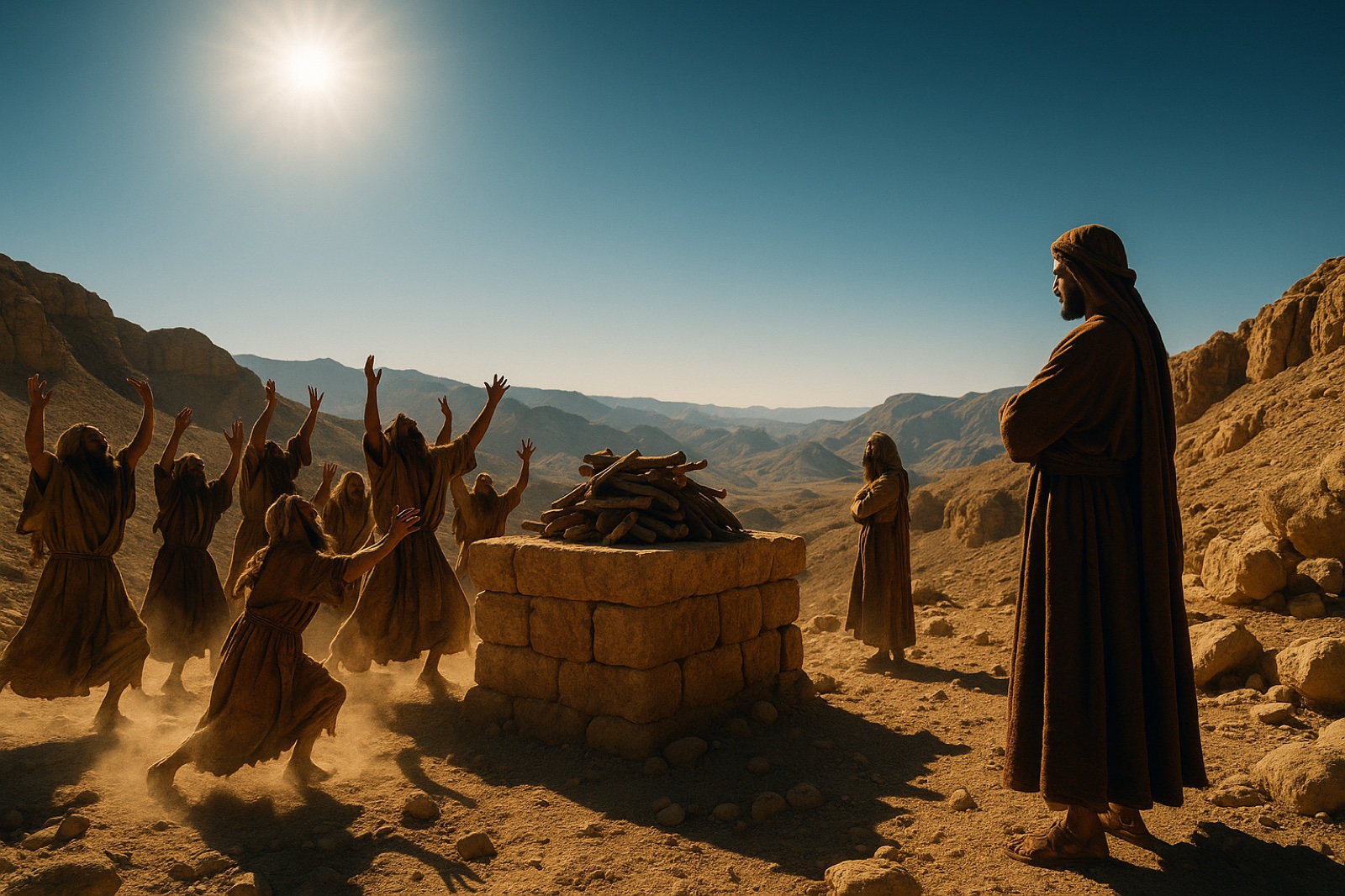
They danced. They shouted. They cut themselves with knives and lances, “till the blood gushed out upon them” — a real, desperate, hours-long ritual to get their god’s attention. And nothing happened. No fire. No voice. No response of any kind.
This is where Elijah does something most readers skim right past. He doesn’t just watch quietly, or wait his turn, or offer a solemn word of correction. He starts needling them.
“And it came to pass at noon, that Elijah mocked them, and said, Cry aloud: for he is a god; either he is talking, or he is pursuing, or he is in a journey, or peradventure he sleepeth, and must be awaked” (1 Kings 18:27, KJV).
Read that again slowly. Elijah is standing in front of hundreds of desperate, bleeding men and telling them — in front of everyone — that maybe their god is busy. Maybe he’s on a trip. Maybe he’s taking a nap and they should shout louder to wake him up. Some Hebrew scholars have pointed out the word translated “pursuing” can carry a cruder meaning too, closer to “relieving himself.” Elijah wasn’t being gently ironic. He was landing a punch.
This is a prophet of God, in Scripture, using sarcasm as a weapon in a public confrontation about who God actually is. Not a private joke between friends. Not a throwaway aside. A recorded, deliberate taunt, aimed at exposing a lie in front of the exact people who needed to see it exposed. It’s not the only place Scripture surprises us with real wit hiding in plain sight — the Bible has more intentional humor than most people ever notice.
The Turn: Bold Faith Doesn’t Have to Whisper
Most of us were taught that faith looks like quiet reverence. Soft voices. Careful words. Never too sure of yourself, never too sharp, always leaving room in case you’re wrong. And there’s real value in humility — Elijah himself, one chapter later, will be the one crumbling under a broom tree, terrified and ready to quit (1 Kings 19). It’s one of the most honest pictures of despair in the whole Bible, and it happens to the same man who was just bold enough to mock a false god in public.
But on Mount Carmel, in the moment that actually mattered, Elijah wasn’t soft. He was certain enough about who God was that he could afford to be funny about who God wasn’t. His sarcasm wasn’t arrogance. It was the natural overflow of settled confidence. You don’t mock what you’re secretly afraid might be real. You mock what you already know is empty.
That’s the piece most of us miss when we imagine what “strong faith” is supposed to sound like. It doesn’t always sound solemn. Sometimes it sounds like someone who’s stopped being polite to the thing that’s been getting more of their attention than God has — and is finally willing to say, out loud, that it isn’t working.
Think about what actually competes for your trust the way Baal competed for Israel’s. A bank balance that has to keep growing before you feel safe. A relationship you’ve quietly made responsible for your worth. A habit or a scroll-feed you go back to every time you’re anxious, hoping it’ll finally deliver the calm it never quite does. Those things don’t announce themselves as false gods. They just sit there, silent, taking your attention while you keep showing up and hoping this time they’ll answer.
Elijah’s challenge still applies: how long will you halt between two opinions?
What You Can Actually Do With This Today
- Name the silent altar. Take two minutes right now and finish this sentence honestly, even just in your head or a notes app: “The thing I keep going back to for peace that never actually gives it to me is ___.” Naming it is the first honest step Israel wouldn’t take.
- Say the doubt out loud instead of just absorbing it. Next time a thought like “is God even paying attention to this” crosses your mind, don’t just sit with it quietly. Say back to it, out loud if you can, something direct and unafraid — even a little bold. You’re allowed to talk back to doubt the way Elijah talked back to Baal.
- Read the whole showdown in one sitting. Open 1 Kings 18:20-40 today and read straight through it, start to finish. It takes about ten minutes, and seeing the mockery inside the full scene — not as an isolated verse — changes how it lands.
A Prayer for When You’re Tired of Hedging
God, I think I’ve been quieter about my doubts than You’d actually want me to be. I’ve let some things sit on the altar in my life that have never once answered when I called. Help me be as honest and unafraid as Elijah was — willing to name what isn’t working, and bold enough to trust You instead. I don’t want to keep halting between two opinions. I want to follow You.
One Question Worth Sitting With
Where in your life have you been more polite to your doubts than Elijah was to Baal — quietly tolerating something you already suspect can’t deliver? We’d love to hear your take in the comments.
Share This
- Elijah didn’t just beat 450 prophets of Baal. He mocked them while he did it — and Scripture kept the joke. Bold faith isn’t always quiet. #BGodInspired
- “Cry aloud: for he is a god… peradventure he sleepeth, and must be awaked.” Elijah’s sarcasm on Mount Carmel is one of the boldest lines in the Bible — and one of the most overlooked.
- You don’t mock what you’re afraid might be real. You mock what you already know is empty. That’s the confidence Elijah had on Mount Carmel — and it’s available to you too.
Questions People Ask About This Story
What did Elijah say to the prophets of Baal?
At noon, after hours of the prophets’ unanswered rituals, Elijah mocked them by suggesting their god might be busy talking, traveling, or asleep, and that they should shout louder to wake him up (1 Kings 18:27, KJV).
Why did Elijah mock the prophets of Baal?
Elijah was confronting a nation that had been quietly worshiping both God and Baal. The mockery exposed, in a very public and undeniable way, that Baal had no power to respond — while the LORD answered immediately with fire from heaven.
Is it wrong for Christians to use sarcasm?
Scripture doesn’t treat sarcasm itself as sinful — Elijah used it here as a tool to expose falsehood in a public confrontation, not to demean an individual out of cruelty. The heart and purpose behind it matter more than the tone itself.
What is the story of Elijah and the prophets of Baal about?
It’s the account in 1 Kings 18:20-40 where Elijah challenges 450 prophets of Baal to a public test on Mount Carmel to prove whose God is real. Baal’s prophets get no response after hours of effort; God answers Elijah’s simple prayer with fire that consumes the entire offering.
What happened right after Elijah’s victory on Mount Carmel?
Despite this massive public win, Elijah collapses into fear and despair almost immediately afterward, fleeing from Jezebel’s threats and asking God to let him die under a broom tree (1 Kings 19) — a reminder that even bold faith doesn’t make anyone immune to exhaustion. God’s response to him there is one of the clearest pictures in the Bible of what it sounds like when God speaks to someone who feels finished.