 0
0
 0
0
For years, parents were told their child had something “very rare.” Maybe one in tens of thousands. Maybe fewer.
A big new study says that was probably never true. It says Phelan-McDermid syndrome may affect about 1 in every 7,300 people. That is not a small change. It is the difference between “almost nobody has this” and “someone in your town probably does.”
So why did the count come out so low for so long? The short answer is simple. Nobody was looking. Most people who have it were never offered the test that would have found it.
What Is Phelan-McDermid Syndrome?
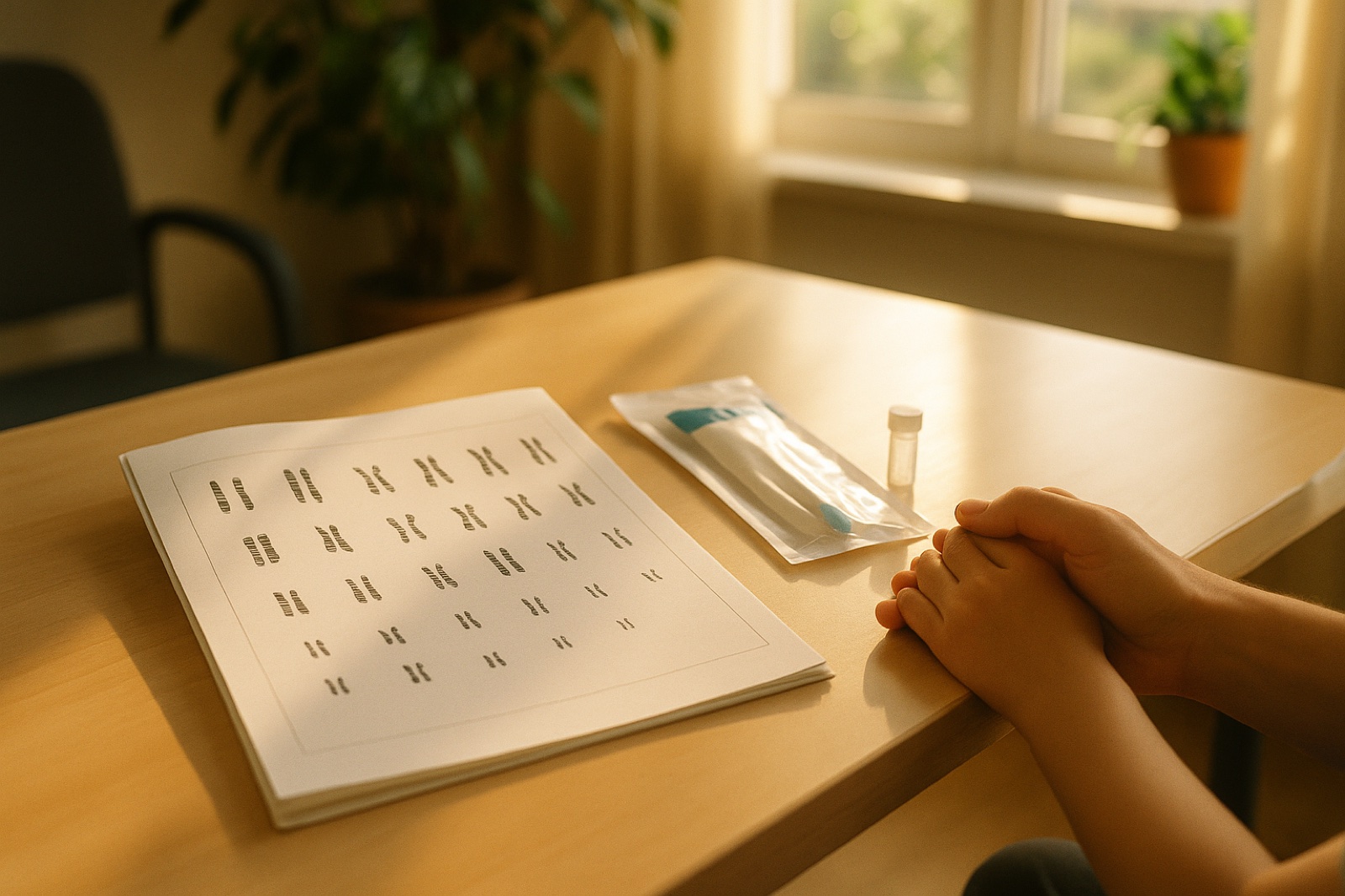
Phelan-McDermid syndrome is a genetic condition. It happens when a small piece is missing from the end of chromosome 22 (doctors call this spot 22q13), or when there is a change in one gene in that spot, called SHANK3.
SHANK3 helps brain cells connect and talk to each other. When it doesn’t work fully, a child’s development can be affected. Common signs include low muscle tone as a baby, delayed or absent speech, and developmental delay. Many people with the syndrome are also autistic.
Not everyone is affected in the same way. Some have more medical needs, some fewer. That is part of why it hides so well: it can look like “autism” or “developmental delay” and stop there, with no one asking what sits underneath.
If you want to go deeper on the science, we covered a study where researchers reversed SHANK3-linked brain changes in adult mice – an early lab result, but a hint of why a precise diagnosis is starting to matter more.
How Phelan-McDermid Syndrome Went Uncounted
The new estimate comes from researchers at the Seaver Autism Center at Mount Sinai in New York. Their paper was published on June 28, 2026, in the journal Autism Research.
They did not test anyone new. Instead, they pulled together genetic test results from nearly 180,000 autistic people, shared by ten different sources: large testing labs, a national autism research study, a research group, and several children’s hospitals.
In that testing data, roughly 1 to 2.5 out of every 100 autistic people who were tested turned out to have Phelan-McDermid syndrome, depending on the kind of test used. The team then adjusted for people never tested, for tests that can miss it, and for people with the syndrome who are not autistic. That gave them their final number: about 13.7 per 100,000 people, or about 1 in 7,300.
For the United States alone, they estimate that is more than 45,000 people.
Here is the part that stopped me. According to the paper, the Phelan-McDermid Syndrome Foundation’s registry – the list families join once they have a diagnosis – held about 3,600 people in 2025. That is a real, hard-won community. But set it next to 45,000, and you can see how many people are probably still out there without a name for what they live with.
Older estimates were far lower. Some put it at just a few cases per million births. Others guessed around 1 in 30,000. The authors note that how those older numbers were worked out was often unclear.
Why most people were never tested
The lead author, genetic counselor Tess Levy, put it plainly: “The large gap between known and estimated cases is likely due in large part to the fact that many individuals with developmental disabilities and autism are never offered genetic testing.”
The paper itself says that even though testing has been recommended for years, testing rates for autistic people and children with developmental delay “remain low in clinical practice.” Cost, insurance, long waits, and simply not being asked all play a part. In many countries, the test is hard to get at all.
The detail most headlines skipped
Most of the coverage framed this as an autism story. But the paper adds a twist: about 38 to 40 out of every 100 people with Phelan-McDermid syndrome do not have an autism diagnosis. So testing only autistic children – even if every one of them got tested – would still miss a big share of people.
How sure is the number?
Honestly? It is an estimate, not a headcount. The researchers say so themselves. Some of their key assumptions rest on small samples, which makes the range of possible answers wide. Not every hospital they asked took part. And places that remembered having Phelan-McDermid patients may have been more likely to join, which could push the number up.
So “1 in 7,300” is best read as “far more common than we thought,” not as an exact figure. Even the low end of their range is well above the old guesses.
Why a Name Matters So Much
You might ask: if a child is already getting help for autism or a delay, what does one more label change?
Quite a lot, it turns out. A genetic diagnosis can point doctors to the medical issues this syndrome is known for, so they can watch for them early. It can open doors to research studies and clinical trials. It can connect a family with others who have walked the exact same road. The senior author, Joseph Buxbaum, said his team recommends that every autistic child get genetic testing, “because knowledge is power.”
And there is something quieter too. Many parents describe years of not knowing why. A name doesn’t change who their child is. But it can end a long, lonely search – and that matters. We wrote about this same relief in a very different setting in What Is Languishing? The Name for Feeling “Blah”: sometimes just having the right word is the first real help.
One more thing, and it matters: this is not a story about something being “wrong” with anyone. Autistic people and people with Phelan-McDermid syndrome are not problems to be fixed. The problem in this story is the counting – a system that didn’t look closely enough to see who was really there.
A Story That Started With One Baby
The syndrome has its name because of one careful look. In 1988, Dr. Katy Phelan was running a chromosome lab at the Greenwood Genetic Center in South Carolina. She found a tiny missing piece at the end of chromosome 22 in a newborn with very low muscle tone.
Years later, families – not scientists – suggested naming the condition after her and researcher Heather McDermid. In 2003, the family group officially took the name Phelan-McDermid syndrome.
I love that detail. One baby, seen closely. Parents who wanted the people who noticed to be remembered. It is a reminder that every one of those 45,000 estimated people is a single person first, not a statistic.
Known Before Anyone Counted
There is something about this story that is hard to shake. For decades, thousands of people were living full lives – laughing, struggling, being loved – while the official record said they barely existed.
But they were never actually unseen. Their parents saw them. Their siblings, teachers, and neighbors saw them. The only thing missing was the count.
There is a very old idea, one of the oldest people have ever held, that every single person is fully known by God before anyone else learns their name – before the lab, before the chart, before the diagnosis. That no one is ever truly “uncounted,” even when every system misses them. You don’t have to believe it to feel why it has comforted so many families waiting on answers.
The researchers are trying to close the gap from the other side: getting the count to finally match the people who were always there.
What You Can Do If This Sounds Familiar
- Ask one simple question. At your next appointment, ask: “Has genetic testing been considered for my child?” You don’t need to know the science. Asking is enough to start the conversation.
- Ask what kind of test. Different tests catch different things. Some find missing pieces of a chromosome; others read single genes. It’s fair to ask which one is being offered and what it can miss.
- Look for free routes. In some places, research studies or public hospitals offer genetic testing at low or no cost. A doctor, nurse, or local disability group may know what exists near you.
- Write down the story. A short list of early signs – how your child fed as a baby, when words came or didn’t – helps any doctor you see, anywhere.
- You are not behind. Adults get diagnosed too. It’s never “too late” to understand yourself or someone you love better.
If you care for an autistic loved one, our piece on the autism life expectancy gap – and how much of it is avoidable is worth your time too. It’s another place where looking more closely saves lives.
The Bottom Line
Phelan-McDermid syndrome probably isn’t as rare as we were told. It was rarely tested. Somewhere right now, a parent is wondering why their child’s story doesn’t quite fit the words they’ve been given. This study is a quiet nudge to keep asking – and a reminder that the people behind the numbers were never missing. They were just waiting for the rest of us to notice.
Discussion Question
Should every child with autism or a developmental delay be offered genetic testing as a normal part of care – even where money is tight? Why or why not? Share your thoughts in the comments below.
Share This
Post 1: Researchers now think Phelan-McDermid syndrome may affect about 1 in 7,300 people – but only a few thousand have been diagnosed. Not rare, just rarely tested. https://bgodinspired.com/index.php/health-and-wellness/phelan-mcdermid-syndrome-rare-or-rarely-tested/
Post 2: If your child has autism or a developmental delay, ask one question at your next visit: “Has genetic testing been considered?” This article explains why that question matters so much.
Post 3: The thing that got me: this condition was named by parents, after the doctor who first looked closely at one newborn in 1988. Every number in this study is a person first.
Questions People Ask About Phelan-McDermid Syndrome
How common is Phelan-McDermid syndrome?
A 2026 study from Mount Sinai’s Seaver Autism Center, published in the journal Autism Research, estimated that Phelan-McDermid syndrome affects about 13.7 per 100,000 people, or roughly 1 in 7,300. That suggests more than 45,000 people in the United States may have it, far more than the roughly 3,600 people listed in the Phelan-McDermid Syndrome Foundation’s registry in 2025. The researchers describe this as an estimate with a wide range of uncertainty.
What causes Phelan-McDermid syndrome?
Phelan-McDermid syndrome is caused by a missing piece at the end of chromosome 22, in a region called 22q13, or by a disease-causing change in the SHANK3 gene in that region. SHANK3 helps brain cells connect with one another, which is why the syndrome often affects speech, muscle tone, and development.
Is Phelan-McDermid syndrome the same as autism?
No. Phelan-McDermid syndrome is a specific genetic condition, while autism is a broad description of how a person develops and experiences the world. Many people with Phelan-McDermid syndrome are autistic, but research suggests about 38 to 40 percent of people with the syndrome do not have an autism diagnosis.
Why do so many people with Phelan-McDermid syndrome go undiagnosed?
The main reason is that many autistic people and people with developmental delays are never offered genetic testing, even though experts have recommended it for years. Cost, insurance limits, long waiting lists, and limited access to testing in many countries all contribute. Some types of genetic tests can also miss certain changes in the SHANK3 gene.
How is Phelan-McDermid syndrome diagnosed?
Phelan-McDermid syndrome is diagnosed with genetic testing. A chromosomal microarray can find missing pieces of chromosome 22, and exome or genome sequencing can find changes inside the SHANK3 gene. Families who suspect it can ask their doctor whether genetic testing has been considered and which type of test is being offered.
Source: Levy T, et al. “Prevalence of Phelan McDermid Syndrome Estimated To Be ~1:7300 Using a Multisource Model,” Autism Research, 2026 (read the study), and Mount Sinai’s announcement.