 0
0
 0
0
It usually goes something like this. Your face feels strange on one side. Your hand won’t grip the cup. The words come out wrong. You are scared for a few minutes. And then it passes. You feel fine. So you decide it was nothing.
That was probably a mini-stroke. Doctors call it a transient ischemic attack, or TIA. And a large new study says the thing most people worry about after one is not the thing most likely to come next.
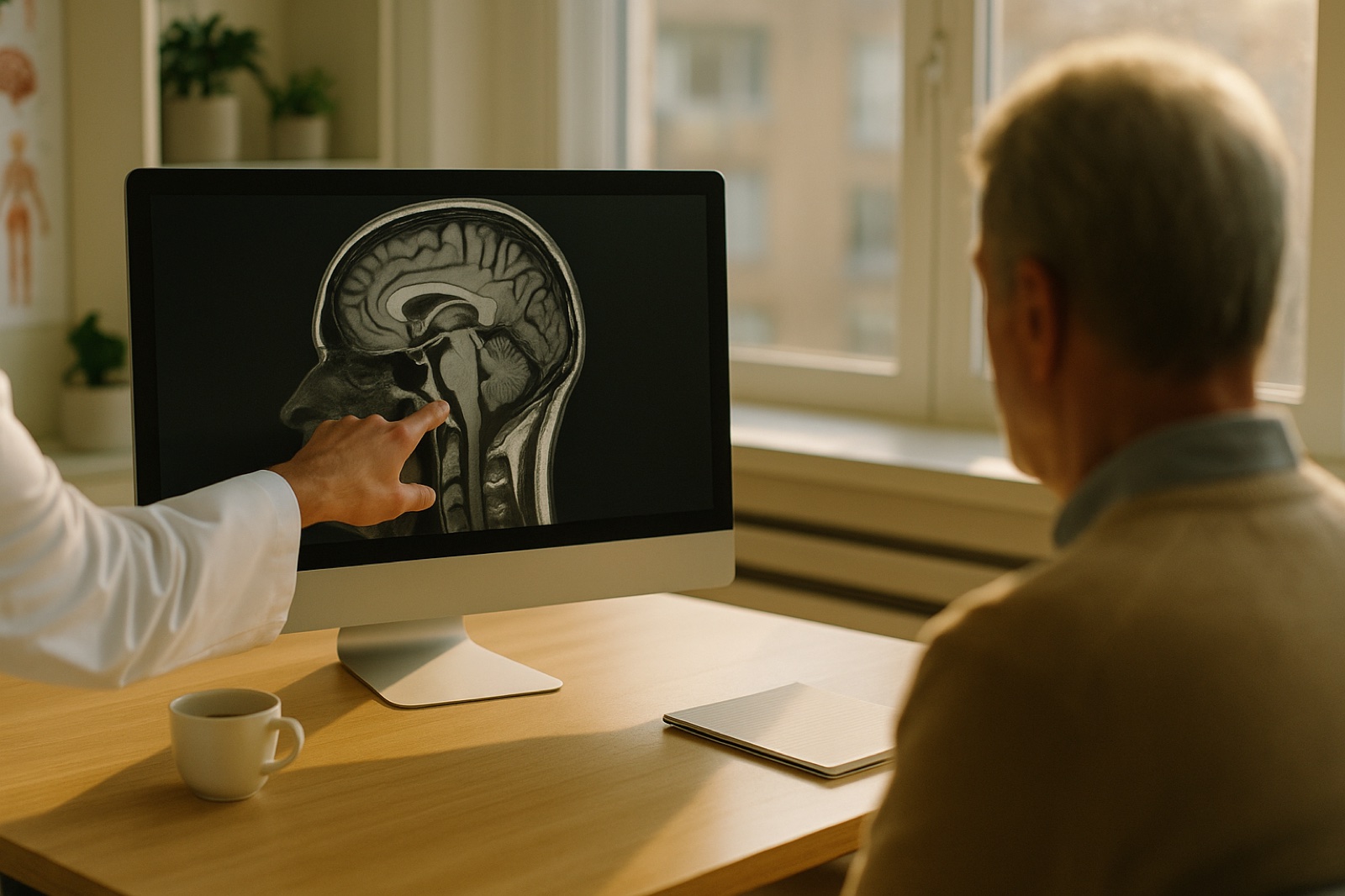
The study looked at the link between a mini-stroke and dementia. What it found is worth knowing, whether you have had a mini-stroke, you love someone who has, or you have never thought about it at all.
What Is a Mini-Stroke?
A mini-stroke happens when blood flow to part of the brain is blocked for a short time. It causes the same signs as a stroke: a face that droops, an arm that goes weak, speech that slurs or stops making sense, sudden trouble seeing, or sudden loss of balance.
The difference is that a mini-stroke clears up on its own. The signs often fade within minutes. That is exactly what makes it easy to ignore. The scary part ends before you even reach a phone.
Doctors have long treated a mini-stroke as a warning that a full stroke could follow. So after one, the focus is usually on preventing that stroke. The new study suggests that is only part of the picture.
If worry has been keeping you up since a scare like this, you are not alone. We made a free guide for exactly that.
What the Study of 113,081 People Found
The study was published on September 23, 2026, in Neurology, the journal of the American Academy of Neurology. It was led by Dr. Raed Joundi of McMaster University and the Population Health Research Institute in Hamilton, Canada.
The team used health records from Ontario, Canada, covering about two decades. They found 113,081 people who had their first mini-stroke and no dementia before it. Their average age was 70. The researchers compared them with people of the same age and sex, with similar blood pressure and diabetes, who had never had a stroke or a mini-stroke. They also compared them with people who had a full stroke.
Then they followed everyone for an average of about seven years. Here is what they found:
- About 1 in 5 people who had a mini-stroke developed dementia (19%). Among similar people with no stroke or mini-stroke, it was 15%.
- Overall, a mini-stroke was linked to a 34% higher risk of dementia.
- In the first year after a mini-stroke, the risk was 75% higher.
- People who had a mini-stroke were three times more likely to develop dementia than to have a stroke over the whole follow-up.
That last point is the surprise. After a mini-stroke, almost everyone braces for a stroke. But in this study, dementia turned up three times as often.
You can read more about how stroke itself is changing in our look at why strokes in young adults nearly doubled in 30 years.
The Detail Most Headlines Missed
A mini-stroke is called “mini” for a reason. The symptoms go away. So you might expect the risk to go away too.
It didn’t. In the first year, people who had a mini-stroke had a lower dementia risk than people who had a full stroke, about 33% lower. But after five years, the two groups looked about the same.
Read that again. Over time, the brief scare that passed in minutes was linked to about as much dementia risk as a full stroke.
Dr. Joundi put it this way: “What is particularly interesting is that the increased risk did not disappear after that early period but remained elevated over the long term.”
Dr. Christopher Yi, a vascular surgeon who was not part of the study, said it more simply: “A [transient ischemic attack] should never be dismissed simply because the symptoms went away.”
What This Study Does Not Say
This part matters just as much, so it is worth being careful.
It does not prove that a mini-stroke causes dementia. The study shows a link, not a cause. A mini-stroke may be a sign of hidden problems in the blood vessels or the brain that lead to both. The researchers also say they did not have detailed brain scans. So they could not see what hidden disease people may already have had.
It does not mean dementia is coming for you. The difference between 19% and 15% is real, but it is not huge. And it means about four out of five people who had a mini-stroke did not develop dementia during the study.
Dr. Joundi was clear about this too: “Someone who has a [transient ischemic attack] is not destined to develop dementia; most people in our study did not develop dementia.”
If fear is louder than the facts for you right now, our free How Anxious Am I? assessment can help you see what you are carrying.
What to Do After a Mini-Stroke
The study didn’t test any treatment. But it points to a few simple, honest steps.
- Treat the signs as an emergency, even when they pass. A face that droops, a weak arm, or slurred speech means it is time to get help right away, from any emergency service or clinic you can reach. Don’t wait to see if it happens again.
- Remember FAST. Face drooping. Arm weakness. Speech trouble. Time to get help.
- Ask about memory, not only stroke. Dr. Yi suggested doctors could record how a person’s thinking and memory work soon after a mini-stroke, then watch for changes. You can ask for that. Families can also gently notice changes over time.
- Look after your blood vessels. The study doesn’t prove what lowers the risk. But the everyday things doctors already advise for blood vessels cost little or nothing: walking, not smoking, sleeping well, eating simply, and keeping blood pressure in check where you can.
If someone you love is already living with memory loss, our piece on ambiguous loss, grief for someone gone but not gone, was written for you.
The Warning That Goes Away
Most warnings we ignore are not the loud ones. They are the quiet ones that pass. The chest pain that stops. The cough that fades. The hand that grips the cup again after five minutes.
We tend to read “it went away” as “it was nothing.” This study says that, at least for a mini-stroke, “it went away” can mean “it came early.” And early is a gift. Early is the only time you get to do something about a thing.
There is an old idea, much older than medicine, that a gentle warning is a kind of mercy. That the God who made us often speaks quietly first, so we don’t have to learn the lesson loudly later. It is not a threat. It is a heads-up from someone who cares whether you are okay.
A mini-stroke is not a sentence. For most people in this study, it did not lead to dementia. But it is a knock on the door. The best thing to do with a knock like that is not to panic, and not to pretend you didn’t hear it. It is to open the door, calmly, while there is still time to do something good with what you learn.
Questions People Ask About Mini-Strokes and Dementia
Does a mini-stroke increase the risk of dementia?
A 2026 study in the journal Neurology followed 113,081 people in Ontario, Canada, after their first mini-stroke (transient ischemic attack, or TIA). About 19% developed dementia over an average of seven years, compared with 15% of similar people who never had a stroke or mini-stroke. Overall, a mini-stroke was linked to a 34% higher dementia risk. The study shows a link, not proof that a mini-stroke causes dementia.
Is dementia more likely than a stroke after a mini-stroke?
In a 2026 Neurology study of 113,081 people who had a first mini-stroke, people were three times more likely to develop dementia than to have a stroke over the whole follow-up period, which averaged about seven years. Doctors have long focused on preventing stroke after a mini-stroke, and the researchers say long-term memory and thinking should get attention too.
What are the warning signs of a mini-stroke?
A mini-stroke, or transient ischemic attack, causes sudden signs like those of a stroke: one side of the face drooping, weakness or numbness in an arm or leg, slurred or confused speech, sudden trouble seeing, or sudden loss of balance. The signs often fade within minutes. The FAST test helps: Face drooping, Arm weakness, Speech trouble, Time to get emergency help.
Should I see a doctor if mini-stroke symptoms went away?
Yes. A mini-stroke should be treated as an emergency even when the symptoms disappear on their own. Vascular surgeon Dr. Christopher Yi said a transient ischemic attack “should never be dismissed simply because the symptoms went away.” A mini-stroke can come before a full stroke, and a 2026 study also linked it to a higher long-term dementia risk.
Does everyone who has a mini-stroke get dementia?
No. In a 2026 Neurology study of 113,081 people who had a first mini-stroke, about four out of five did not develop dementia over an average of seven years of follow-up. Lead author Dr. Raed Joundi said someone who has a mini-stroke “is not destined to develop dementia.”
What Do You Think?
Here’s the question we keep thinking about: why do you think people are so quick to decide a warning sign was “nothing” once it goes away? Is it fear, being busy, or something else? Tell us what you think in the comments.
Share This
“A study of 113,081 people found that after a mini-stroke, dementia was 3 times more likely than a full stroke. Most people never hear that part. https://bgodinspired.com/index.php/health-and-wellness/mini-stroke-dementia-risk/”
“If your face droops or your arm goes weak for a few minutes and then it’s fine, that’s not nothing. Get checked. A mini-stroke that goes away is still a warning. https://bgodinspired.com/index.php/health-and-wellness/mini-stroke-dementia-risk/”
“The part that stuck with me: ‘it went away’ doesn’t mean ‘it was nothing.’ Sometimes it means ‘it came early.’ And early is when you can still do something. https://bgodinspired.com/index.php/health-and-wellness/mini-stroke-dementia-risk/”