 0
0
 0
0
Pope Leo XIV said something last month that most coverage turned into a headline and left on the table.
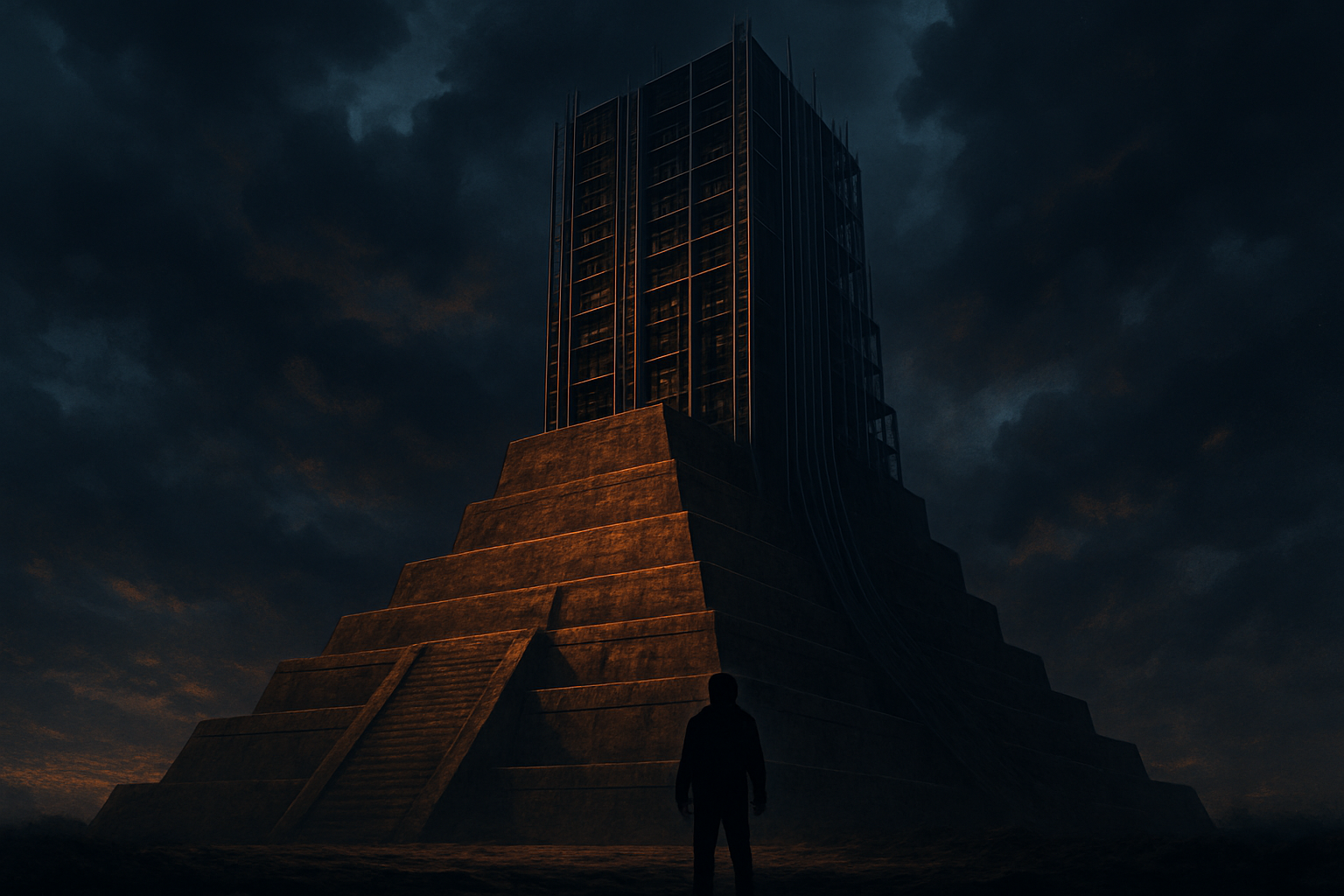
In his first major encyclical — a letter from the Pope to the entire Catholic Church — he reached back three thousand years and pulled out a story about a tower that never got finished. He used it to describe what he sees happening with artificial intelligence right now.
Most outlets ran with “Pope warns AI is like Tower of Babel.” A few theological journals unpacked his argument. The secular press focused on the politics.
Nobody sat down with Genesis 11 and asked: what does this actually say? Not the metaphor. The text.
Here’s what it says — and it’s stranger and more important than the headline.
What Genesis 11 Actually Says
The Tower of Babel story is short. Nine verses. Most people know the broad strokes: humanity decides to build a tower to the heavens, God comes down and scatters them, the end.
But the specific language in those nine verses is worth slowing down for.
Verse 4: “Come, let us build ourselves a city, with a tower that reaches to the heavens, so that we may make a name for ourselves.”
That phrase — make a name for ourselves — is important. It’s the stated motivation. Not conquest. Not evil. They want to matter. They want permanence. They want to leave a mark.
Which, if we’re being honest, is something every human generation has wanted.
Then God comes down to look. And here is where the text says something that most summaries completely miss.
Verse 6: “If as one people speaking the same language they have begun to do this, then nothing they plan to do will be impossible for them.“
Stop there.
God’s stated concern is not that they’re arrogant. It’s not that the tower is offensive. It’s not that humans are overreaching or blaspheming or failing to honor their limits.
The Hebrew word is yakhol — to be possible, to be able. And the sentence is describing the elimination of impossibility.
What worried God wasn’t how high the tower was. It was what a unified, limitless humanity would do with no sense of its own boundaries.
The Part Everyone’s Coverage Left Out
When Pope Leo XIV cited the Tower of Babel in Magnifica Humanitas, he wasn’t wrong about the pattern. He was pointing at something real: AI represents a genuine convergence of human capability — a unified language system, a unified creative output, a unified information layer — that the world has never seen before.
Catholic commentators debated his theology. Secular journalists debated his politics. But almost everyone collapsed his argument into the familiar moral: humans were too proud and got scattered as punishment.
That’s not what Genesis 11 says.
The Babel builders weren’t described as wicked. They weren’t cursed. They weren’t judged for sin. God didn’t look down and say “how dare they.” God looked down and said: if this continues, nothing will be impossible for them.
The scatter wasn’t a punishment for arrogance. It was an intervention for something God recognized as a limit humanity needed to keep bumping into.
The limit of its own limitedness.
Here’s the thing about impossibility: when you lose your sense of it, you stop reaching for what you can’t build yourself. You stop needing anything you can’t manufacture.
A humanity that believes it can build anything will eventually stop looking up.
AI as Babel in Reverse
The Tower of Babel ended with God scattering languages — seventy, by some ancient traditions. Different peoples. Different words. Different ways of describing the world.
The last six years of AI development have been, in a very specific way, the reversal of that scattering.
Every large language model — every AI system that can generate text, write code, compose music, diagnose illness, argue a legal case — is trained by ingesting human language at a scale that would have been incomprehensible a generation ago. Billions of texts, across hundreds of languages, reduced to something a single system can understand and respond to.
The scattered languages are being reunified. Not into one spoken tongue, but into one computational representation.
Pope Leo XIV looked at that process and reached for Genesis 11. He wasn’t being reactionary. He was reading the pattern.
The question is what Genesis 11 is actually warning about.
It’s not: don’t build things.
It’s not: technology is inherently dangerous.
It’s: what happens to a species that loses its sense of what it cannot do?
The Turn
Here’s what changes when you read Genesis 11 carefully instead of reaching for the shortcut version.
The scatter wasn’t a tragedy. It was, in a very strange way, a gift.
Because the limits that Babel’s builders were about to lose — the friction, the confusion, the need to reach across difference, the experience of genuinely not being able to do something — those limits are part of what drives humans toward each other, and toward something beyond themselves.
When everything is possible, you don’t need anyone. You don’t need to ask for help. You don’t need to wait. You don’t need to trust. You don’t need to believe in a source of something you can’t generate yourself.
That’s not a life. That’s a closed loop.
The writer of Babel understood something that every generation rediscovers in a different form: a humanity that needs nothing beyond itself will never find what it’s actually looking for.
Not because God is withholding it. But because what we’re actually looking for is precisely the thing that can’t be built at Babel’s scale.
Connection. Meaning. The sense that we are known.
AI can simulate all three. We’re going to spend the next decade learning what the difference feels like between the simulation and the real thing.
Genesis 11 isn’t a warning about the future. It’s a description of a recurring human discovery: every time we build something capable enough to make us feel like we don’t need anything else, we find out that we still do.
What This Means for You Today
You don’t need to have an opinion on AI policy to sit with this.
The Tower of Babel question isn’t really about technology. It’s about what you’re building — right now, in your own life — to make a name for yourself. And what you’re expecting that construction project to give you that it probably can’t.
The career. The income. The reputation. The following. The perfect version of your family, your health, your schedule.
None of those things are wrong. The Babel builders weren’t wrong for building. They were wrong about what the building would give them.
The scatter wasn’t the end of their story. It was the beginning of the stories we still tell — of Abraham, called out of Ur, into the unknown. Of Moses, finding God not in a tower but in a burning bush on the back side of a desert. Of Jesus, born not in a palace but in the one place nobody would look for what they actually needed.
The scatter put people back in a position to reach for something they couldn’t build. That reaching is where faith begins.
Actions to Take
- Read Genesis 11:1-9 today — slowly, one verse at a time. Notice what God actually says in verse 6. If you’ve always heard this story as “God punished pride,” read it again and ask: what is God actually concerned about here?
- Name one thing you’re building to “make a name for yourself.” Not to judge it — just to see it clearly. Career, reputation, achievement. Then ask: what do I believe this will give me when it’s done?
- Bring the honest version of that answer to God in prayer. Not the cleaned-up version. The actual expectation. The thing you hope the tower will provide.
Journaling Prompts
- What does “making a name for yourself” look like in your life right now — and what do you believe will happen when you’ve made it?
- Where in your life have limits or failures ended up putting you in a better position than success would have?
- When you think about what you can’t do on your own — genuinely can’t — does that feel like a problem to solve, or like an invitation to something?
Prayer
God, I can see the Babel pattern in my own life — the things I’m building to feel secure, to matter, to stop needing anything I can’t manufacture. I don’t always recognize it in the moment. I just feel the urgency. The drive to do more, make more, be more capable. Scatter me gently, if that’s what it takes. Put me somewhere I have to reach for you. I want to be the kind of person who needs something I can’t build. Because I think that’s the only kind of person who actually finds it. Amen.
What’s your honest reaction to reading Genesis 11 this way — does it change how you think about it? Share in the comments — I’d love to hear what surfaces for you.