 0
 0
Solstice meaning, in one line: the word is Latin, and it says “the sun stands still.” That is the name we gave to the shortest day of the year. This year it lands on Monday, December 21, 2026, at 20:50 UTC. (In parts of Asia, Australia and New Zealand, that moment is already December 22 on the local calendar.)
Most of us hear “solstice” and think of cold mornings and early dark. But the word is older than the weather talk. Someone, a very long time ago, stood watching the sun and decided the best word for what they saw was stopped.
What does solstice mean?
The word comes from two Latin pieces. Sol means sun. Sistere means to stand still. Put them together and you get “sun stands still.”
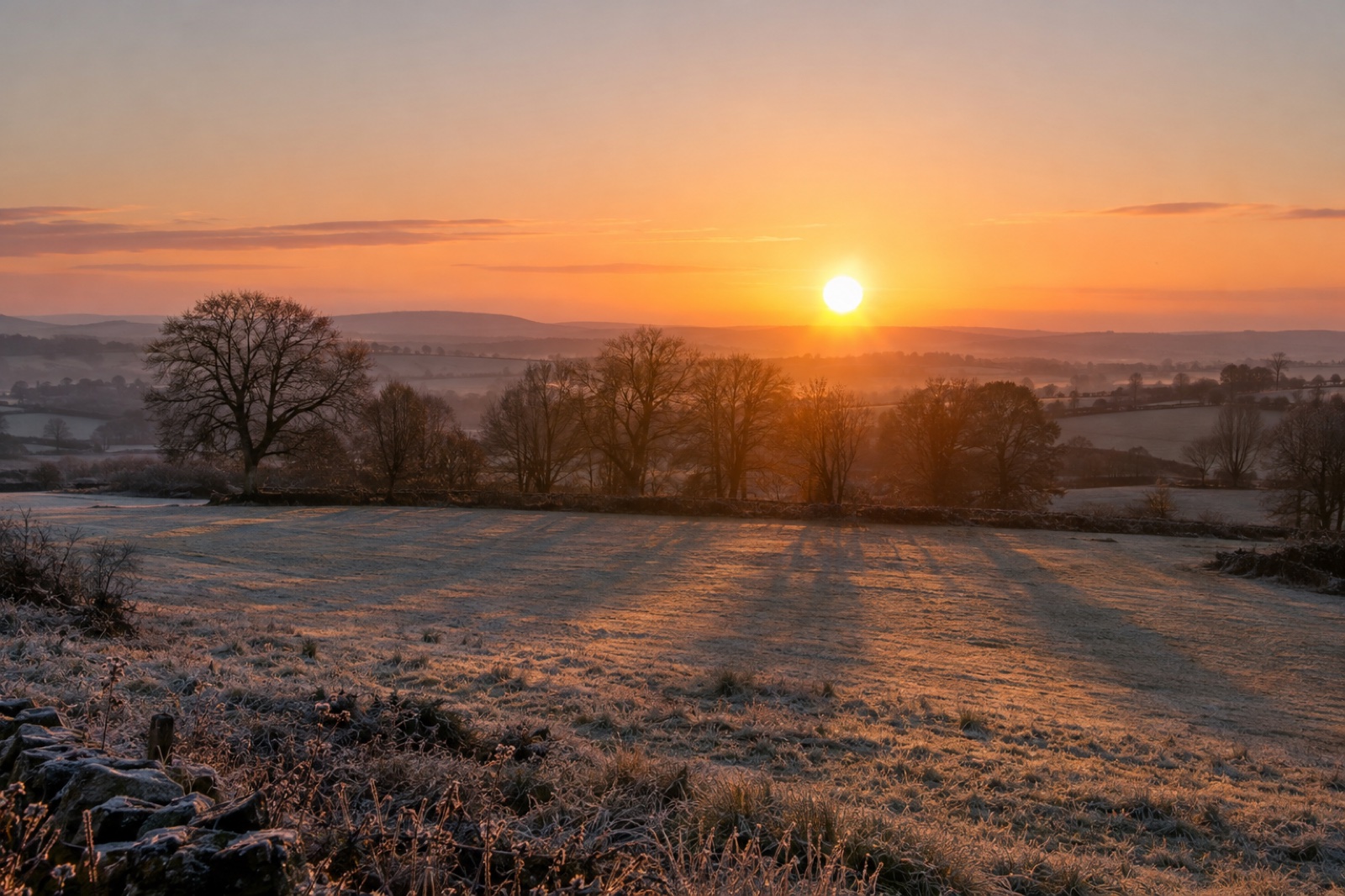
That sounds like poetry, but it is plain observation. If you watch where the sun rises or sets along the horizon day after day, the spot slides a little each morning. All through autumn it slides one way. Then, around the solstice, it slows, seems to hang in one place for a few days, and turns around.
The sun is not really pausing. The tilt of our planet is doing the work. But from the ground, with no instruments, it looks like a pause. Ancient people noticed. Many of them built things to mark the spot.
Why the shortest day of 2026 feels so long
Here is the odd part. In the days around the solstice, the length of daylight barely changes. The gain or loss from one day to the next is tiny, so tiny you could not feel it. For about a week the days feel stuck.
That is also why the date is fuzzy for the rest of us. Almanac.com and the Royal Museums Greenwich both give 20:50 UTC on December 21, 2026. That is 3:50 pm in New York and 8:50 pm in London. It is already the early hours of December 22 in Manila, Sydney and Auckland. If you live in the Southern Hemisphere, the same moment is your longest day, not your shortest.
So “the shortest day” is a moment, not a whole day on the clock. After it, the light comes back slowly. Many people find the week after a solstice oddly hopeful. Nothing has visibly changed yet, but the direction has.
The one time an old book says the sun really stood still
Because the word is so literal, it sends some people looking for the other time the sun was said to stand still. There is exactly one. It is in the Book of Joshua, and it is worth reading for what it does not say.
The story goes like this. An army has been marching uphill all night to reach an ally under attack. They arrive and fight a long battle, and the daylight is running out before the work is done. So their leader, Joshua, says out loud, in front of everyone: “Sun, stand thou still upon Gibeon; and thou, Moon, in the valley of Ajalon.” Then the account says, “the sun stood still in the midst of heaven, and hasted not to go down about a whole day.”
People argue about the mechanics of that line, and they have for centuries. This article is not going to settle it. What most readers miss is the sentence that closes the passage. It does not boast about the sun. It says: “there was no day like that before it or after it, that the LORD hearkened unto the voice of a man.”
Read that again. The thing the writer finds remarkable is not that the sky changed. It is that someone asked, and was heard.
What “sun stands still” can mean for you
A solstice is a small, yearly, free reminder of the same thing from the other direction. The sun’s pause is not a failure. It is a turning point. And the old account makes a quiet claim beside it: that behind the clockwork, something listens.
You do not have to settle any big question to try it. Notice the light this week. Notice how long the dark is, and that it is about to start shrinking. If you have been waiting on something that feels stuck, a result, a decision, a person, the shortest day is a decent day to say it out loud to whoever or whatever might be hearing.
If this kind of thing interests you, we have written before about why people have celebrated the longest day for thousands of years, about the old word for a calm in the middle of winter, and about how solstices show up in scripture and spiritual tradition.
Solstice questions people ask
What does the word solstice mean?
Solstice comes from the Latin words sol, meaning sun, and sistere, meaning to stand still. It means “sun stands still,” because the sunrise and sunset points on the horizon seem to stop moving for a few days before turning back.
When is the winter solstice in 2026?
The Northern Hemisphere winter solstice in 2026 is on Monday, December 21, at 20:50 UTC. In parts of Asia, Australia and New Zealand, that moment falls on December 22 local time. In the Southern Hemisphere, the same moment is the summer solstice.
Does the sun really stop on the solstice?
No. The sun does not stop. Earth’s tilt makes the sun’s path across the sky reach its lowest or highest point, and for a few days the change from one day to the next is too small to notice, so it looks like a pause.
Is the shortest day also the coldest day?
Usually not. The land and oceans hold heat and cool slowly, so the coldest weather in much of the Northern Hemisphere comes weeks after the solstice.
What is the story of the sun standing still in the Bible?
It is in the Book of Joshua. Joshua asks the sun to stand still during a battle, and the account says the day lasted about a whole day longer. The passage ends by saying no day was like it, because God listened to the voice of a man.
What do you think?
Do you mark the solstice in any way, with a walk, a candle, a meal, or just noticing the light? Tell us in the comments what, if anything, you do on the shortest day of the year.
Share this
- The word “solstice” literally means “sun stands still.” The shortest day of 2026 is December 21 and I had no idea.
- Fun fact: daylight barely changes for about a week around the solstice, which is why the sun seems to “stand still.” Then the light starts coming back.
- There is exactly one story where the sun is said to have actually stood still, and the strangest part is not the sun. It is who asked.