 0
0
 0
0
Humanoid Robot Set to Assist Teachers in Upstate New York School District
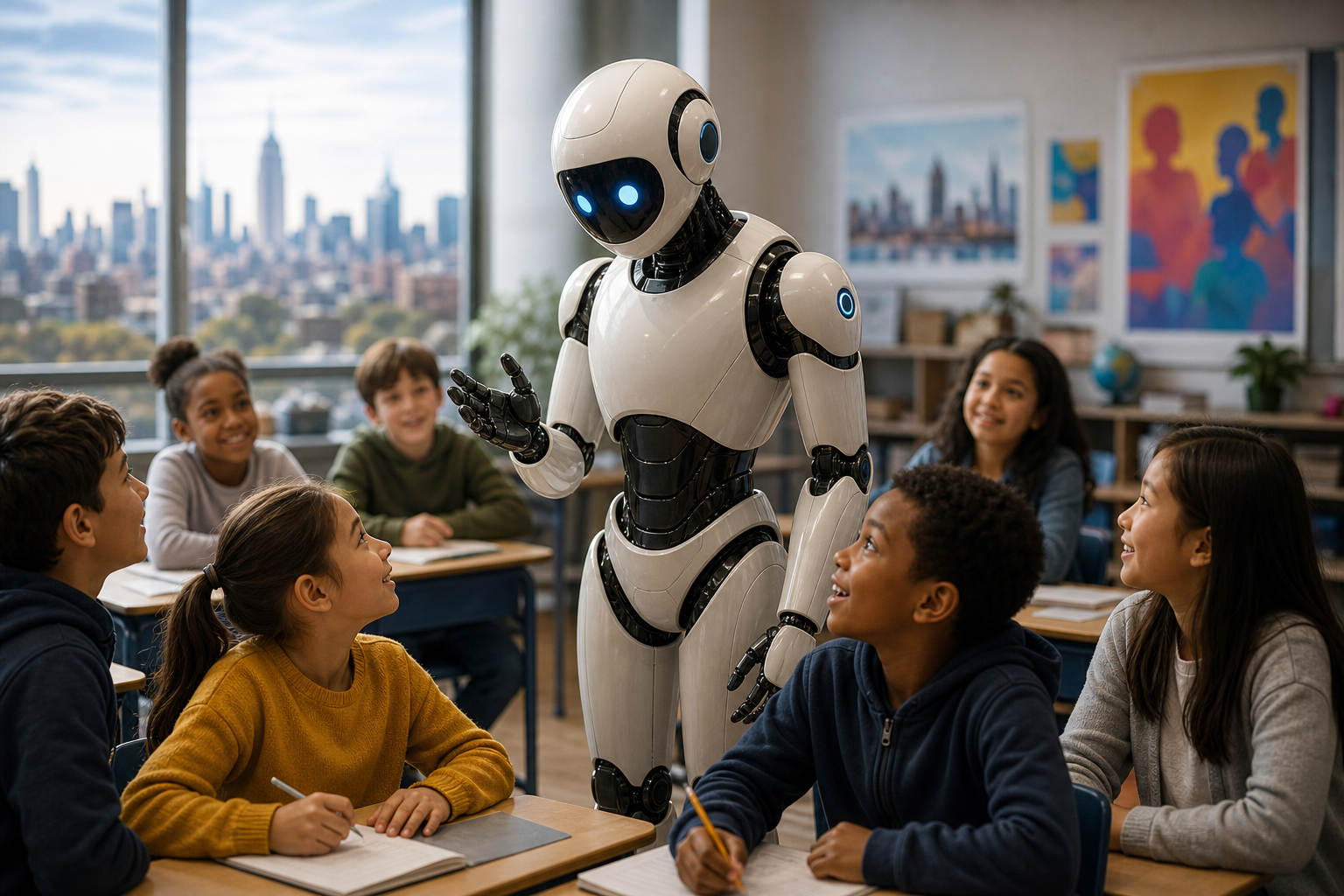
In a groundbreaking move for education, the Salamanca City Central School District in upstate New York has announced that it will introduce a humanoid robot, named "Sally," into classrooms this fall. This initiative aims to explore innovative ways of integrating artificial intelligence (AI) into teaching practices, rather than replacing educators.
During a recent board meeting, district officials revealed their plans to acquire the robot from Realbotix, alongside an accompanying AI teacher’s assistant program. This will allow students to interact with Sally directly from their laptops, enabling a personalized learning experience.
“This deployment represents a landmark moment for both AI and humanoid robotics,” stated Andrew Kiguel, CEO of Realbotix. He emphasized that Salamanca’s initiative signifies the beginning of a new era in which humanoid robots and intelligent AI assistants become integral tools in STEM education.
Sally is designed to resemble a human with silicone skin and can exhibit various facial expressions and upper-body movements, although it will remain seated in the classroom. The robot’s functionality includes recognizing students through unique ID numbers, allowing it to customize interactions based on individual learning histories.
Mark Beehler, the Salamanca Superintendent, stated that rather than shunning technological advancements, the district seeks to educate students about responsible technology use. “Many schools are taking the easy solution of simply banning it, but I have found that students will find a way around most rules,” Beehler explained. This perspective echoes a biblical principle of stewardship—responsibly managing the tools and resources available to us (1 Peter 4:10).
With education-specific safeguards in place, both educators and the district will oversee Sally’s operations to ensure the ethical use of technology in a learning environment. “We are providing custom-built educational robots that prioritize both student engagement and safety,” Kiguel added.
As this new chapter in education unfolds, the integration of AI presents an opportunity to engage with the principles of growth and learning, akin to the teachings of Jesus, who encouraged curiosity and the pursuit of knowledge (Luke 2:52).
Encouraging Takeaway: As students and teachers embrace this new technology, it invites us all to reflect on our approach to learning and innovation. How can we apply biblical wisdom in our use of technology, ensuring that it enriches our educational experiences? This new venture reminds us that seeking knowledge is a journey best undertaken with responsibility and integrity.
If you want to want to know more about this topic, check out BGodInspired.com or check out specific products/content we’ve created to answer the question at BGodInspired Solutions
If positive Biblical wisdom matters to you, I’d love your support of the mission
Q&A about
How can a humanoid robot serve as a positive influence in a classroom setting?
A humanoid robot can enhance the learning environment by providing personalized support, just as Jesus modeled love and care for individuals, meeting them where they were (Luke 19:10). By utilizing technology for education, we can ensure all students receive assistance, reflecting God’s desire for us to nurture and encourage one another (1 Thessalonians 5:11).
Is it okay for children to interact with robots instead of teachers?
While technology can be beneficial, it’s important to remember that human interaction is vital for emotional and spiritual growth. Jesus emphasized the importance of relationships, guiding us to love and support each other (John 13:34-35). Balancing tech with meaningful relationships ensures students develop social skills and empathy alongside their academic knowledge.
Can using a robot in the classroom be seen as a tool to spread Christian values?
Absolutely, when a robot is used to teach and reinforce Christian ethics, it can be a practical application of the Great Commission, where we are called to teach and make disciples (Matthew 28:19). By programming it with values of kindness, respect, and integrity, it can help instill these principles in the students.
How should parents feel about AI in their children’s education?
Parents should approach AI in education with discernment, as we’re called to be wise stewards of our children’s upbringing (Proverbs 22:6). Ensuring that any tech aligns with Christian values and promotes a learning environment rooted in faith will help guide children toward the truth, as we are reminded that Jesus is the way, the truth, and the life (John 14:6).