 0
0
 0
0
Bears Euthanized as New Mexico Wildlife Encroaches on Neighborhoods—An Impending Crisis?
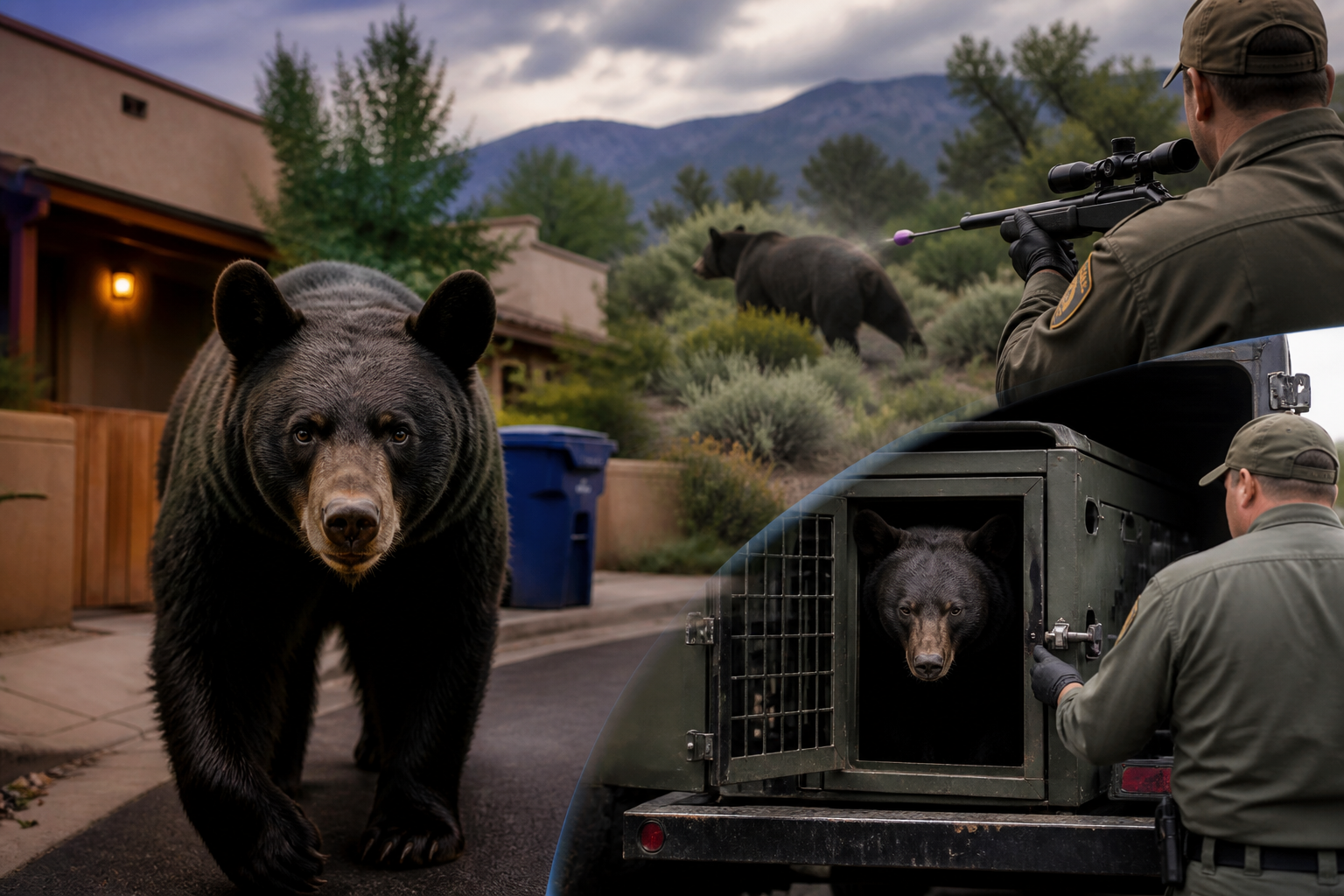
ALBUQUERQUE, N.M. — As drought and soaring temperatures compel bears to seek sustenance in urban environments, alarming reports indicate that the New Mexico Department of Wildlife (DOW) is now euthanizing some of these animals while relocating others.
Recent encounters in places like Albuquerque and Rio Rancho have left residents witnessing bears wandering through their neighborhoods. Just last Sunday, a bear was spotted in Rio Rancho, prompting quick action from local police and wildlife officials who successfully tranquilized and relocated the animal. Travelers who have lived in these areas for decades share mixed reactions to these extraordinary visits. "I’ve been here since ’94. Every now and then, you hear about a few of them, so it happens from time to time," commented one Rio Rancho resident.
As the situation escalates, Jessica Shelton from Animal Protection New Mexico points to the ongoing drought as a key factor driving these bears into residential areas. “As long as there is available food and water in these urban areas, we’re going to see some bears coming into that territory,” she noted, emphasizing the pressing environmental issues at play.
In a sobering twist, the DOW has issued a stark warning: “A fed bear is a dead bear.” This illustrates a critical point—once bears begin to rely on human-provided food sources, the safety and well-being of both the animals and the community become jeopardized. Not only does this behavior complicate relocation efforts, but it can also lead to euthanization if safety concerns arise.
This raises an important ethical question: How should we, as a community, interact with the natural world? The Bible teaches us in Proverbs 12:10 that “The righteous care for the needs of their animals.” This verse reflects a principle that calls for respect and stewardship—encouraging us to nurture our relationship with all living creatures, allowing their natural habits and habitats to guide our coexistence rather than mere convenience.
As concerns grow regarding bears returning to urban areas, Shelton reminds us, “Once a bear has been relocated and continues to return to an urban area, there are public safety concerns.” This cycle of events taps into a broader spiritual message about stewardship and discernment in our interaction with the world around us.
Let this situation remind us not only of the physical crisis at hand but also of the spiritual lessons we can learn. How can we take proactive steps to coexist harmoniously with wildlife? Feeding bears may seem like a kind gesture, but it can yield destructive consequences.
As we reflect on our role as caretakers of God’s creation, consider this encouraging takeaway: Our choices matter, and understanding the needs of those around us—be they human or animal—can lead to a more harmonious existence. The call is clear: Let us choose wisely and act with compassion, fostering a world that respects nature and its cycles.
If you want to want to know more about this topic, check out BGodInspired.com or check out specific products/content we’ve created to answer the question at BGodInspired Solutions
If positive Biblical wisdom matters to you, I’d love your support of the mission
Q&A about
Why is the New Mexico Department of Game and Fish euthanizing bears instead of finding another solution?
The decision to euthanize bears likely stems from safety concerns for both the animals and communities. In the Bible, Jesus calls us to seek peace and not to cause harm to others (Matthew 5:9). Finding a humane way to manage wildlife aligns with cherishing God’s creation while ensuring safety for all.
How can I view the relocation of bears through a Christian lens?
Relocating bears can be seen as a way to honor God’s creation and uphold stewardship of the earth. Proverbs 12:10 reminds us that a righteous person cares for their animals, suggesting that relocating bears shows respect for their lives. It’s important that such decisions are made with compassion and a desire to protect all of God’s creatures.
Should Christians support the euthanization of bears in neighborhoods?
Supporting euthanization may conflict with the biblical call to value life, as Christ teaches us to be compassionate and loving (Matthew 22:39). Christians can advocate for alternative solutions that protect both people and animals, reflecting the Lord’s desire for justice and mercy in our stewardship of creation.
Is there anything we can do as a community to address bear migrations?
Communities can come together to educate one another about wildlife safety and prevention measures, akin to the parable of the Good Samaritan that encourages us to care for neighbors (Luke 10:25-37). By fostering a spirit of cooperation and concern, we model Christ’s love for all living beings, ensuring safety and compassion.