 0
0
 0
0
Groundbreaking Research Suggests New Pathway to Understanding Life’s Origins
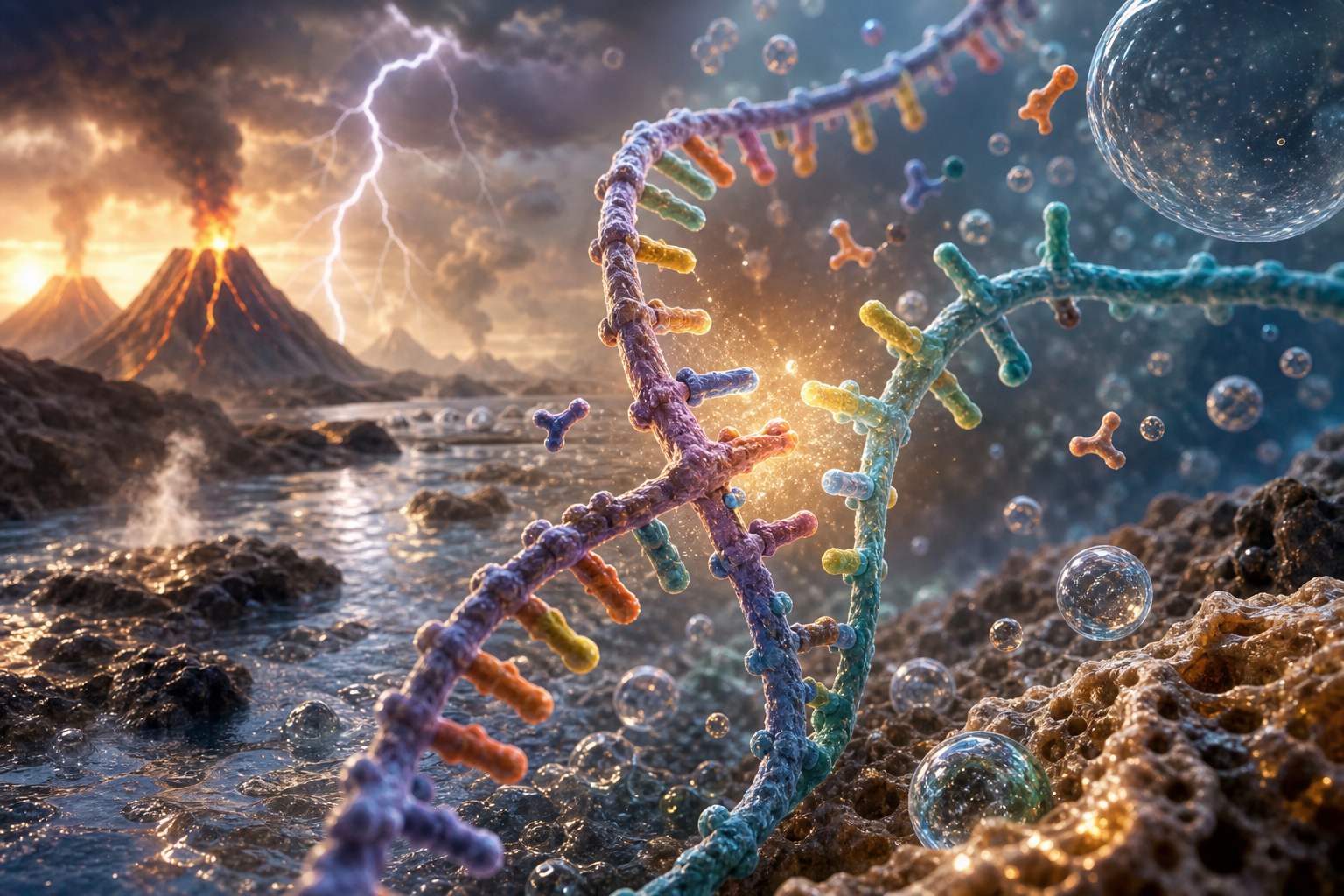
A recent study published in Nature Chemistry asserts a significant milestone in the ongoing exploration of life’s beginnings: the demonstration of exponential RNA replication by a polymerase ribozyme in conditions reminiscent of early Earth environments. Conducted by Dr. James Attwater and Dr. Philipp Holliger at Cambridge’s MRC Laboratory of Molecular Biology, along with colleagues at UCL Chemistry, this work promises to shape future discourse on the RNA world hypothesis, though it doesn’t cement any definitive conclusions about life’s origins.
Addressing a Major Obstacle
At the heart of the study is a key problem facing RNA chemists known as the "strand separation problem." This challenge arises when RNA strands replicate, leading to the formation of stable double helices that resist unwinding. In contemporary cells, protein-based enzymes carry out this separation, but the early Earth environment lacked such complexity.
Utilizing a novel approach with trinucleotides—unusual building blocks not found in present-day biology—the authors report a complete and repeatable RNA replication cycle. By alternating conditions of heat and cold, they effectively coaxed RNA strands into replicating exponentially, a process that can illuminate the pathways through which primitive life may have first emerged.
A Unique Breakthrough
This finding is distinct from other recent advancements in RNA research, particularly those addressing RNA fidelity or self-replication. The trinucleotide-freeze-thaw mechanism presented here uniquely navigates the strand separation issue, an innovative step forward in understanding prebiotic chemistry. As Dr. Holliger emphasized, the replication cycle initiates a cascade of genetic transmission that resonates with the biblical principle of the importance of passing on wisdom and knowledge across generations.
The Richness of Discovery
While exciting, the research does not provide a complete narrative for how life originated. The authors themselves caution against viewing it as the definitive story of life’s beginnings. The complex interplay of RNA, peptides, and metabolic processes likely shaped the formative stages of life long before we could document its existence.
The implications of such research echo biblical principles concerning creation and the intricate web of life. As the Book of Genesis recounts, “God saw all that he had made, and it was very good” (Genesis 1:31). This aligns with the findings, inviting us to reflect on the wonder of creation and the unfolding mysteries of life.
Looking Ahead
Future inquiries will be crucial in determining whether this trinucleotide mechanism can extend to longer RNA sequences and self-replication. Notably, the study hints that the replication chemistry itself could shape early genetic structures, an idea that may resonate with the divine wisdom attributed to the Creator’s design.
In a broader sense, as we ponder the intricate dance of molecular life, consider how our pursuits echo a deeper yearning for understanding and connection—much like the teachings of Jesus that advocate for love, curiosity, and the sharing of knowledge.
An Encouraging Reflection
As we marvel at the complexity of life revealed through science, let us remember that the quest for knowledge is itself a journey of exploration and discovery, much like the life journeys we each undertake. May this inspire within us a desire to seek greater understanding—not only of our world but also of the greater spiritual truths that bind us all.
Let the findings serve as a reminder to “Seek the Lord while he may be found; call on him while he is near” (Isaiah 55:6), inviting us to explore the connections between faith, science, and the intricate design of life.
If you want to want to know more about this topic, check out BGodInspired.com or check out specific products/content we’ve created to answer the question at BGodInspired Solutions
If positive Biblical wisdom matters to you, I’d love your support of the mission
Q&A about
How does this RNA research relate to the creation of life from a Christian perspective?
This research provides insight into how life might have begun, which can inspire awe in God’s creative power. In Romans 1:20, we learn that God’s invisible attributes are evident in creation, encouraging us to see His hand in the processes that led to life, just as He said, “Let there be life.”
Is there a conflict between this RNA study and my faith?
Not at all; understanding the mechanisms of creation can deepen your faith rather than undermine it. Jesus taught in Matthew 5:14 that we are the light of the world, prompting us to explore, study, and celebrate the wonders of creation as part of shining that light.
Could this RNA development be a sign of God’s involvement in evolution?
Many Christians believe that God uses natural processes for His purposes, similar to how He used parables in teaching. Romans 8:28 reminds us that all things work together for good, suggesting that God could very well use scientific discoveries, like RNA self-replication, as part of His divine plan.
How can I reconcile scientific research with my belief in the creation story?
Science can reveal the complexity and beauty of God’s creation, enriching your understanding. Colossians 1:16 highlights that all things were created through Him and for Him, affirming that both faith and science can coexist as they ultimately point to the same Creator.