 0
0
 0
0
A Scientific Revelation: How Singing Mice Illuminate the Origins of Human Speech
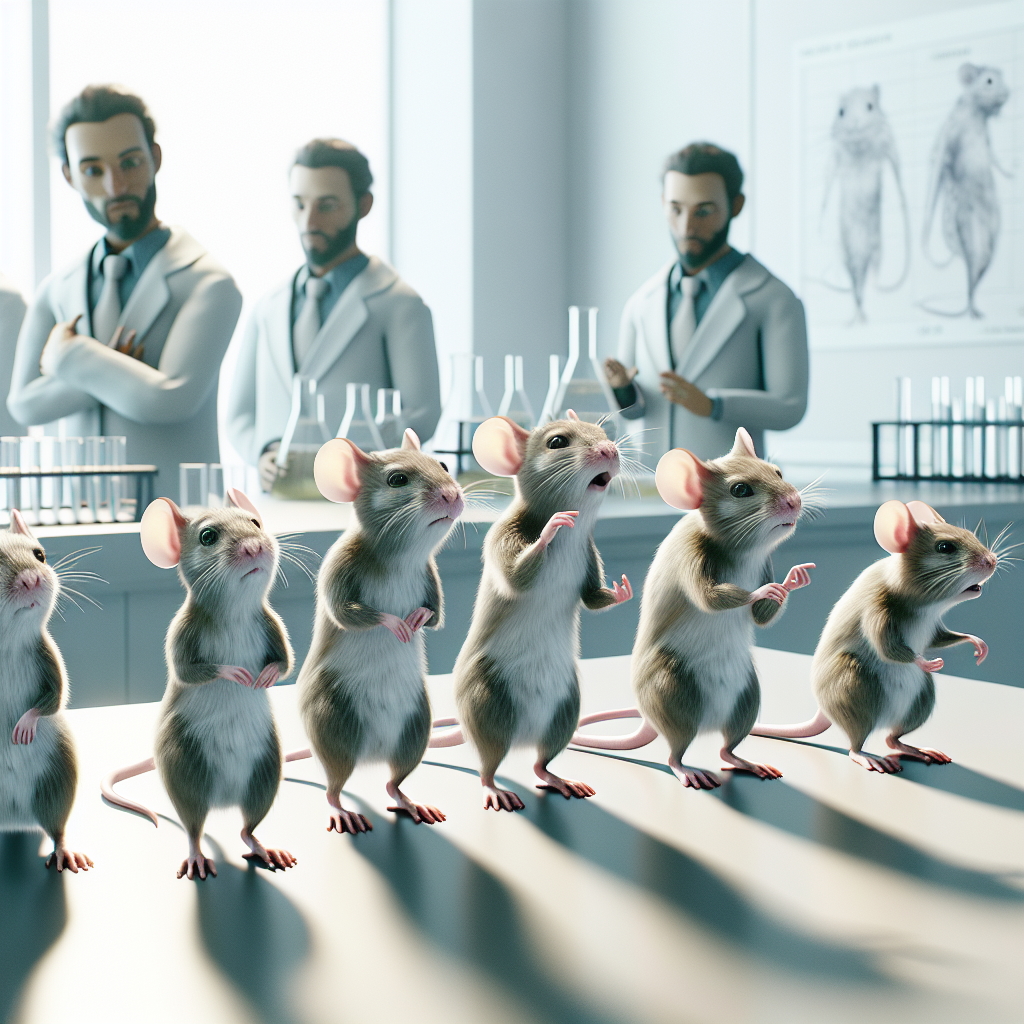
In a groundbreaking discovery, scientists have found that certain singing mice possess a genetic mutation akin to that which enabled early humans to develop speech. This revelation not only sheds light on the evolutionary steps taken by our ancestors but also prompts fascinating questions about communication, language, and even the essence of creativity that some may argue reflect a divine element in our existence.
Research published in reputable journals such as Nature and Science News details how specific expansions in the motor cortex of singing mice allow them to create elaborate vocalizations, similar to complex human speech patterns. This phenomenon hints at a deeper evolutionary connection between species and provides insight into the origins of vocal communication. According to studies from Cold Spring Harbor Laboratory, these mice are able to “puff up” air sacs to amplify their unique songs, showcasing advanced neural mechanisms that mirror human speech development.
These findings may remind us of the biblical principle that communication is a gift from God. In Genesis 1:26, it is stated, “Let us make man in our image, after our likeness.” This scripture suggests that the ability to communicate, to express thoughts, emotions, and creativity, reflects an aspect of the divine.
As researchers delve deeper into how such mutations function neurologically, one might ponder the broader implications: if these mice can demonstrate a rudimentary form of speech, what does this say about our responsibility to communicate love and compassion with one another? The New Testament emphasizes the power of words; in Proverbs 18:21, we read, “Death and life are in the power of the tongue.” Language, then, is not merely a means of conveying information but can also foster connection, healing, and understanding.
As scientists explore this intriguing overlap of animal communication and human language, the dialogue opens up reflections on how we, as stewards of our unique ability to speak, might better use our voices. Are we amplifying messages of hope, love, and community?
In this age of rapid advancements, let us remember that the gift of language is not just a tool for survival, but a sacred responsibility. As we consider the intricate ways in which speech evolved, may we also be inspired to use our voices for good—spreading positivity and understanding, reflecting at every turn the deeper values that connect us all.
In closing, let this discovery of singing mice encourage us to appreciate the beautiful complexity of communication and remind us that every word we share carries weight. Just as these mice express their unique songs, may we strive to sing our own melodies of kindness and respect in a world that often craves harmony.
If you want to want to know more about this topic, check out BGodInspired.com or check out specific products/content we’ve created to answer the question at BGodInspired Solutions
If positive Biblical wisdom matters to you, I’d love your support of the mission
Q&A about
Did a mutation really give humans the ability to speak?
It’s fascinating to consider how God designed humans uniquely, and mutations can be seen in that light. While science may explain the mechanics, Scripture reveals that God breathed life into us (Genesis 2:7), indicating a divine origin for our ability to communicate. Our speech is a gift that enables us to share the Gospel and express love, aligning with Paul’s teaching in Ephesians 4:29 to use our words for building others up.
How can this discovery about mice having speech-like abilities relate to our understanding of creation?
This discovery can remind us of God’s marvelous creativity in all His creatures. Just as Jesus taught that even the stones would cry out to proclaim His glory (Luke 19:40), it shows that the ability to communicate might be part of a broader divine plan for His creation. We are called to nurture a relationship with all living things, recognizing that they reflect God’s handiwork.
What does this mean for how I should view evolution and creation in my faith?
It’s crucial to recognize that God is sovereign over all creation, whether we talk about evolution or divine creation. Colossians 1:16 tells us that all things were created through Him and for Him. As believers, we can hold fast to our faith while engaging thoughtfully with scientific discoveries, understanding them as part of God’s ongoing creation narrative.
How can we apply the findings about communication in animals to our daily lives as Christians?
These findings serve as a reminder of the importance of communication in our relationships, especially in sharing our faith. Jesus emphasized the power of words in Mark 11:23, highlighting that faith-filled speech can move mountains. We should harness our ability to communicate effectively not only to build relationships but also to boldly share the love of Christ with those around us.