 0
0
 0
0
Samsung Workers Avert Major Strike Amid AI Boom: A Reflection on Fairness and Unity
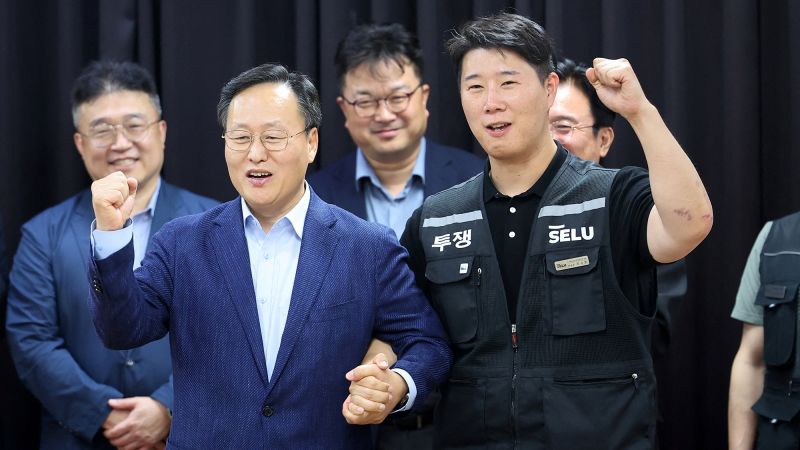
Hong Kong/Seoul — Samsung Electronics, buoyed by an unprecedented surge in demand for semiconductors, has emerged as a key player in the global artificial intelligence (AI) landscape. In a striking development, the company has reached a market valuation of $1 trillion, consolidating South Korea’s position as the world’s sixth-largest stock market. Yet, amidst this corporate triumph, tens of thousands of Samsung workers voiced their dissent, threatening an unprecedented walkout over pay disparities.
In a move that could have significantly disrupted a crucial supply of memory chips—essential components for AI technologies—the employees were initially poised to strike. However, just hours before the planned walkout, unions announced a tentative agreement with management that will require ratification from union members. This development comes as a relief, as a strike involving over 48,000 workers could have resulted in significant economic fallout for South Korea, where Samsung contributes over 12% of the national GDP.
The agreement centers around salary increases and enhanced bonus structures, responding to employees’ demands for fair compensation in light of the company’s record profits. Last month, Samsung reported an astonishing 8.5-fold rise in quarterly profits compared to the previous year, underscoring the widening gap between corporate gains and employee wages.
As these workers seek a fair distribution of wealth, it’s essential to reflect on the biblical principle of fairness and equity. The Bible teaches us in Proverbs 16:11: "Honest scales and balances belong to the Lord; all the weights in the bag are of his making." This verse reminds us that equity isn’t just a corporate concern but a moral one, emphasizing the need for just compensation and respect for labor.
While Samsung’s production employees earn some of the highest salaries in South Korea, comparisons to rival SK Hynix, which recently revised its bonus structure, have fueled discontent. SK Hynix employees now benefit from a compensation plan that allocates a larger share of operating profits to bonuses—reflecting a growing trend in which companies leverage employee satisfaction for competitive advantage.
This event underscores a significant issue within the global workforce—escalating polarization amid booming profits coupled with rising living costs. As workers without job security continue to face immense challenges, those employed by industry giants have begun to expect commensurate rewards for their contributions to corporate success. As societal divisions deepen, the call for fairness resonates more strongly than ever.
Leading up to the tentative agreement, concerns grew across various sectors, with South Korea’s Prime Minister warning that disruptions to Samsung’s production could lead to national economic strife. Given the growing reliance on AI technologies, the implications of a strike could reach far beyond Samsung’s walls.
As we consider the ramifications of this situation, we are reminded of the importance of labor relationships built on equity, respect, and unity. In many ways, the workers’ struggle is a call to remind us all about the principles of teamwork and shared success, qualities emphasized by Jesus in his teachings.
In reflecting on these developments, we can draw on the lesson embedded within Ephesians 4:3—"Make every effort to keep the unity of the Spirit through the bond of peace." The call for unity among leaders and employees alike mirrors the broader message of collaboration in the workplace, where mutual respect and understanding can yield not only corporate success but also a thriving community.
As the Samsung workers prepare to vote on the tentative deal, let us consider how fairness, unity, and equity play crucial roles in our lives. May we strive to embody these principles in our workplaces and communities, ultimately fostering a spirit of unity where everyone can thrive and feel valued in their contributions.
If you want to want to know more about this topic, check out BGodInspired.com or check out specific products/content we’ve created to answer the question at BGodInspired Solutions
If positive Biblical wisdom matters to you, I’d love your support of the mission
Q&A about
I work at Samsung, and I feel like we’re the ones making AI profitable. How should I view this from a Christian perspective?
God calls us to take pride in our work and to be good stewards of our abilities. In Colossians 3:23-24, we’re reminded to work heartily, as if for the Lord. Recognizing that your efforts contribute to the success of the company can transform your perspective and inspire you to advocate for fair compensation.
Is it wrong to want a bigger share of the profits that AI has generated at Samsung?
Desiring fair compensation is not inherently wrong; even Paul in 1 Timothy 5:18 reminds us that workers deserve their wages. It’s important to balance that desire with a spirit of generosity and cooperation, as Jesus taught us to love our neighbors and maintain unity.
How can I approach my boss about employees wanting a bigger piece of the pie?
Approaching your boss with respect and clarity is vital. Ephesians 4:15 encourages us to speak the truth in love. Present your case thoughtfully, focusing on how fair compensation can benefit both employees and the overall mission of the company.
What does the Bible say about wealth creation in light of AI’s success at Samsung?
The Bible acknowledges the value of work and wealth creation but encourages stewardship over selfish accumulation. In Matthew 25:14-30, the parable of the talents highlights the importance of using our gifts wisely for the common good, reminding us to consider how AI can serve people and communities beyond just generating profit.