 0
0
 0
0
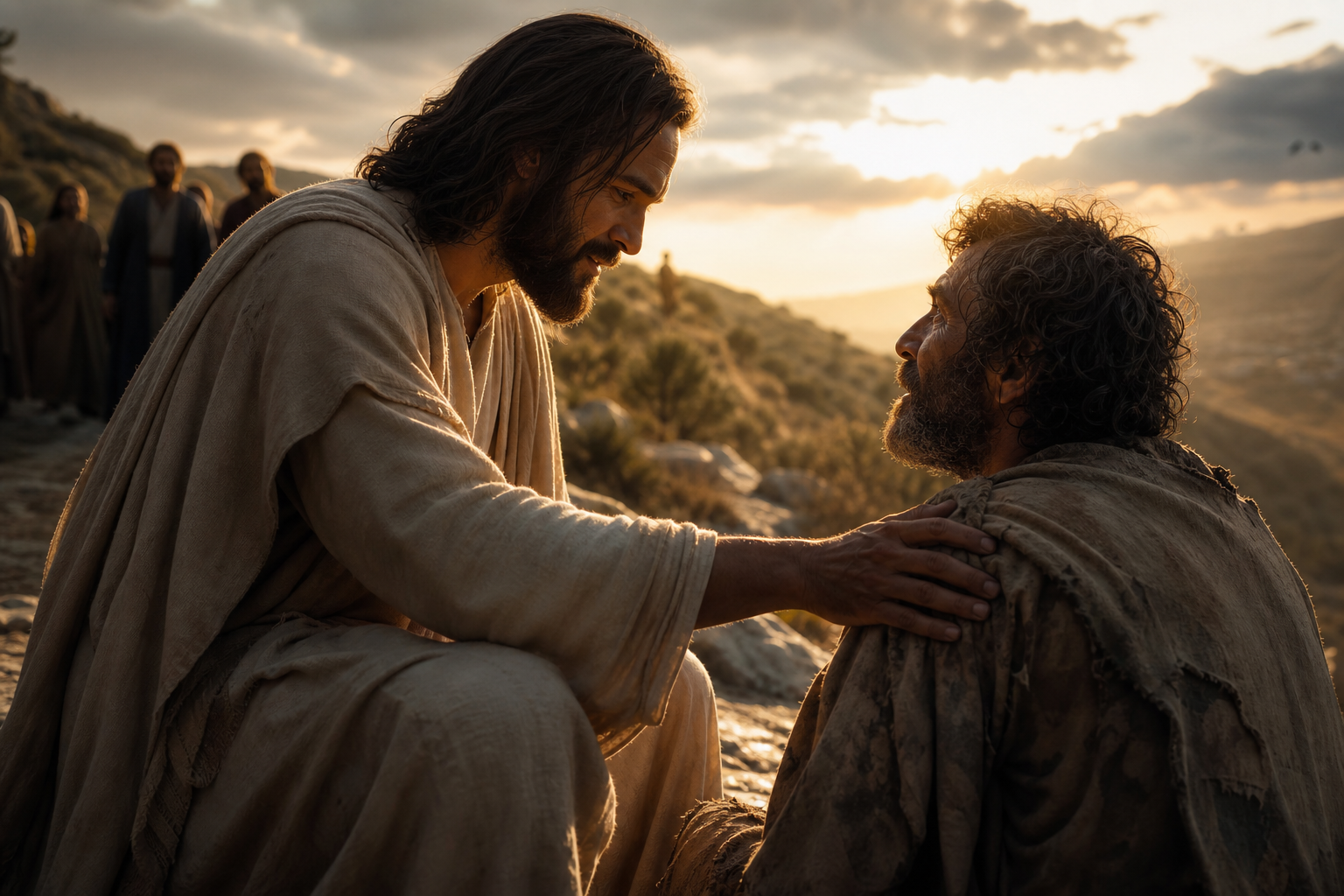
In the rugged landscape of ancient Jerusalem, where dust clings like shadows and the air buzzes with anticipation, a figure strides forward with purpose—Jesus, the carpenter Messiah. His words cut through the noise, “For the Son of Man came to seek and to save the lost.” This isn’t just a proclamation; it’s a living, breathing mission.
Imagine a shepherd amidst a storm—relentless, focused, eyes scanning the horizon. The stakes are high, no room for error. The lost aren’t just faceless souls; they’re sons and daughters, wandering in the wilderness of doubt and despair. His call echoes with urgency, a heartbeat in the silence.
The scene shifts. We find ourselves amidst the bustling street, where life is gritty and real. Zacchaeus, the tax collector—despised, isolated—climbs a tree just to glimpse the Savior. He’s lost, and he knows it. But Jesus stops. Looks up. Calls him by name. It’s intimate, unexpected. “Come down,” Jesus says. An invitation wrapped in grace, a lifeline tossed into turbulent waters.
With every step Jesus takes, the world shifts. Lives intersect with eternity. Walls crumble—fear, shame, regret—all bowing under the weight of His love. His journey is scandalous, embracing the untouchables, breaking bread with sinners. Salvation isn’t just a word; it’s a rescue mission in action.
Each encounter is a chapter in this divine narrative. The blind see. The lame walk. Hearts ignite with newfound hope. It’s not about numbers or notoriety, but the one, the individual lost in the crowd. Jesus seeks. Jesus saves. Simple, yet impossibly profound.
It’s the heart of the mission, painted against the canvas of corruption and chaos—a beacon of relentless love. In a world starved for meaning, this message roars like wildfire, consuming doubt, kindling faith.
Luke 19:10 is a lifeline, a compass pointing toward redemption. A call to action, urging us to move, to love like He loves, to seek the lost in our modern day wilderness. Fast-paced, emotion-laden, and deeply spiritual, this truth—ancient yet shockingly fresh—demands a response. Embrace it. Live it. Transform.
If you want to want to know more about this topic, check out BGodInspired.com or check out specific products/content we’ve created to answer the question at BGodInspired Solutions
If positive Biblical wisdom matters to you, I’d love your support of the mission
Q&A about Luke 19:10
Why did Jesus talk about seeking the lost in Luke 19:10?
Jesus mentions seeking the lost in Luke 19:10, saying He came to "seek and to save the lost" because it reflects His mission of redemption and compassion. This aligns with the parable of the lost sheep in Matthew 18:12-14, where Jesus emphasizes the joy in heaven over one sinner who repents. Practically, it highlights our call to love and reach out to those spiritually lost or marginalized.
How can I seek the lost in my community today?
You can seek the lost in your community by building genuine relationships and serving others, reflecting Jesus’ love as in Matthew 5:16, where He calls us to let our light shine. Engage in acts of kindness, listen to others’ stories, and be ready to share your faith with gentleness and respect, as encouraged in 1 Peter 3:15.
What does Jesus saving the lost mean for me personally?
For you personally, Jesus saving the lost means experiencing God’s grace and forgiveness, as seen in Ephesians 2:8-9, which reminds us that salvation is a gift. It reassures us that no matter how far we’ve strayed, Jesus is willing to welcome us back with open arms, transforming our lives with His love.
How can I pray for someone who is lost or straying from faith?
Pray for someone who is lost by asking God to open their heart and mind to His love, as Paul did in Ephesians 1:17-18. Pray for opportunities to share God’s message with them in meaningful ways, and for their protection from negative influences, trusting that God desires for all to be saved, as stated in 1 Timothy 2:4.