 0
0
 0
0
You know that hungry feeling that has nothing to do with food? The one that shows up at the end of a long day when the house is noisy but you feel alone, or the restaurant is full but the conversation is thin. You eat, you scroll, you nod at a story you’re not really inside of, and the whole thing feels… hollow. You’re fed, but not nourished. Surrounded, but not seen.
It’s not that you don’t have people. It’s not that you don’t have time. It’s that your life has become so efficient, so optimized, that it’s lost the friction that makes moments real. Somewhere between takeout and deadlines and group chats, we quietly traded rituals for routines. And our nervous systems know the difference.
The obvious fix is to “be more social” or “go out more,” but you’ve probably tried that. You can sit at a table with five people and leave lonelier than when you arrived. You can attend gatherings every week and still feel weightless. The root isn’t quantity—of people or events. The root is that our moments don’t have a shape anymore. We rush through them the way we consume headlines: fast, clever, forgettable. We don’t give them a frame to hold meaning.
Here’s the reframe: meaning isn’t discovered—it’s created. It’s something you build with your hands and your attention. And one of the simplest places to start is at the table, because eating is the most ordinary ritual we have. If you can turn a meal into a moment, you can begin to rebuild a life that feels like yours again.
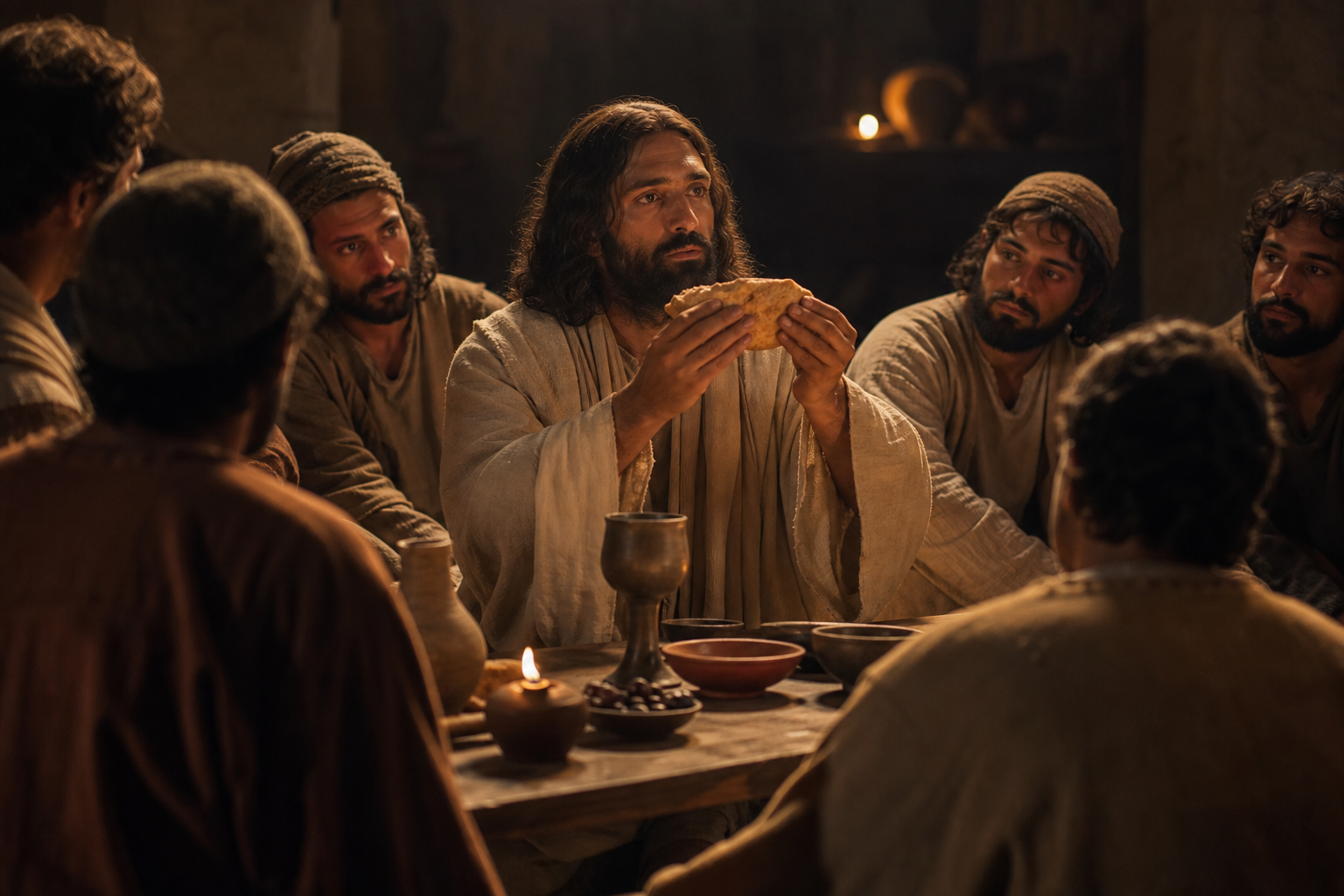
A friend once put it this way: “Turn a meal into a promise—break your attention into pieces you can share.” He told me he first encountered the idea in Matthew 26:26—an ancient scene where bread is given thanks for, broken, and shared. The concept doesn’t require a religious framework to be true. It’s just quietly profound wisdom: a simple act, done with intention, can feed more than your body.
Let’s make this practical. You don’t need a farmhouse table or a culinary degree. You need small, repeatable moves that teach your nervous system, and the people you love, that this moment matters.
— Begin with a pause and a simple line of thanks. Before the first bite, put your phone face down and let your shoulders drop. Take one slow breath. Then say a single honest line out loud, even if you’re by yourself: “I’m grateful for this food and the hands that made it possible.” That’s it. If words feel awkward, name three plain facts: “It’s warm. I’m hungry. I get to rest for ten minutes.” You’re not trying to manufacture holiness. You’re signaling to your brain: we’re here now. This is a transition from doing to receiving. That tiny pause interrupts autopilot. It softens the guard dog in your chest. Over time, your body will start to recognize the table as a safe place to land.
— Replace “How was your day?” with “One true thing.” Most of us answer “How was your day?” with logistics. We report our itinerary. That keeps us on the surface. Try this instead: each person at the table offers one true thing, and it has to be about how they actually feel, not just what happened. “I’m relieved the meeting is over.” “I’m anxious about money.” “I felt proud when I finished that run.” Keep it to sixty seconds. No multi-paragraph monologues. If you’re alone, speak your one true thing into a voice memo or write it on a sticky note while you eat. This is not oversharing. It’s offering a bite-sized piece of you that others can hold without choking on it. You’ll be surprised how quickly the tone of the room shifts when the first person goes real. You’ll also notice how your own appetite changes when you name what your heart is actually starving for.
— Make it tangible, not performative. “Showing up” is an abstract phrase; your nervous system can’t eat it. Bring something to the table that your hands touched, even if it’s tiny. Slice an orange. Warm the bread. Plate takeout on a real dish. Light a tea candle. Pour water into glasses instead of handing someone a bottle. If you’re eating alone, set a napkin and a fork like you’re your own guest. The point isn’t aesthetics—it’s embodiment. You’re translating care into matter. Performance is about impressing; an offering is about giving. Offerings don’t need applause; they just need to be real. If your gift is a story, tell it. If it’s silence, keep it. If it’s doing the dishes without announcing it, beautiful. Tangible acts teach your brain, “I’m part of this. I affect this space.” And that sense of agency is a huge piece of feeling connected.
— Put a small anchor on the calendar and guard it fiercely. Spontaneity dies in adulthood not because we’re boring but because we’re tired. Waiting for connection to “just happen” guarantees another month of near-misses. Choose a repeating anchor—Tuesday tacos at 7, Saturday pancakes at 10, Thursday tea at 8 p.m. It can be twenty minutes. It can be coffee on the back steps. Keep it consistent, and make the rules kind: late is okay, pajamas are okay, fancy is forbidden. Tell the people you love that this happens with or without them, and that when they can come, there will be a chair. If no one joins you for a while, keep the appointment alone. Rituals gain power through repetition, not attendance. The first few will be awkward. That’s how new muscles feel. By the sixth or seventh, the awkwardness gives way to gravity. You will have built a place in time where your life knows where to find itself.
— Give a piece, not the whole. Burnout often masquerades as connection, because we confuse pouring ourselves out with being present. You don’t have to fix people or perform intimacy to be close to them. Decide, before you sit down, what small, specific slice of your attention you will give fully. Tell yourself, “For the next fifteen minutes, I’ll ask two real questions and really listen,” or “I’ll share one honest story instead of three curated updates,” or “I’ll make sure everyone’s glass is full before mine.” Paradoxically, choosing a small, complete offering makes you feel fuller, not emptier. It’s the difference between scattering crumbs and handing someone a warm piece of bread. When you choose a piece, you also reserve the rest of you for recovery. That’s how connection and self-respect can coexist at the same table.
Maybe you’re thinking, Great, but my life isn’t built for this. The kids won’t sit still. My roommate eats standing at the sink. My partner hates “touchy-feely stuff.” Or: I live alone and most nights I eat cereal at midnight. Here’s the thing—ritual doesn’t require perfect conditions. It requires an invitation, a repeat, and a willingness to look a little silly. Kids can pass an orange and say one true thing in six seconds. A roommate can handle plates while you light a candle. A partner who bristles at feelings might still enjoy knowing Tuesday tacos means you don’t schedule late calls. And if it’s just you and your cereal, put it in a bowl, stand by the window, say your one true thing, and take ten quiet bites with the phone in the other room. You are worthy of the same care you’d give a guest you adored.
This is not about transforming every dinner into a movie moment. It’s about stacking small signals that teach your body: I am allowed to be here, and I am allowed to be human here. That accumulates. You’ll notice it when conflict shows up and you find you have language for it. You’ll notice it when a friend texts, “Are you still doing Thursday tea? Can I come?” You’ll notice it when you eat less just to fill silence and more because you’re actually hungry.
If you’re worried this is corny, you’re not wrong. Most things that work begin a little corny. Gratitude journals are corny until you’re three weeks in and your brain, unprompted, catches a shaft of afternoon light and says, “Thank you.” Therapy metaphors are corny until you stop panicking in the grocery store. Lighting a candle is corny until the smell of smoke tells your nervous system, almost like a lullaby, “We’re done hustling for a minute.”
And there’s room to be imperfect. You’ll forget the pause. Someone will make a joke during “one true thing.” The candle will tunnel and sputter. Fine. Connection isn’t fragile china. It’s more like dough—you’re allowed to punch it down and try again tomorrow. What matters is that you keep showing up with something you actually feel, and you let other people do the same, however clumsily.
One more thing: don’t underestimate how much your body is part of this. Eye contact, chewing slowly, feet flat on the floor—these are not niceties. They are ways your nervous system says, “Safe. Here. Enough.” When you slow your body, your mind follows. When your mind slows, you notice what you’re actually hungry for. And when you notice, you can ask for it, or offer it, instead of eating your way around the ache.
If you want to start today, make the bar microscopic. Tonight, before you eat, breathe once and say one honest sentence. Plate your food, even if it’s leftovers. Ask yourself or someone you love for one true thing. Wash the dish and call it a win. That’s more than a meal. That’s a moment with a shape.
You don’t have to wait for a better season of life to feel connected. You don’t have to become a different person. You just have to choose, in the smallest ways, to be here. Bread, broken and shared—attention, broken and shared—has always been enough to begin.
What’s one tiny change you could make to turn your next meal from a routine into a moment you’ll actually remember?
If positive Biblical wisdom matters to you, I’d love your support of the mission
Q&A about Matthew 26:26
What did Jesus mean when he said “this is my body” in Matthew 26:26?
Jesus used the bread to point to his sacrificial self-giving, saying it is his body given for us (Luke 22:19; 1 Corinthians 11:24). He invites believers to receive by faith the life he offers, echoing his words that he is the living bread given for the life of the world (John 6:51). Practically, when you take the bread, remember his costly love and offer your own body to God in thankful obedience (Romans 12:1).
How should I prepare my heart before taking communion based on Matthew 26:26?
Prepare your heart by gratitude, as Jesus first gave thanks before breaking bread in Matthew 26:26. Scripture says to examine yourself and discern the body, approaching in a worthy manner (1 Corinthians 11:27–29). Confess sins and receive cleansing promised to the repentant (1 John 1:9), and, as possible, pursue reconciliation with others (Matthew 5:23–24).
Is Jesus really present in communion, or is it just a symbol?
Scripture holds both remembrance and real participation together: we do this in remembrance of Jesus (Luke 22:19), yet the cup and bread are a participation in his blood and body (1 Corinthians 10:16). Jesus promised to be with his disciples by the Spirit (John 14:18), so we come to the Table expecting his living presence to strengthen faith. Practically, approach with reverence and trust, receiving Christ as he offers himself.
Can I celebrate communion at home with my family, or does it have to be in church?
The early believers broke bread in their homes as well as gathered together, showing that the Lord’s Supper can be shared in ordinary places (Acts 2:46; Acts 20:7). Paul also ties communion to the church’s gathered unity and loving order when you come together (1 Corinthians 11:17–29). If you celebrate at home, do it under your church’s guidance when possible (Hebrews 13:17), read Scripture, give thanks, examine yourselves, and keep the focus on Christ’s body and one another.