 0
0
 0
0
Turn off a nuclear reactor and you’d expect it to go quiet. The fuel rods come out, the turbines stop, the plant powers down. Done.
Except it isn’t. Scientists just confirmed that a shut-down reactor keeps sending out a real, measurable signal for weeks — sometimes months — after everything visible has stopped. Not radiation leaking into the environment. Not a malfunction. A faint but genuine physical trace, still there, still detectable, long after the plant looks completely dead from the outside.
Physicists are calling it the nuclear reactor afterglow — and the story of how they caught it, and why it matters far beyond the lab, is stranger and more interesting than the headline makes it sound.
The Nuclear Reactor Afterglow, Explained
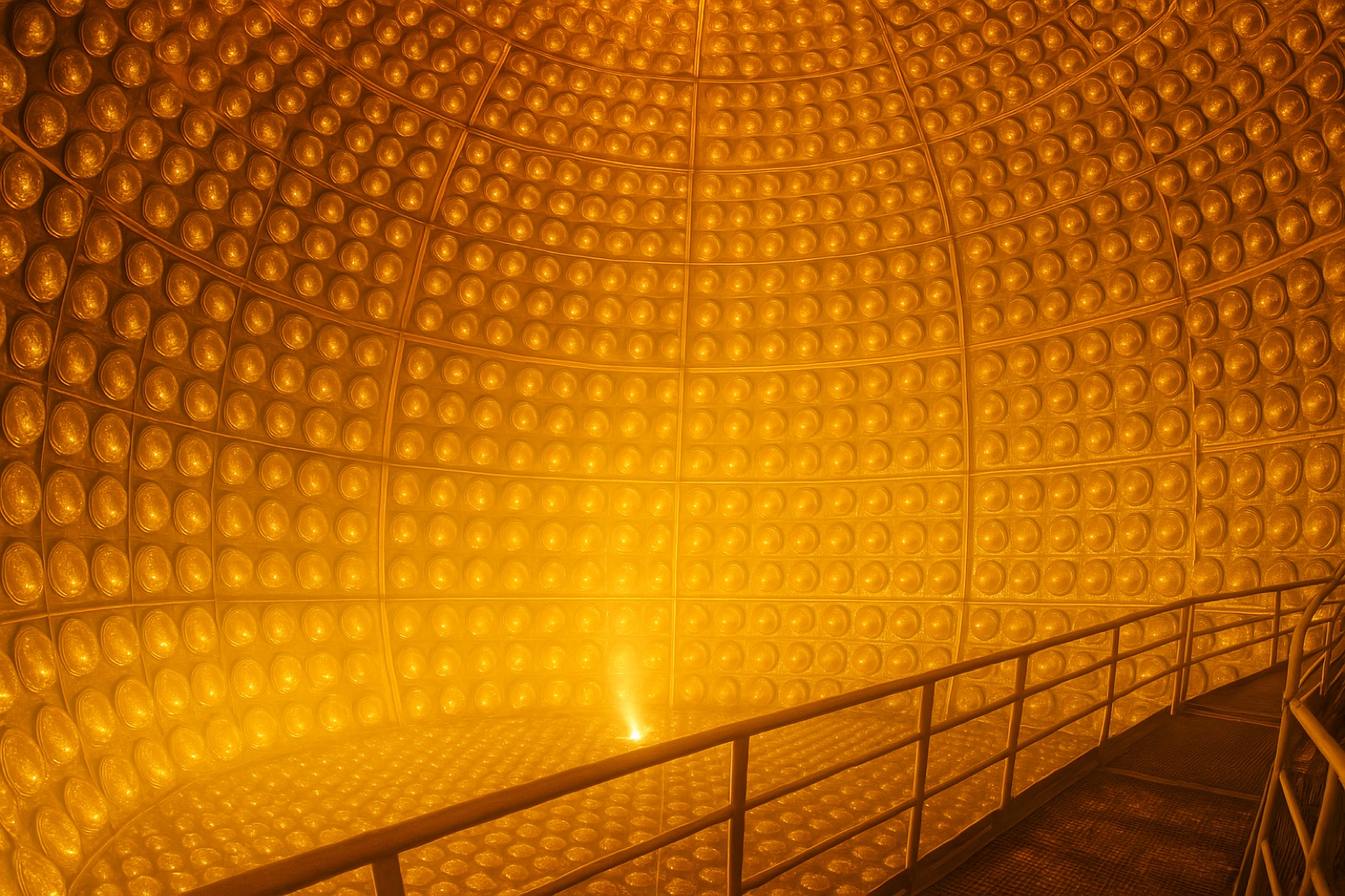
The discovery comes from the Double Chooz collaboration, an international team of physicists who monitor a nuclear power plant in France using massive underground detectors built to catch nearly invisible particles called antineutrinos. Their findings were published in Physical Review Letters in early August 2026, and they mark the first direct measurement of its kind ever recorded.
Here’s the short version of the physics. While a reactor is running, the nuclear fuel inside it is splitting apart in a controlled chain reaction, and that process throws off huge numbers of antineutrinos — ghostly particles that pass through solid matter almost like it isn’t there. Detectors like Double Chooz’s can pick up a tiny fraction of them and use that signal to monitor exactly what’s happening inside the reactor core, without ever opening it up.
The surprise came after shutdown. Even with the chain reaction stopped and the visible operation completely finished, the spent fuel sitting in the reactor kept producing antineutrinos — at around 1% of the levels seen during full operation — for weeks afterward. The detectors could still see it. A signal that, by every outward measure, shouldn’t have still been there, was still there.
Why This Matters Outside the Lab
This isn’t just a curiosity for physicists. The ability to detect a reactor’s antineutrino “afterglow” has real, practical stakes in nuclear safeguards — the science of verifying that countries and facilities are doing what they say they’re doing with nuclear material. A reactor that claims to be shut down but is secretly still processing fuel would, in theory, leave a detectable trace. This measurement is a step toward tools that could confirm a shutdown really is a shutdown, from a distance, without anyone needing to walk inside and check.
It’s the kind of research that usually never makes it past a physics journal. But there’s something almost irresistible about the image itself: a machine, powered all the way down, sitting silent and finished-looking — and still, if you know exactly where and how to listen, it’s saying something.
It’s not the first time science has caught something like this. A 12-year-old in Texas made headlines for building a working nuclear fusion reactor in his home, and the same principle showed up there too — a small, quiet process producing something real and measurable that most people would never think to check for. The instruments have to be built specifically to notice. Everyone else just sees a machine that looks off.
The Part That’s Easy to Miss
What makes the Double Chooz result land differently than most physics news is the timescale. This isn’t a signal that fades in seconds, the way an afterglow on a lightbulb filament does. It’s weeks. Months. The reactor has been fully shut down, disconnected, done — and it’s still, quietly, doing something. Not much. Not visibly. But something real enough that a detector built specifically to listen for it can find it.
There’s an old idea, much older than nuclear physics, that this same shape shows up in: that a life doesn’t necessarily end the moment the visible activity stops. That something can go quiet on the outside — retirement, an ordinary life nobody was watching, a season that looks finished — and still be producing something real, still reaching someone, still worth paying attention to, if you know how to look. Ancient wisdom has always insisted that presence and impact don’t require noise. Sometimes the truest measure of a life isn’t what it looked like while it was loud, but what’s still faintly, genuinely there after everything visible has gone still.
It’s a strange kind of comfort, borrowed from a physics lab: the absence of visible activity was never proof of absence. Something can still be real, still be sending a signal, long after it stopped looking like it.
We’ve written before about this same shape showing up elsewhere — in Nikola Tesla’s legacy, and in the way a voice can keep speaking long after the person who spoke it is gone. It seems to be everywhere once you start noticing it.
What This Means for the Quiet Seasons in Your Own Life
Maybe that’s worth sitting with the next time a season of your own life looks shut down from the outside — a job that ended, a chapter that closed, a version of yourself that isn’t visibly “running” anymore. The instruments other people are using to measure you might not be sensitive enough to catch what’s still there. That doesn’t mean nothing is.
What Do You Think?
If a shut-down reactor can still be doing something real weeks later, purely invisible to the naked eye — where else in life do you think we mistake “quiet” for “over”? Drop your take in the comments.
Share This
- “A nuclear reactor was fully shut down — and scientists just proved it was still ‘speaking’ weeks later. Wild story: https://bgodinspired.com/index.php/bible-resources/bible-and-science/nuclear-reactor-ghostly-afterglow/”
- “They shut the reactor off completely. It kept sending a real signal for weeks anyway. Physics just described something I think is true about people too. https://bgodinspired.com/index.php/bible-resources/bible-and-science/nuclear-reactor-ghostly-afterglow/”
- “Turns out ‘quiet’ and ‘over’ aren’t the same thing — even a nuclear reactor knows that. https://bgodinspired.com/index.php/bible-resources/bible-and-science/nuclear-reactor-ghostly-afterglow/”
Quick Questions, Answered
What is a nuclear reactor’s “afterglow”?
It’s the term physicists are using for the faint but real antineutrino signal a shut-down nuclear reactor keeps producing for weeks to months after operation stops, caused by the spent fuel still inside it. It was directly measured for the first time by the Double Chooz collaboration and published in Physical Review Letters in August 2026.
How long does a shut-down reactor keep emitting a detectable signal?
The Double Chooz measurement found a detectable antineutrino signal, at roughly 1% of the reactor’s full operating strength, persisting for weeks after shutdown, with the potential to be measurable even longer depending on the fuel and detector sensitivity.
Why do scientists care about detecting this signal?
Beyond the physics itself, it has real applications in nuclear safeguards — the ability to verify from a distance, using antineutrino detectors, that a reactor claimed to be shut down actually is, without needing physical inspection access.
Is this the same thing as radioactive contamination or a leak?
No. The antineutrino signal is a normal, expected physical byproduct of the fuel still present in a shut-down reactor — not a leak, malfunction, or safety hazard. Antineutrinos pass through virtually all matter, including people and buildings, without interacting.
Who discovered this and where was it published?
The Double Chooz collaboration, an international physics team monitoring a nuclear plant in France, published the first direct measurement of this residual antineutrino emission in Physical Review Letters in early August 2026, with coverage from ScienceDaily, Phys.org, and SciTechDaily.