 0
0
 0
0
You’re lying in bed, or sitting in your car in a parking lot, or standing at the sink with your hands still wet, and you start to pray. Then, mid-sentence, a thought interrupts you: does this even count? You’re not sure what you believe. Not fully. Not the way the people at church seem to. So you stop, or you keep going but quieter, like you’re apologizing for taking up space in a conversation you’re not sure you’re invited to.
If that’s ever been you — genuinely reaching toward God while still sorting out whether you actually believe in Him — you’re not alone, and you’re not doing it wrong. There’s a man in the book of Acts who prayed for years from that exact in-between place. God didn’t wait for him to get his theology settled before He started listening.
A Roman Soldier Who Hadn’t Made Up His Mind
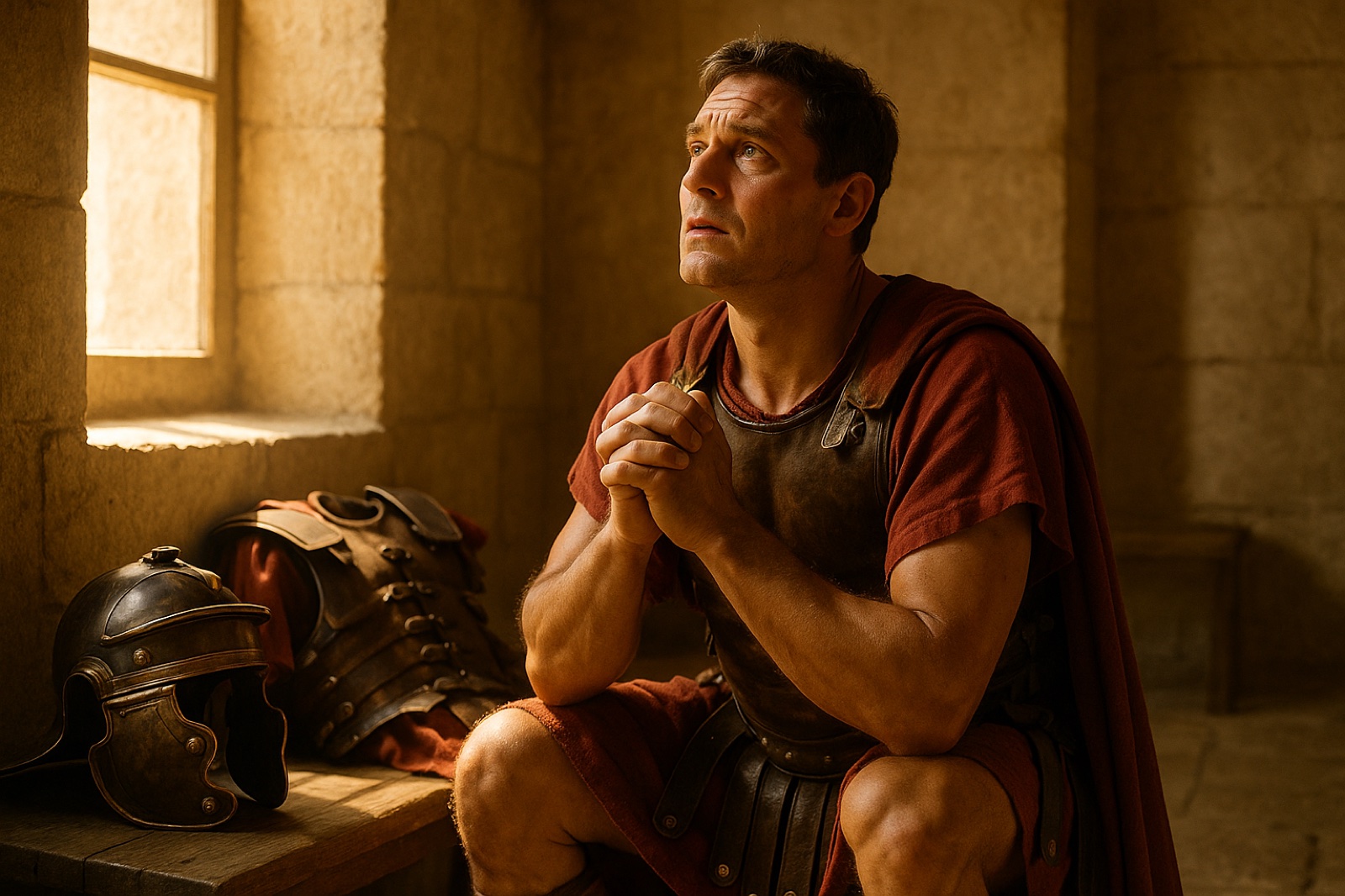
His name was Cornelius, and Acts 10 opens with him already praying — long before anyone had explained who Jesus was to him. “There was a certain man in Caesarea called Cornelius, a centurion of the band called the Italian band, a devout man, and one that feared God with all his house, which gave much alms to the people, and prayed to God alway” (Acts 10:1-2).
Caesarea was a Roman military and government hub on the Mediterranean coast — not exactly friendly territory for someone drawn to the God of Israel. Cornelius commanded a hundred soldiers. He wasn’t a spiritual seeker in the modern sense; he was a career military officer in an occupying army, and yet something in him kept reaching toward the God worshiped by the people his empire had conquered.
Historians call people like Cornelius “God-fearers” — Gentiles who prayed to the God of Israel, gave generously, and lived by His moral standards, but who hadn’t gone through the formal steps that would make them full converts to Judaism. He was devout, but still standing outside. Drawn in, but not officially “in.” He hadn’t decided — not because he didn’t care, but because he was still in the middle of figuring it out, praying his way toward an answer he didn’t have yet.
What Happened While He Was Still Figuring It Out
Acts 10:3-4 says: “He saw in a vision evidently about the ninth hour of the day an angel of God coming in to him, and saying unto him, Cornelius. And when he looked on him, he was afraid, and said, What is it, Lord? And he said unto him, Thy prayers and thine alms are come up for a memorial before God.”
Notice the timing. The ninth hour — roughly 3 in the afternoon — was one of the set hours of prayer observant Jews kept in that era. Cornelius, a Gentile with no formal standing in that faith, was praying on that same rhythm anyway. Nobody required it of him. He just kept showing up to it.
And notice the word the angel uses: memorial. That’s not casual language. In the Old Testament, the “memorial portion” was the part of a grain offering that went up on the altar and was received by God as genuine, accepted worship (Leviticus 2:2). The angel is telling Cornelius, in the vocabulary of temple sacrifice, that his ordinary, unfinished, not-yet-Christian prayers had already reached God and been received as real.
This happens in verse 4. Peter doesn’t arrive to explain the gospel to Cornelius until later in the chapter. The Holy Spirit doesn’t fall on Cornelius’s household until the very end (Acts 10:44-48). The order matters: God responded to Cornelius’s prayers before Cornelius had a clear, correct, complete understanding of who he was praying to. His faith wasn’t settled. His prayers were still heard.
The Turn: You Don’t Need a Finished Theology to Be Heard
A few verses later, once Peter finally meets Cornelius face to face, Peter says something that reframes the whole story: “Of a truth I perceive that God is no respecter of persons: But in every nation he that feareth him, and worketh righteousness, is accepted with him” (Acts 10:34-35).
Read that closely. Peter doesn’t say God accepts people who have their doctrine correct. He says God accepts the one who fears Him and lives it out — an honest posture, not a finished exam. That’s what Cornelius had. Not certainty. Not a tidy testimony. Just an honest reaching toward God, prayed out loud, day after day, without waiting for permission he didn’t think he had.
If you’ve been quietly assuming your own prayers need an asterisk — this doesn’t really count, I’m still not sure I believe — Cornelius says otherwise. The bar was never “have this fully figured out.” It was always something closer to: are you actually turning toward Him, however unfinished that turn still is.
What This Looks Like Today
You don’t have to pretend to a certainty you don’t feel. You don’t have to wait until doubt is gone to start talking to God — Cornelius never got that luxury either, and God met him exactly where he was. The same God who noticed a Roman centurion’s honest, uncertain devotion is still in the business of hearing prayers that come with more questions than answers. If you’ve ever wondered whether God had simply gone quiet on you altogether, it’s worth reading what the Bible actually says about the moments He doesn’t answer — silence and unbelief aren’t the same thing, and neither one disqualifies you.
Cornelius isn’t the only outsider in the Gospels who reached for God without full standing to do so. A Gentile mother did the same thing when she begged Jesus to heal her daughter, refusing to be waved off — you can read her story here. So did a woman who had no right, by the customs of her day, to even touch Jesus in public — and He stopped for her anyway, a story worth reading in full at Woman With the Issue of Blood. God has a consistent habit of responding to people before they had any right to expect it.
Actions to Take Today
- Pray one honest sentence, out loud, without the caveat. Instead of silently thinking “I don’t even know if this counts,” say the doubt to God as part of the prayer itself: “God, I don’t know if I fully believe yet, but I’m talking to You anyway.” That’s not a weaker prayer than a confident one — it’s the Cornelius pattern.
- Name one specific thing, not a vague one. Cornelius’s prayers weren’t generic — they were specific enough to be described as alms and devotion God could point to. Open your phone’s notes app right now and write down one specific need or one specific thing you’re grateful for. Specific is what makes a prayer real.
- Tell one person. Say to someone you trust, “I’ve been praying even though I’m still figuring out what I believe.” This is the hardest of the three because it breaks the private shame around it — but Cornelius’s whole household was drawn into what God was doing with him. You don’t have to keep this compartment sealed off from the people who love you.
God, I don’t fully know what I believe yet. Some days I’m not even sure You’re listening. But I’m here anyway, saying this out loud instead of just thinking it. If Cornelius’s prayers reached You before he had any of this sorted out, I’m asking mine do too. Meet me here, in the middle of not knowing.
A Question Worth Sitting With
Do you think a prayer only “counts” once someone has their beliefs fully sorted out — or does Cornelius’s story suggest something different? Tell us what you think in the comments below.
Share This
- I used to think my prayers didn’t count because my faith wasn’t “settled” yet. Then I found the story of a Roman soldier God heard before he even understood who Jesus was. Maybe mine count too.
- Turns out you don’t need a finished theology to be heard by God. Acts 10 wrecked me a little today.
- “Thy prayers and thine alms are come up for a memorial before God.” He said that to a man who hadn’t figured anything out yet. Read that again.
Questions People Ask
Who was Cornelius in the Bible?
Cornelius was a Roman centurion stationed in Caesarea, commanding around a hundred soldiers in a unit called the Italian Cohort. Acts 10 describes him as “a devout man, and one that feared God with all his house, which gave much alms to the people, and prayed to God alway” (Acts 10:2) — meaning he worshiped the God of Israel and lived generously, even though he had not converted to Judaism and did not yet know Jesus.
What does “prayers and alms as a memorial before God” mean?
In Acts 10:4, an angel tells Cornelius that his “prayers and thine alms are come up for a memorial before God.” The word “memorial” echoes Old Testament sacrificial language for the portion of an offering that ascended to God and was received by Him. It means God had genuinely accepted Cornelius’s prayers, even though Cornelius hadn’t yet heard the gospel or made any decision about Jesus.
Does God hear the prayers of someone who isn’t a believer yet?
Acts 10 strongly suggests yes. Cornelius prayed for an unknown length of time as a “God-fearer” — someone drawn to God but not yet fully committed or instructed — and God heard him, sent an angel to him, and set in motion the events that led him to full faith in Jesus. His prayers reached God before his belief was fully formed.
What is a “God-fearer” in the Bible?
A God-fearer was a Gentile in the first century who worshiped the God of Israel, prayed, and gave generously, but had not gone through the formal conversion process required to become a full proselyte to Judaism. Cornelius fit this description exactly — respected for his devotion, but still standing outside full covenant membership when Acts 10 begins.
What can Cornelius’s story teach someone who feels like their faith isn’t strong enough to pray?
It teaches that prayer was never meant to wait for certainty. Cornelius didn’t have a finished theology — he had honest devotion. God met him in that in-between place and used it to lead him to full faith. The same pattern holds today: an honest, unfinished prayer is still a real prayer.