 0
0
 0
0
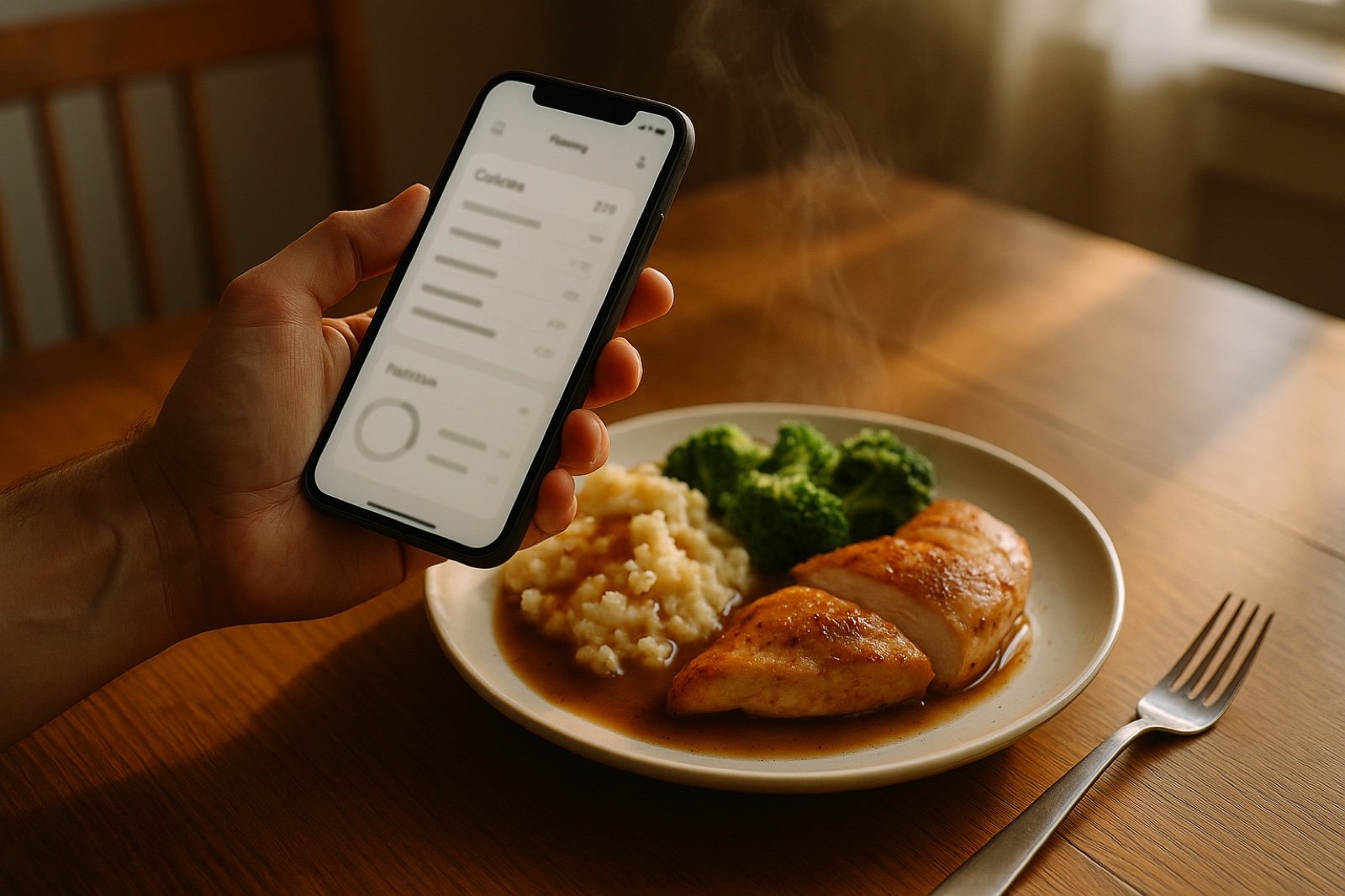
You take a photo of your lunch. The app chews on it for two seconds and hands you a number: 612 calories. You log it, close the app, and move on with your day. The math feels settled.
It probably wasn’t.
A study presented this week at NUTRITION 2026, the flagship annual meeting of the American Society for Nutrition, put four of the most popular photo-based calorie apps through a real test — and the results should change how you think about that number on your screen.
The Experiment That Put Calorie Apps to the Test
Researchers at the National Institute of Diabetes and Digestive and Kidney Diseases (NIDDK) gathered standardized photos of 102 meals that had been prepared for an actual clinical diet study. That detail matters: these weren’t random plates snapped in someone’s kitchen. They came from a metabolic kitchen, a type of research facility where every ingredient is weighed down to the tenth of a gram before it ever reaches a plate. Researchers already knew, to a near-perfect degree, exactly what was in each meal.
Then they ran the same photos through four apps millions of people already use every day — MyFitnessPal, LoseIt!, CalAI, and Appediet — and compared the apps’ guesses to the known, lab-verified truth.
The apps missed. Consistently. On average, they underestimated the calorie content of a meal by 250 to 345 calories, and underestimated the fat content by about 30 grams. Carbohydrate estimates came out more accurate than the rest, but the overall pattern was clear: the number in the app was not the number on the plate.
Why the Apps Keep Getting It Wrong
It isn’t that these apps are badly built. Photo-based estimation is genuinely difficult — a single image can’t show how much oil pooled at the bottom of a stir-fry, how dense a slice of bread really is, or how a sauce was layered under a piece of chicken instead of on top of it, where the camera could actually see it. The apps are guessing from the outside of a meal, and a meal’s real weight is mostly on the inside.
That’s a genuinely useful thing to know if you’ve ever felt like a number on a screen was somehow more trustworthy than your own body. If you’ve been quietly frustrated that your weight isn’t moving the way the app’s math says it should, this study is a small piece of evidence that the math itself may be the part that’s off — not your effort, and not your body.
What This Actually Means If You’re Trying to Manage Your Weight
None of this means calorie tracking is useless. It means treating the number as a rough estimate rather than a verdict. A few practical takeaways researchers and dietitians point to:
- Use the app’s number as a general direction, not an exact accounting — a gap of a few hundred calories a day, repeated over weeks, is where these apps tend to drift the most.
- Pay closer attention to fat estimates specifically, since that’s where the apps were furthest off in this study.
- If a number in the app feels wrong compared to how a meal actually looked or felt going down, trust that instinct — it’s often closer to correct than the algorithm.
- Weighing food occasionally, even for a week, tends to recalibrate your eye far more effectively than staring at an app total ever will.
It’s a reminder that even in 2026, with genuinely impressive AI behind these tools, a plate of food still resists being fully translated into a spreadsheet.
The Hunger a Number Was Never Going to Solve
Here’s what’s easy to miss in a story about calorie math: the reason so many of us reach for these apps in the first place isn’t really about the number. It’s about wanting to feel like eating is finally under control — measured, accounted for, safe. And when the number turns out to be wrong, the anxiety underneath it doesn’t go away. It usually just looks for a new number to attach to.
This isn’t the first time a number has quietly failed to deliver the peace it promised. Money dysmorphia describes something almost identical — people who feel broke no matter what their bank balance actually says, because the feeling was never really about the number on the statement either.
Long before food apps or bank apps existed, people were already discovering that some hungers don’t resolve by getting more precise about the counting. Some research on why certain foods never quite satisfy found the same pattern from a different angle — that the emptiness people describe after eating “enough” often isn’t a measurement problem at all.
Meals have carried more than nutrients for about as long as there have been people to share them. Ancient wisdom treated a meal as something closer to an event than an equation — a place where people were forgiven, welcomed, noticed, or simply not alone for an hour. It’s almost as if whoever designed us built the table to hold more than food from the very beginning — like God knew a body could be fed and a person could still be starving. None of that shows up in a calorie count, and none of it was ever supposed to. If you’ve been eating good food alone at a desk while an app tallies the damage, the thing you’re actually missing might not be on the label at all — it might be who isn’t sitting across from you. That’s worth naming honestly, the same way the exhaustion behind avoiding people is worth naming honestly instead of just pushing through it.
Eating Without the Anxiety of Getting It Exact
None of this is an argument to stop paying attention to what you eat. It’s permission to stop treating a phone’s best guess as a moral report card. The study out of NUTRITION 2026 is, in its own quiet way, good news: the gap you’ve felt between the app’s number and your own experience was probably real. Trust the plate a little more than the pixel. And maybe, every now and then, let a meal be what it’s always actually been — less a transaction to balance, and more a table to sit down at.
Discussion Question
Do you think people would eat differently — calmer, less anxious about the number — if calorie apps came with a visible margin of error attached? Tell us what you think in the comments.
Share This
- “Turns out my calorie app has been lying to me by up to 345 calories a meal. I feel so validated right now.” 🍽️
- Your calorie-counting app might be off by 345 calories per meal, according to a real NIDDK study using lab-measured food. The gap isn’t your fault — and it might not even be about the math.
- Wild that in 2026, with all this AI, a photo still can’t tell you what’s actually on your plate. Wonder what else we’re trying to measure that was never meant to be measured that precisely.
Common Questions
How accurate are AI calorie-counting apps like MyFitnessPal or CalAI?
A 2026 study presented at NUTRITION 2026 found that four popular photo-based calorie apps — MyFitnessPal, LoseIt!, CalAI, and Appediet — underestimated the calorie content of meals by an average of 250 to 345 calories when compared to lab-measured, standardized meals. Fat content was also underestimated by roughly 30 grams on average, while carbohydrate estimates were closer to accurate.
Why do calorie-tracking apps underestimate food?
Photo-based apps estimate calories from a single image, which makes it hard to account for hidden ingredients like cooking oil, sauces layered underneath food, or the true density and portion size of a dish. Because much of a meal’s actual calorie and fat content isn’t visible from the outside, apps tend to guess low.
Should I stop using a calorie-tracking app if it’s inaccurate?
Not necessarily. Researchers suggest treating the app’s number as a general estimate rather than an exact count, paying closer attention to fat estimates specifically, and occasionally weighing food to recalibrate your sense of portion sizes.
What study found that calorie apps are inaccurate?
The findings were presented by Olivia Charles, a postbaccalaureate research fellow at the National Institute of Diabetes and Digestive and Kidney Diseases (NIDDK), at NUTRITION 2026, the American Society for Nutrition’s annual meeting held July 25-28, 2026, in National Harbor, Maryland.
Is there more to a meal than the calorie count?
Yes — beyond nutrients, meals have historically served a relational purpose: connection, gratitude, and belonging that a calorie count was never designed to capture. Many people who feel unsatisfied after eating “enough” describe a hunger that isn’t strictly physical.