 0
0
 0
0
For decades, the sun had a silver problem. Every time astronomers measured how much silver our star actually contains, the number came back too low — noticeably lower than the silver content found in some of the oldest, most untouched rocks in the solar system. That mismatch sat there, unresolved, for years. Not a huge discrepancy. Just a stubborn one, the kind that nags at people who study stars for a living.
This month, a team of researchers may have finally closed the gap. And the fix wasn’t a new telescope, a new probe, or a new sample. It was a better way of reading light that had been reaching Earth the entire time.
The Case of the Sun’s Missing Silver
Here’s the puzzle astronomers have been sitting with. The leading model of how our solar system formed says the sun and everything orbiting it — planets, asteroids, meteorites — condensed out of the same enormous cloud of gas and dust, roughly 4.6 billion years ago. If that’s true, the elements inside the sun and the elements inside the oldest, most chemically primitive meteorites should roughly match. They’re supposed to be siblings from the same materials.
For most elements, they do match, remarkably well. Silver was one of the exceptions. Meteorite samples consistently showed more silver than solar spectroscopy — the method of splitting sunlight into its component wavelengths to identify which elements are present — could ever account for in the sun itself. Either the formation model had a blind spot, or something about the way silver was being measured in the sun was off.
A Better Way to Read the Sun’s Light
Researchers at Uppsala University, publishing this month in the journal Astronomy & Astrophysics, went after the second possibility. Older estimates of the sun’s silver content leaned on simplified, one-dimensional models of the sun’s outer layers — models that treat the solar atmosphere as a tidy, uniform shell, and that assume atoms behave in a state of neutral equilibrium as they absorb and release light.
The sun’s atmosphere is not tidy. It churns, convects, and varies from spot to spot, and silver atoms don’t sit around in equilibrium waiting to be measured politely. So the team built a dynamic, three-dimensional model of the sun’s outer layers and paired it with non-equilibrium atomic physics calculations — a far more realistic picture of what’s actually happening to a silver atom in real solar plasma at the moment it’s interacting with light.
Run the numbers through that more accurate model, and the sun’s silver abundance jumps by 55% over the old estimate. That single correction brings the solar value into close agreement with what’s measured in those ancient meteorites. The “missing” silver wasn’t missing at all. It had been there in the sun the entire time. The instrument reading it just wasn’t precise enough to see it.
Nothing About the Sun Changed. The Sun Was Always Like This.
That’s the detail worth sitting with for a second. This discovery didn’t add silver to the sun. The sun has held exactly this much silver since it formed, long before anyone existed to wonder about it, and it will keep holding that much silver whether or not another paper ever gets written about it. What changed this month is that humans finally built a tool sharp enough to measure what was already true.
It’s a pattern that shows up again and again in science lately — real, physical properties sitting undetected for the entire span of human history simply because no one had built the right instrument yet. The universe keeps turning out to be more precisely, more consistently itself than our best tools have been able to confirm, one correction at a time.
What Fire Actually Reveals
Silver has always occupied a strange place in human history, long before anyone could measure it in a star. Across cultures and centuries, it became the material people reached for when they needed to describe what real testing does to something valuable. A silversmith doesn’t guess when silver is pure. He heats it, skims off what rises to the surface as waste, and watches — because the metal only shows what it actually is once it’s under enough heat to stop hiding anything.
Ancient wisdom leaned on that image constantly, long before anyone had the physics to explain why it works. Pressure and heat were never framed as random misfortune in that older way of thinking — they were framed as the process that finally shows what was true about a person or a thing all along, the impurities burning off until what’s left can hold its own reflection. It’s not a comforting idea because it makes hard seasons painless. It’s a comforting idea because it suggests the hard season isn’t pointless. Something real is being revealed, not randomly inflicted.
That’s an old picture people have turned to for a long time when trying to make sense of a season of pressure — the idea that testing isn’t the opposite of being valued, it’s often the process that proves it. There’s a reason the metaphor never needed updating even as the science around it did. And there’s a reason the word people have historically reached for, in their hardest moments, has more to do with being crushed before something is released than it does with being simply, senselessly broken.
The Same Star, Read More Clearly
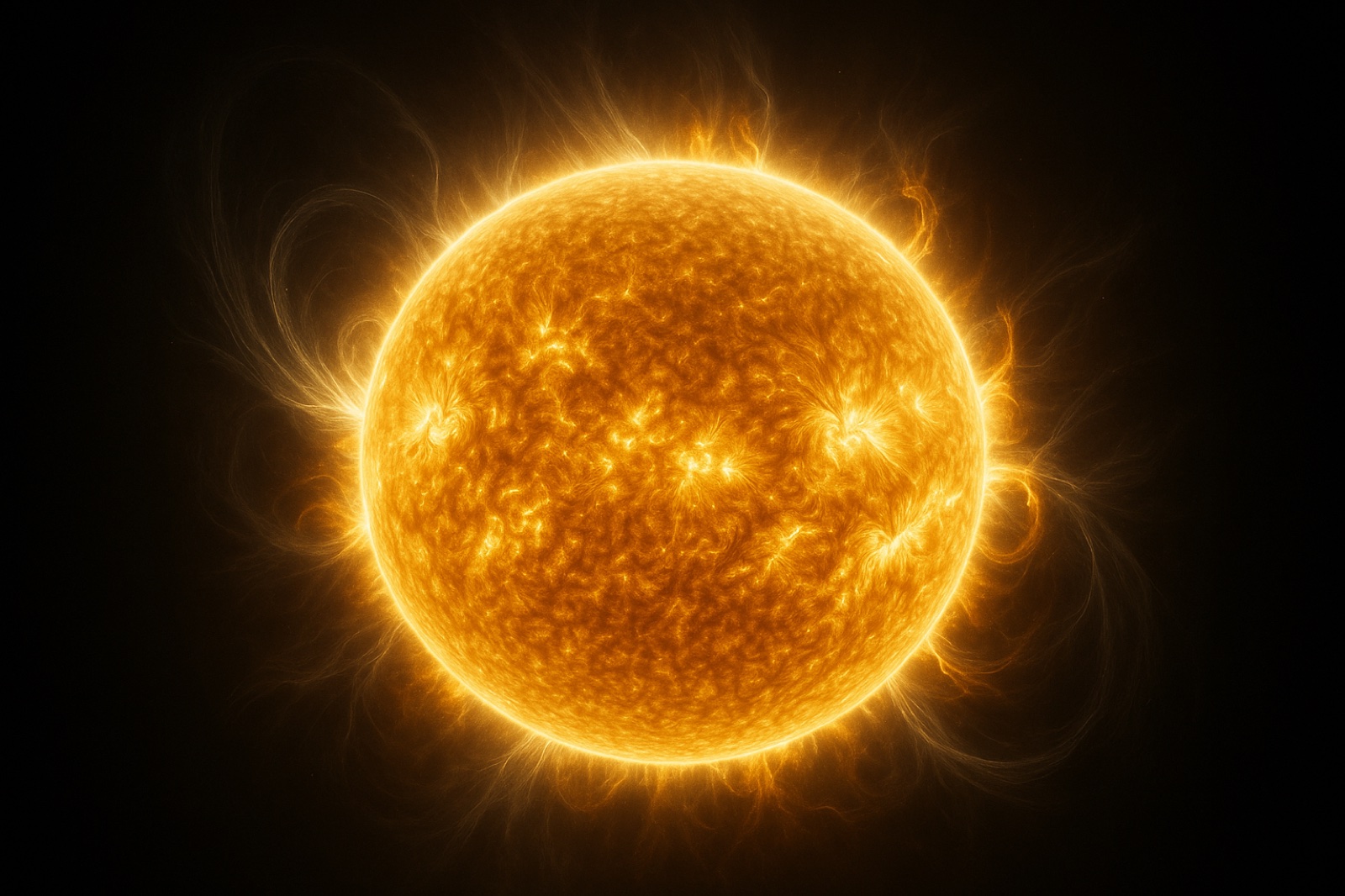
Nothing about the sun is different tonight than it was last month. It’s still 93 million miles away, still fusing hydrogen into helium at its core, still carrying exactly the amount of silver it has carried since before the Earth existed. The only thing that changed is how clearly we’re able to see what was already there.
Maybe that’s worth carrying into whatever pressure you’re sitting under right now, too — the possibility that what feels like a flame doing damage might actually be the thing finally letting something true come into view.
Discussion Question
If something as vast and well-studied as the sun could hold a 55% measurement error for decades simply because we didn’t have a precise enough way to look — what’s something in your own life you suspect you haven’t measured accurately yet, simply because you haven’t looked closely enough? What’s your take?
Share This
- The sun had 55% more silver than we thought this entire time. We just didn’t have a tool sharp enough to measure it correctly until now. Wild what’s hiding in plain sight.
- Scientists just solved “the case of the sun’s missing silver” — and it turns out nothing about the sun was ever missing anything. Our instruments just weren’t precise enough yet.
- New research: the sun holds 55% more silver than every previous estimate. Same star. Same silver. Just a much better way of reading the light.
Questions and Answers
Q: How much more silver does the sun actually contain than previously thought?
A: Researchers at Uppsala University calculated that the sun holds 55% more silver than earlier estimates, publishing their findings this month in the journal Astronomy & Astrophysics. The new figure brings the sun’s silver content into close agreement with silver measured in ancient, chemically primitive meteorites.
Q: Why did older measurements underestimate the sun’s silver content?
A: Earlier estimates relied on simplified, one-dimensional models of the sun’s atmosphere that assumed atoms exist in a neutral equilibrium state. The sun’s atmosphere actually churns and varies constantly, so the new research used a dynamic three-dimensional model combined with non-equilibrium atomic physics calculations to get a far more realistic reading.
Q: What is the “missing silver” problem in astronomy?
A: For decades, the silver measured in the sun didn’t match the silver found in primitive meteorites, even though both are believed to have formed from the same original cloud of gas and dust roughly 4.6 billion years ago. Since most other elements matched closely between the two, silver’s mismatch stood out as an unsolved puzzle.
Q: Did the sun’s actual silver content change?
A: No. The sun has contained this amount of silver since it formed. What changed is the accuracy of the measurement — researchers built a more precise model of the sun’s outer layers, which revealed silver that was there all along but wasn’t being detected correctly by older methods.
Q: What does silver symbolize in ancient wisdom traditions?
A: Across many cultures and centuries, silver became a common image for what real testing or pressure reveals in something valuable — the idea that heat and difficulty don’t create worth from nothing, but expose and refine a worth that was already present, burning away what doesn’t belong.