 0
0
 0
0
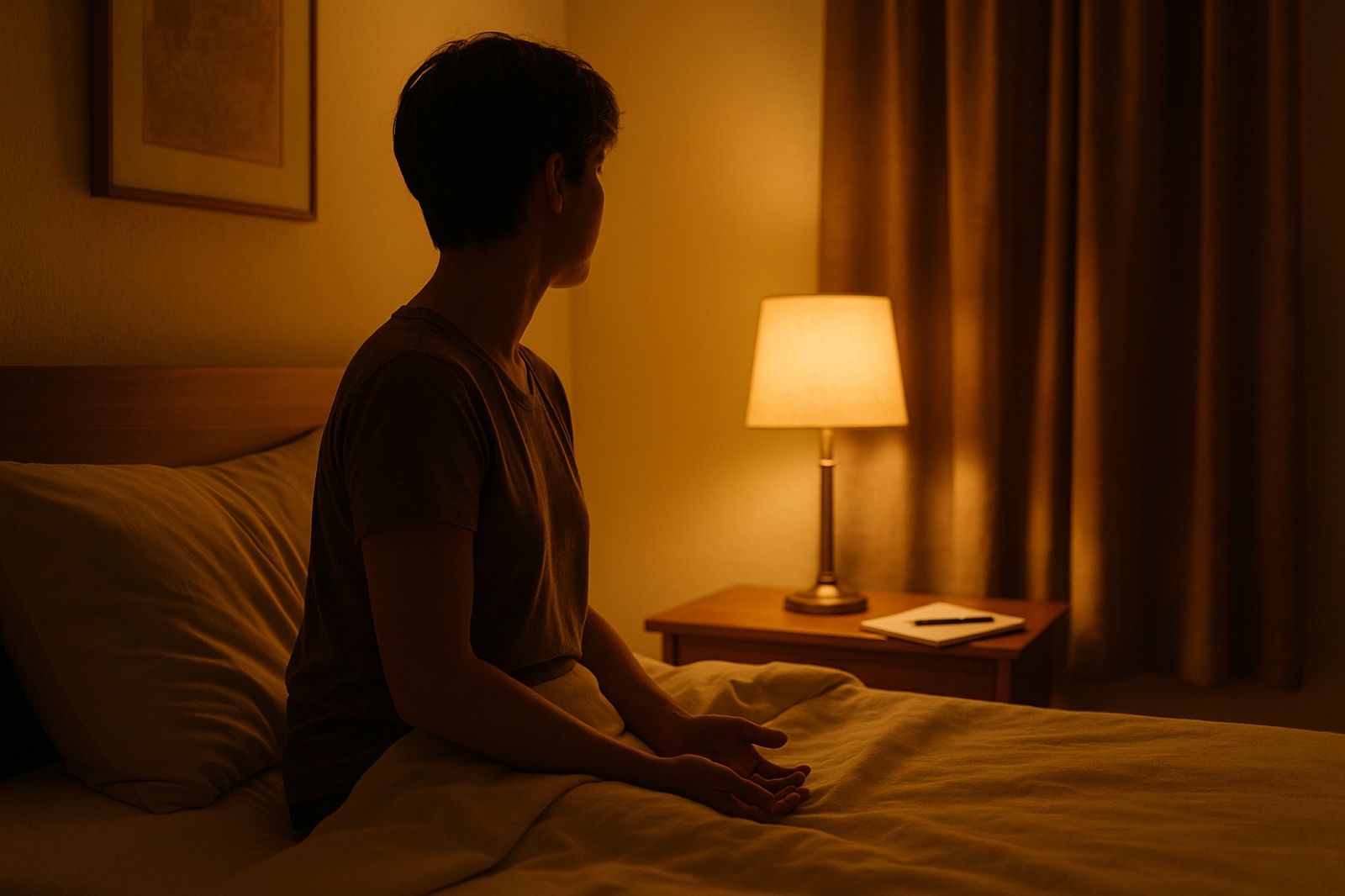
It’s 11:47pm and your body has already decided the day is over — you’re lying still, breathing slow, doing everything right. Your mind didn’t get the memo. It’s running through tomorrow’s meeting, that text you haven’t answered, a worry that makes no sense at this hour. Someone told you to “just pray about it.” You did. The thoughts kept coming anyway.
That gap — between what you were told faith should feel like, and what it actually feels like at midnight — is exactly where the Bible verses about anxiety worth knowing actually meet you. Not with a switch to flip. With something quieter, and stranger, than that.
Bible Verses About Anxiety Worth Knowing
Scripture doesn’t pretend anxious thoughts are rare or shameful. It names them directly, more than once, in language written by people who were genuinely afraid.
Paul writes it plainly in Philippians 4:6-7: “Be careful for nothing; but in every thing by prayer and supplication with thanksgiving let your requests be made known unto God. And the peace of God, which passeth all understanding, shall keep your hearts and minds through Christ Jesus.” He wrote that from prison — not from a place of ease telling other people to relax.
Peter’s version is shorter and just as direct: “Casting all your care upon him; for he careth for you” (1 Peter 5:7). And Jesus himself, mid-sermon, tells a crowd of people worried about food and clothing: “Take therefore no thought for the morrow: for the morrow shall take thought for the things of itself. Sufficient unto the day is the evil thereof” (Matthew 6:34).
Each of these gets quoted often — for good reason. But there’s a fourth verse, tucked into a psalm nobody memorizes, that describes the actual mechanics of an anxious mind more precisely than any of them. It’s the one most people skip.
The Verse Most People Skip
Psalm 94 isn’t a peaceful psalm. It opens with someone crying out for God to rise up against injustice — corrupt leaders, people who “slay the widow and the stranger,” a world that isn’t working the way it should. The writer is angry and afraid at the same time, and nineteen verses in, right in the middle of that unresolved tension, he says this:
“In the multitude of my thoughts within me thy comforts delight my soul.” (Psalm 94:19)
Read that again slowly. He doesn’t say the multitude of thoughts went away. He doesn’t say comfort arrived once his mind finally quieted down. He says the comfort met him inside the multitude — while the thoughts were still multiplying, still circling, still there. That’s the reframe most people miss when they read “verses about anxiety” looking for an off-switch: the Bible doesn’t promise the racing thoughts will stop before you’re allowed to feel comforted. It describes comfort finding you in the middle of them.
That’s not a small distinction if you’ve spent years waiting for the noise to end as a precondition for peace. It relocates where you’re allowed to look for God — not after the multitude, but in it, the same way peace at night doesn’t require the mind to fully settle first.
What This Looks Like Tonight
Here’s where it gets practical, because knowing the verse and living inside it are two different things.
The next time your mind starts circling, don’t try to silence the multitude. Name it instead. Grab your phone or a scrap of paper and write down every specific thought currently running — not fixed, not resolved, just listed. “Will I still have a job in six months.” “That thing I said.” “The test results.” Get the actual multitude out of your head and onto a page where you can see it.
Then pick one item from that list — just one — and say Psalm 94:19 out loud over it by name: “In the multitude of my thoughts about [that specific thing], let your comfort delight my soul.” Not the whole cloud at once. One named thought, met specifically. This is closer to how Bible verses about overthinking actually work in practice — not by stopping the loop, but by interrupting it with something specific enough to hold onto.
Three Things to Try This Week
- Tonight: Write out your own “multitude” as a plain list before bed — no editing, no fixing, just naming what’s actually circling.
- Pick one: Choose the single item on that list you have zero control over right now, and pray Psalm 94:19 over it by name, out loud if you can.
- This week: Set one recurring reminder for your usual anxious hour — commute, bedtime, whatever it is — that just says “name the multitude.” A prompt to externalize the thought instead of just circling it silently.
If tonight’s list feels bigger than you know what to do with, that’s not a sign you’re doing this wrong — it’s the same weight described in this look at Luke 1:37, when what’s standing in front of you is genuinely bigger than your own capacity to fix it tonight.
Go Deeper
- Where in your life have you been waiting for the noise to fully stop before you expected to feel God’s comfort — and what would change tonight if comfort could meet you inside the noise instead?
- What does your own “multitude of thoughts” actually sound like on your worst nights — the real sentences, not the tidy version?
- Which item on tonight’s list are you most reluctant to say out loud, even to God — and what do you think that reluctance is protecting?
A Prayer for the Multitude
God, my mind won’t stop tonight, and I’m tired of pretending it will if I just try harder to trust you. I’m not asking you to make the thoughts disappear — I’m asking you to meet me inside them, the way you met the psalmist in his. Here’s what’s actually circling right now, the real list, not the version I’d say out loud in church. Let your comfort find me here, in the middle of it, not on the other side of it. Amen.
Here’s a question worth sitting with: do you think God expects your mind to be quiet before He shows up — or is Psalm 94:19 suggesting He was never waiting for that in the first place? There’s no one right answer here, but it’s worth deciding for yourself before your head hits the pillow tonight.
Share This
- “I always thought I had to quiet my mind before God could comfort me. Psalm 94:19 says He meets you in the multitude, not after it.”
- “Not every Bible verse about anxiety is an off-switch. Some of them just tell you where to look while the noise is still there.”
- “Tonight’s plan: name the multitude instead of fighting it. Psalm 94:19.”
Common Questions
What is the best Bible verse for anxiety?
There isn’t one single “best” verse, but Philippians 4:6-7, 1 Peter 5:7, and Psalm 94:19 each address anxiety from a different angle — surrender in prayer, casting care onto God, and finding comfort inside racing thoughts rather than after they stop.
Does the Bible say anxiety is a sin?
No. Scripture repeatedly meets people in real fear and worry — including psalmists, prophets, and Jesus’s own disciples — without condemning the feeling itself. What it offers is somewhere to bring it, not shame for having it.
What does Psalm 94:19 mean?
It means that even when anxious thoughts are multiplying and unresolved, God’s comfort can reach a person in the middle of that state — not only once the mind has calmed down. The comfort meets the multitude; it doesn’t wait for it to end.
How do I stop overthinking at night using the Bible?
Rather than trying to force the thoughts to stop, try naming them specifically — write out what’s actually circling, then pray over one named thought at a time instead of the whole cloud at once.
Is it wrong to still feel anxious after praying?
No. Peace in scripture is often described as guarding the heart and mind in the middle of a situation (Philippians 4:7), not as a guarantee that anxious feelings vanish immediately after prayer.
“He didn’t wait for the multitude to end. He met me in it.”