 0
0
 0
0
Right now, millions of people across the Midwest and Northeast are being told to stay inside — not because of a storm, not because of heat, but because of something they can’t see. Wildfire smoke from fires burning in Canada and parts of Minnesota has drifted for hundreds of miles, dropping air quality to dangerous levels from Minnesota all the way to the Mid-Atlantic. New York City ranked among the most polluted cities in the world this week. Pennsylvania is under a code red alert for Thursday.
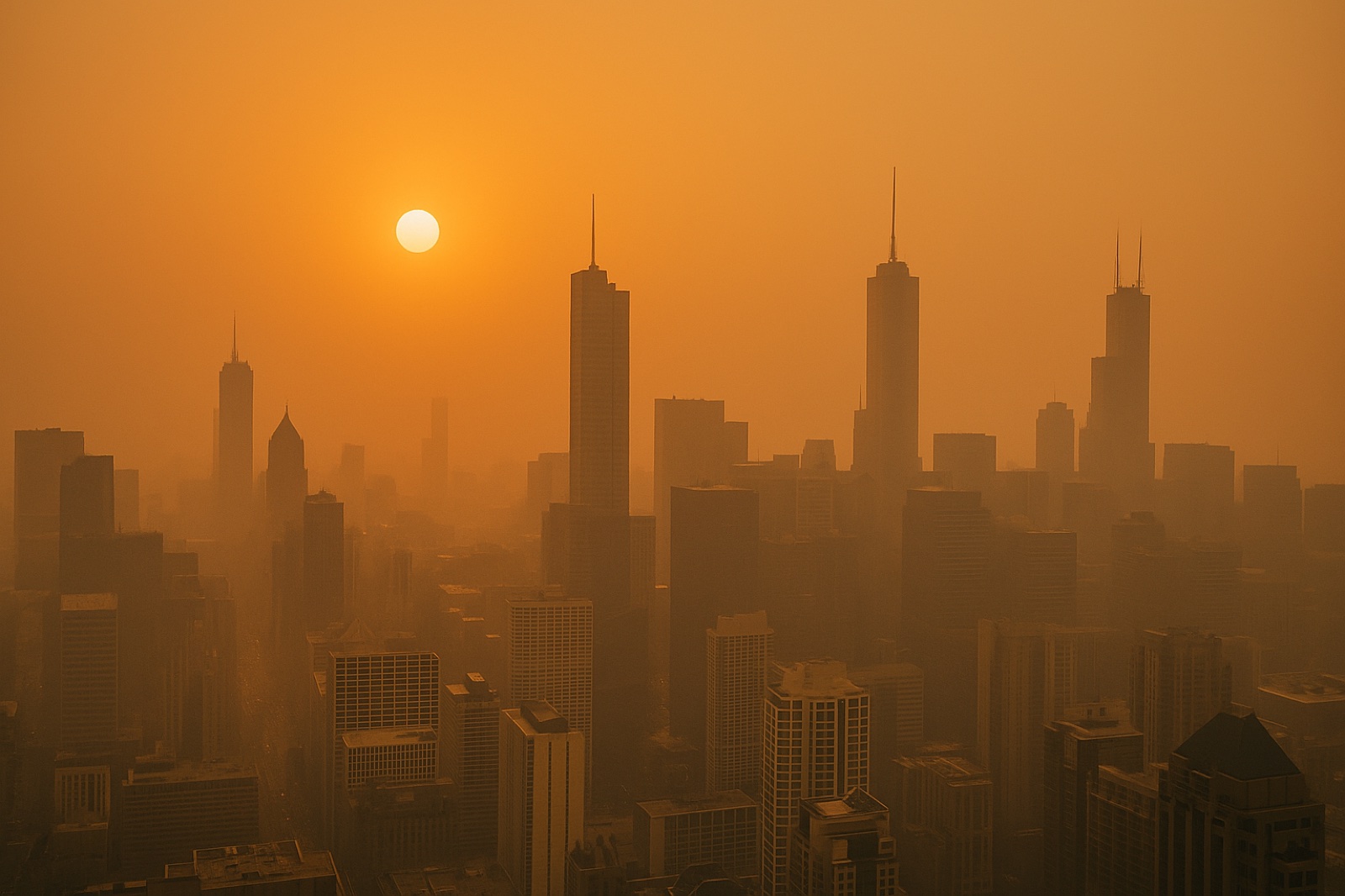
If you’re in the affected zone, you already know the strange feeling of it: the sky looks a little hazy, maybe a little orange at sunset, and your phone keeps buzzing with air quality warnings. But you can walk outside right now and, unless it’s especially thick, not smell a thing. That’s what makes this particular kind of danger so unsettling — it’s invisible.
What’s Actually Happening in the Sky Right Now
Wildfires burning hundreds of miles away in Canada and parts of Minnesota are sending smoke drifting south and east on the wind. It’s not the fire that’s reaching your neighborhood — it’s the smoke, carrying microscopic particles small enough to slip past your body’s natural defenses and settle deep in your lungs. Maps have tracked this kind of smoke traveling across entire continents before, and this week it’s happening again — this time landing squarely on some of the most densely populated cities in the country.
Health officials are advising people in the affected areas — especially children, older adults, and anyone with asthma or heart conditions — to limit time outdoors until the air clears.
Why the Air You Can’t See Is the One to Worry About
Here’s the part that surprises people: it’s not the smell of smoke that does the damage. It’s the fine particulate matter — scientists call it PM2.5 — tiny enough that thirty of them could fit across the width of a human hair. Your body doesn’t have a good way to filter something that small. It slips past your nose, past your throat, and lands directly in the tissue of your lungs, where it can trigger inflammation, worsen asthma, and strain the heart.
Understanding what’s actually in that haze changes how you think about a hazy sky. It’s not just an inconvenience. It’s a real, physical thing happening to your body, whether or not you can smell it.
Simple Ways to Protect Yourself Today
- Check your local air quality index (AQI) before heading outside — a quick search of your city name plus “air quality” will give you a real-time number.
- Keep windows closed and run an air purifier or your AC’s recirculate setting if you have one.
- Wear a well-fitted N95 mask if you have to be outside for an extended period — a cloth mask won’t filter particles this small.
- Check on older neighbors or relatives who may not be tracking the alerts as closely as you are.
- Postpone strenuous outdoor exercise until air quality improves — your lungs work harder during exertion, pulling in more of what’s in the air.
The Thing Nobody’s Thinking About
Somewhere in the middle of checking air quality apps and deciding whether it’s safe to walk the dog, there’s a bigger, quieter thought worth sitting with for a second: you don’t actually own the air you breathe. None of us do. It moves through you roughly twenty thousand times a day, and most of those breaths happen without a single thought — until a week like this one reminds you they were never guaranteed.
One of the oldest stories humanity has ever told about itself says the very first thing done for the first person wasn’t a name, or a purpose, or a possession. It was breath. Life itself was described as something breathed into a person from outside themselves — a gift on loan, not a right owned. That idea is thousands of years old, and somehow this week’s headlines make it feel newer than ever.
You don’t have to believe any particular thing to notice the truth sitting underneath that story: the most essential thing keeping you alive right now is something you can’t see, can’t buy, and can’t fully control. Most days, that’s easy to forget. Weeks like this one make it hard to.
If the uncertainty of it all has your mind running a little faster than usual, that’s a normal response to a real threat — and there are gentler ways to sit with that unease than refreshing another air quality map.
Wherever you are this week, take the alerts seriously, check in on the people near you, and — if you get a clear breath of air later today — maybe notice it, just for a second, before you move on with your day.
A Question Worth Sitting With
When was the last time you actually noticed a single breath — not because something was wrong, but just because you were paying attention? Tell us in the comments: has this week’s smoke changed how you think about something as ordinary as the air around you?
Share This
- “Didn’t realize how much I take breathing for granted until I couldn’t see the air I was breathing this week.”
- “The air quality maps this week are wild — millions of us breathing something we can’t even see. Wild reminder that the basics aren’t guaranteed.”
- “Wildfire smoke is blanketing half the country right now and it’s got me thinking about how little control we actually have over the air in our own lungs.”
Common Questions About This Week’s Wildfire Smoke
Why is wildfire smoke from Canada affecting the U.S. this week?
Wildfires burning in Canada and parts of Minnesota have sent smoke drifting south and east on wind currents, lowering air quality across the Midwest and Northeast, including major cities like New York.
Is it safe to be outside during a wildfire smoke air quality alert?
Health officials generally advise limiting time outdoors during active alerts, especially for children, older adults, and people with asthma or heart conditions. If you must go outside, a well-fitted N95 mask offers meaningful protection.
What makes wildfire smoke dangerous even if you can’t smell it?
Wildfire smoke contains fine particulate matter (PM2.5) small enough to bypass your body’s natural filters and settle deep in lung tissue, which can cause damage even when the smoke isn’t strong enough to smell.
How can I check current air quality in my area?
Searching your city name along with “air quality index” will typically bring up a real-time AQI reading, which tells you how safe it currently is to be outside.
What does this wildfire smoke event have to do with gratitude?
Being unable to see the air you depend on is a striking reminder that something as basic as breath was never fully within your control — a realization that, for many people, naturally turns into gratitude for something usually taken for granted.