 0
0
 0
0
STEP 1 — EXTRACT THE THEME
At the heart of Matthew 26:28 is a stubbornly human truth: real forgiveness isn’t cheap. When harm is done, someone absorbs the cost so life can move forward. Repair requires commitment, not just words. A fresh start is secured by actions that honor the weight of what happened.
STEP 2 — IDENTIFY THE PROBLEM
The problem: How do you forgive yourself when you can’t undo the damage? It’s the sinking-stomach feeling at 2 a.m. when your mind replays what you said, what you broke, what you can’t take back. You’ve apologized. Maybe you’ve “moved on” publicly. But privately, you’re still carrying it. You don’t want to excuse yourself. You also don’t want to live chained to it. You want a way to make peace without lying to yourself.
STEP 3 — WRITE THE ARTICLE
You know that moment when your chest tightens and your brain hits rewind again? It’s usually quiet. Everyone else has gone to bed. Your scene shows up like a film you don’t want to watch—what you did, what you didn’t do, the face of the person you hurt, the version of yourself you swore you’d never be. You keep thinking, “If I could just go back.” But you can’t. And that’s the part that makes your stomach drop.
People tell you to “let it go.” But the mind has a justice system. It resists dismissing a case when harm still feels unpaid. That’s why “moving on” can feel dishonest. You’re not trying to get away with it; you’re trying to live with it. And the part of you that wants to be a trustworthy human isn’t okay with bypassing the truth.
Here’s what often sits underneath our inability to forgive ourselves: we confuse forgiveness with pretending it wasn’t that bad. Deep down, we know that’s a lie. So we punish ourselves instead—keep the wound open, deny ourselves good things, sabotage opportunities, rehearse our failures. It feels like penance. But punishment without repair doesn’t protect anyone. It just freezes the moment and calls that morality.
If you can’t undo what happened, how do you move forward honestly?
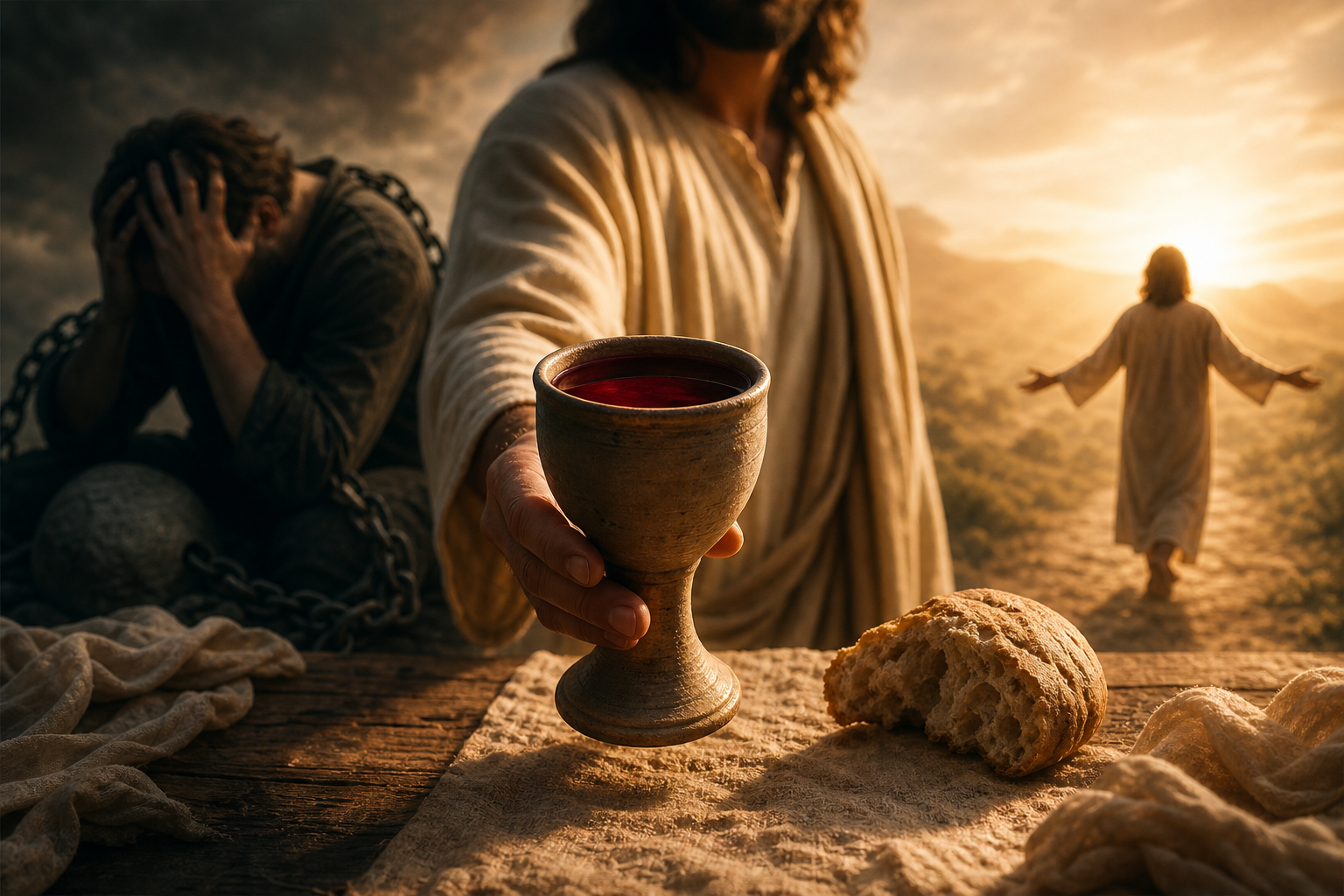
There’s a different frame: treat self-forgiveness less like a feeling and more like a settlement. When there’s harm, there’s a debt—lost trust, lost time, lost safety, sometimes lost opportunities. If nothing can be done, the unpaid balance echoes forever. But if someone absorbs the cost and commits to a different future, accounts can close and life can continue. That “someone,” in the case of self-forgiveness, is you.
A friend once put it this way: “Every real forgiveness costs somebody something. The only question is who will pay the price—and will that payment buy freedom or just more debt?” He told me he first encountered the idea in Matthew 26:28 — but the concept doesn’t require a religious framework to be true. It’s just quietly profound wisdom that happens to have ancient roots.
This is the turning point: you don’t need to convince yourself it wasn’t that bad. You need to decide how you will pay what can be paid, grieve what can’t, and bind yourself to a future that honors the damage done. Not as punishment. As integrity.
Here’s what that looks like in real life.
Name the exact debt in plain language. Vague shame keeps you stuck because your mind can’t settle what it can’t specify. Write down what actually happened, without defense or theater. “I lied about the deadline, caused the team to scramble, and damaged my manager’s trust.” “I snapped at my partner, said things designed to hurt, and made home feel unsafe.” List the concrete outcomes: time wasted, money lost, trust broken, joy drained. Then separate consequence from condemnation. Consequences are the real costs your actions created. Condemnation is the story that says you are permanently unworthy. One is data; the other is a prison you build yourself. Self-forgiveness starts by telling the truth and refusing to turn truth into a life sentence.
Pay what can be paid, and grieve what can’t. This is where self-forgiveness becomes more than a mood. If there’s restitution you can make, make it. That might mean repayment, a thorough apology that names the harm without asking for comfort, fixing what you broke, covering a shift, redoing the work you rushed, or stepping back so someone else can feel safe again. If your mistake cost opportunities you truly can’t replace, you grieve them. You don’t bargain with the past; you honor the loss. Write a letter you won’t send. Say out loud what can’t be mended. Sit with the sadness without turning it into self-hate. Grief is different from guilt—it says, “This mattered,” without chaining you to a moment you cannot change. Often we get stuck because we won’t let ourselves mourn the parts that are irreplaceable. Mourning is a form of paying the cost with honesty instead of with endless punishment.
Make a covenant with your future self. Cheap promises produce cheap peace. Real change needs structure. Choose a small set of non-negotiables that would have prevented the harm in the first place and would protect others going forward. If you lied, the covenant might include a rule like: “No silent carry of bad news. I surface risks within 24 hours.” If you lashed out, it might be: “When I’m flooded, I pause conversations, go outside, and return only when I can speak without attacking.” Write these as if-then plans so they’re automatic: “If I miss a deadline milestone by a day, then I immediately inform the team with a new plan.” Install friction: remove apps after 10 p.m., block websites during work hours, place a sticky note on your computer that says “Say the hard thing early.” Involve one person you trust. Tell them what you’re committing to and schedule a five-minute weekly check-in. Sign it. Date it. Make it real. This isn’t punishment; it’s the receipt that you’re paying for a better future.
Live the receipt—track proof over time. Forgiveness deepens when there’s evidence. Keep a simple log of kept promises: “Told manager about roadblock on Tuesday.” “Paused argument and returned calm.” “Rewrote sloppy email before sending.” Each line is a brick in the new foundation you’re laying under your own feet. Expect slippage, not as a moral failure but as a data point. When you miss the mark, you don’t hide it or spiral; you follow your if-then: report it, repair the immediate effect, and adjust your plan. This is how trust gets rebuilt—slowly, with boring consistency. And note this: self-compassion is not the enemy of accountability; it’s the fuel. Shame signals can get your attention, but only care keeps you going. If your inner voice is a drill sergeant, you’ll hide, and hiding is how people get hurt again. Talk to yourself like you would to a friend who’s trying to do right: firm, honest, on your side.
Rebuild trust brick by brick, including with yourself. If you harmed someone, they don’t owe you reconciliation. Your work isn’t to win them back; it’s to become the kind of person who won’t repeat the harm. Ask what repair would look like for them—not what you hope, but what they need—and accept their boundaries without arguing the verdict. Trust with others takes time. Trust with yourself does too. That quiet dread you feel at 2 a.m.? It eases when you stack days of clean choices. You’ll know you’re moving from penance to integrity when your promises get smaller and your follow-through gets bigger. You’ll know you’re healing when you stop performing remorse and start practicing repair even when no one is watching.
There’s a myth that self-forgiveness is a switch you flip inside your chest. More often, it’s a practice you keep. You stop trying to erase what happened and start honoring it by living differently. You trade the endless sentence for a costly, honest future. You’re not buying your way out; you’re choosing to carry what’s yours to carry and to stop dragging what isn’t. Over time, the weight redistributes. The past still matters, but it stops driving.
And here’s the quiet victory most people don’t expect: when you take responsibility this deeply, you become safer—for yourself and for others. You move through the world with more care. You tell the truth sooner. You notice sooner when you’re sliding. You interrupt your own patterns. You make fewer messes and you clean faster when you do. That doesn’t erase the old chapter. But it writes a new one with hands that have learned how to hold things gently.
If you’re up late and the film is rolling again, try this: pause it. Write a single sentence that names the real debt. Write a second sentence that names one concrete payment you can make this week. Write a third that names what can’t be fixed and deserves to be grieved. Then draft one line of your covenant—one if-then plan that will make tomorrow safer than yesterday. That’s not pretending. That’s paying the cost in a way that turns into freedom.
What’s one small, specific promise you’re willing to keep this week that would make tomorrow safer than yesterday—for you and for the people around you?
If positive Biblical wisdom matters to you, I’d love your support of the mission
Q&A about Matthew 26:28
In Matthew 26:28, what does Jesus mean by “my blood of the covenant,” and why does it matter for me today?
Jesus is saying his sacrificial death seals the new covenant—God’s promised relationship of forgiveness and heart change (Jeremiah 31:31-34), reaffirmed at the Supper in Luke 22:20 and 1 Corinthians 11:25. Because his blood is poured out for forgiveness (Matthew 26:28), you can approach God with confidence today (Hebrews 10:19). Practically, receive that pardon and walk in repentance and gratitude, treating others with the mercy you’ve been given (Ephesians 4:32).
How should Matthew 26:28 shape the way I take communion at church?
When you take the bread and cup, remember Jesus said the cup is “my blood of the covenant” for forgiveness (Matthew 26:28; Luke 22:20). Paul urges us to examine ourselves and discern the body so we receive faithfully, not casually (1 Corinthians 11:27-29). Practically, confess sin, come hungry for grace, and leave determined to love and serve like Christ (John 13:34).
Does Matthew 26:28 mean my sins are really forgiven, even the ones I keep struggling with?
Yes—Jesus ties forgiveness to his poured-out blood, not your performance (Matthew 26:28; Ephesians 1:7). If you confess and keep walking in the light, his blood keeps cleansing you (1 John 1:7–9). Practically, repent quickly, seek support for patterns of sin, and stand in assurance since he always lives to intercede for you (Hebrews 7:25).
How is Matthew 26:28 connected to the Old Testament sacrifices and the new covenant?
Matthew 26:28 echoes Moses’ words, “the blood of the covenant,” at Sinai (Exodus 24:8), but Jesus brings the better, once-for-all sacrifice that truly removes sin (Hebrews 9:12, 22). His death inaugurates the new covenant promised in Jeremiah 31:31-34, writing God’s law on our hearts. Practically, stop trying to atone by effort and rest in Christ’s finished work, then obey from a changed heart (Romans 8:3-4).