 0
0
 0
0
Mortgage Balances Hold Steady While HELOCs Surge
By Wolf Richter for WOLF STREET
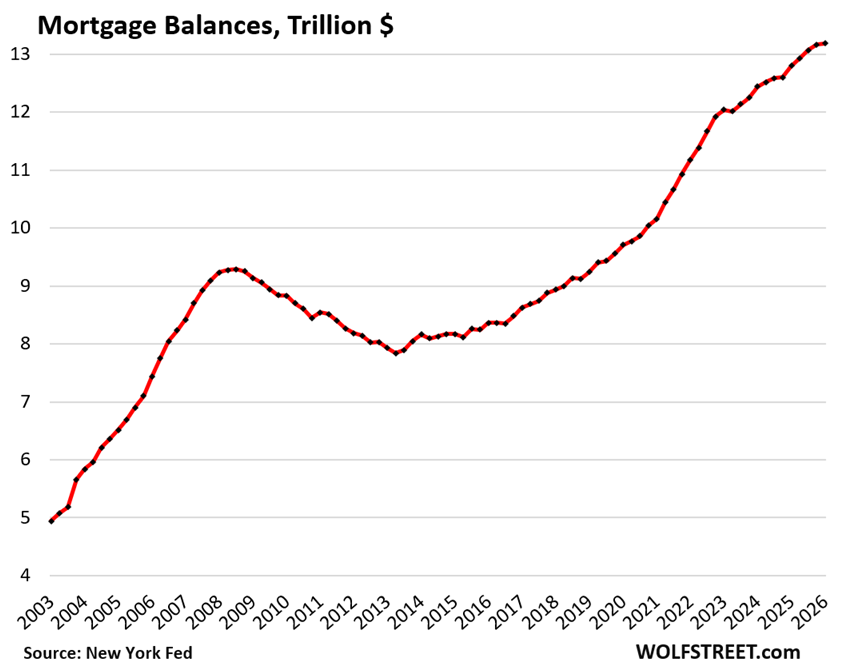
In a dynamic housing market where buyers face challenges, mortgage balances have barely budged, showing only a modest increase of 0.16% ($21 billion) to reach $13.19 trillion in the first quarter of the year. This stagnation comes amidst a backdrop where existing home sales remain stagnant, and new home sales, while somewhat resilient, rely on significant price reductions and incentives.
Conversely, balances for Home Equity Lines of Credit (HELOCs) have seen a dramatic rise, up 3.7% from the previous quarter and 10.9% year-over-year, bringing the total to $446 billion. Since early 2021, HELOC balances have surged by an impressive 41%.
Understanding the Dynamics
The stark difference in mortgage and HELOC balances reflects underlying trends. Homeowners are increasingly drawn to HELOCs as a means to leverage their home’s equity without refinancing their existing low-rate mortgages. This choice highlights an intricate balance of risk and opportunity for many homeowners today.
As mortgage balances rise primarily through new purchases and secondary mortgages, it’s essential to remember that thoughtful management of debt can lead to growth. Proverbs 21:20 reminds us, "The wise store up knowledge, but the mouth of a fool invites ruin.” This emphasizes the need for wisdom in navigating financial landscapes, especially in the area of housing debt.
Current Economic Landscape
Despite the rise in mortgage balances, the housing market is marked by cautious optimism. New home sales, making up only 17% of the total, are buoyed by competitive pricing strategies. While home equity can provide homeowners with necessary funds, it’s crucial to remain mindful of the potential risks associated with increased leverage.
With delinquencies on both mortgages and HELOCs remaining low, the economic indicators suggest a robust, albeit cautious, recovery. The current rate of 90-plus-day delinquency for mortgages stands at 1.09%, mirroring trends from the prosperous years of 2018-2019.
Risks and Responsibilities
The potential risks tied to increased HELOC use are notable. During economic recessions, homeowners may face the temptation to default, posing risks not just to individual financial stability but also to the broader economy. The biblical principle that reminds us of the importance of responsibility and accountability in our actions resonates here. As Luke 14:28 advises, “For which of you, intending to build a tower, does not sit down first and count the cost, whether he has enough to finish it?”
Looking Ahead
As we look to the future, balancing financial decision-making with wisdom and careful consideration remains paramount. The current trends remind us of the delicate nature of the housing market and the broader economic implications that arise from our financial choices.
While the implications of these economic indicators evoke reflection on debt management and financial planning, they also offer a chance to examine our priorities. In a world focused on material wealth, aligning our financial actions with a commitment to responsible stewardship can lead to more profound personal and societal outcomes.
Encouraging Resilience
As we navigate the complexities of the current housing landscape, it’s essential to remember the power of resilience and wisdom. Reflecting on our financial responsibilities can lead not merely to economic stability but to a deeper understanding of moderation and stewardship.
Let us strive to be wise in our choices, trusting that “the plans of the diligent lead surely to abundance” (Proverbs 21:5). In a world filled with uncertainty, embracing thoughtful choices provides a path towards stability and a hopeful future.
If you want to want to know more about this topic, check out BGodInspired.com or check out specific products/content we’ve created to answer the question at BGodInspired Solutions
If positive Biblical wisdom matters to you, I’d love your support of the mission
Q&A about
How do HELOCs affect my financial peace as a Christian?
Using a Home Equity Line of Credit (HELOC) can be tempting, but remember that our financial decisions should reflect our trust in God and not solely on worldly gains. Proverbs reminds us to trust in the Lord with all our hearts and lean not on our own understanding. Before diving into borrowing, pray for wisdom and discernment to avoid mismanagement or debt that could jeopardize your peace.
Should I worry about housing debt-to-income ratios as a Christian?
While monitoring your debt-to-income ratio is crucial for maintaining financial stability, don’t let anxiety consume you. Philippians encourages us to be anxious for nothing and to bring our concerns to God in prayer. Trusting in Him for provision helps shift our focus from fear to faith, enabling us to make prudent financial choices.
What does Jesus say about serious delinquencies and their impact on my faith?
Delinquencies can create stress, but remember Jesus’ teachings on forgiveness and grace. Just as He forgives our debts, we can find hope in the possibility of restoring our financial situations. Engage with your lender transparently and prayerfully seek solutions, knowing that God’s mercy extends even into our financial falters.
Are foreclosures a sign of failure in my Christian walk?
Foreclosures can feel like a personal failure, but they do not define your relationship with God. In Matthew, Jesus assures us that God cares for all His creations, even the sparrows. Focus on resilience and seek guidance in your struggles; God can turn challenging situations into opportunities for growth and greater reliance on His provision.