 0
0
 0
0
New Species of Ancient Crocodile Cousin Unveiled: A Marvel of Creation
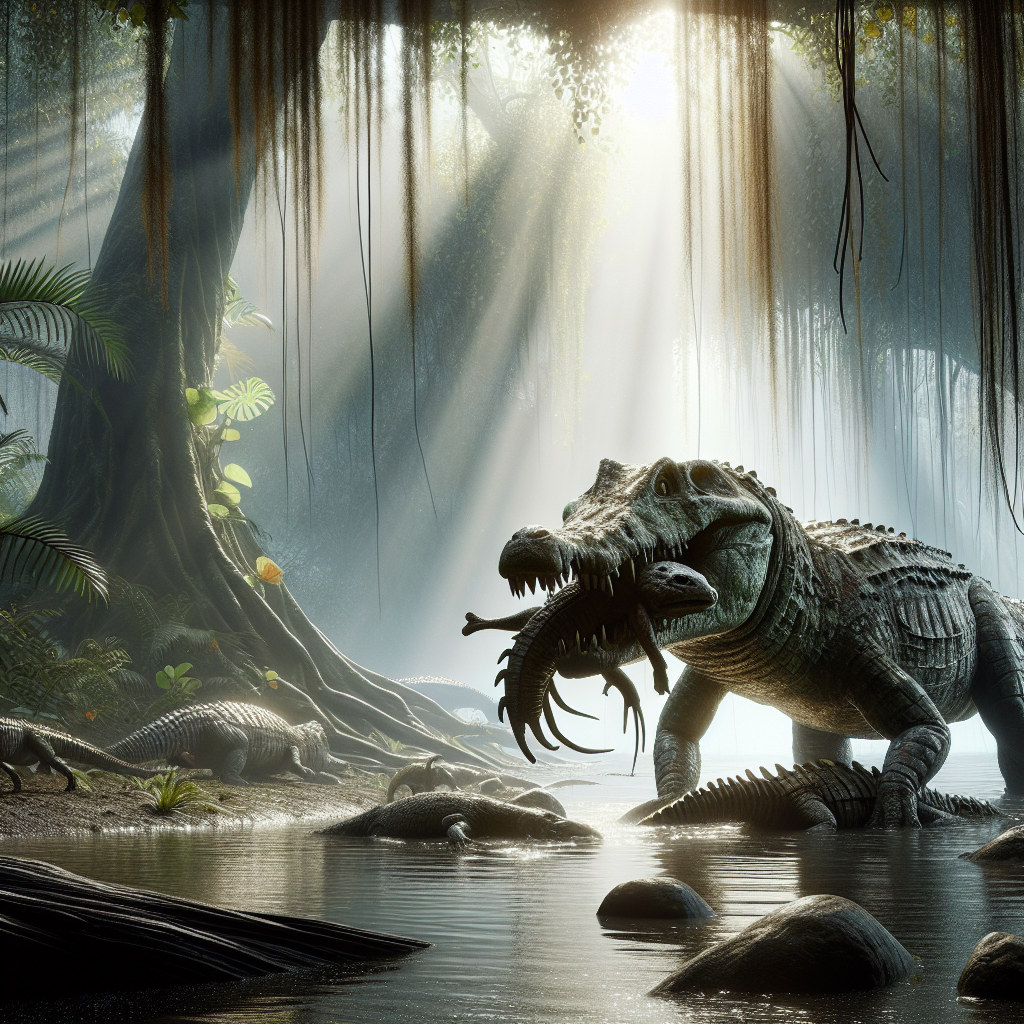
In a remarkable discovery that underscores the intricacies of our planet’s history, paleontologists have identified a new species of prehistoric crocodile cousin, believed to have roamed the earth 210 million years ago. Unveiled in a study published in Nature, this ancient reptile, dubbed Kaprosuchus saharicus, showcases features that signify its adaptation to hunting larger prey, emphasizing the incredible design found in nature.
A Fearsome Predator
The Kaprosuchus is a significant addition to the family of crocodyliformes, characterized by its robust teeth shaped for crushing and powerful jaw structure. These features suggest a specialized role as a predator, indicating potential interactions with other large herbivores of its time. The fossil remains, discovered in North Africa, provide valuable insights into ecological dynamics during the Late Triassic period, showing how life has adapted to survive across millennia.
Connecting Science and Faith
This discovery prompts reflection on the extraordinary complexity of life. The evolving adaptations seen in creatures like the Kaprosuchus saharicus remind us of the biblical principle of stewardship—that we are caretakers of this remarkable creation. Jesus often taught about the importance of appreciating the wonders of nature, echoing in Matthew 6:26, which reminds us, "
If you want to want to know more about this topic, check out BGodInspired.com or check out specific products/content we’ve created to answer the question at BGodInspired Solutions
If positive Biblical wisdom matters to you, I’d love your support of the mission
Q&A about
Why should I care about a newly identified crocodile cousin from 210 million years ago?
Understanding ancient creatures like this crocodile cousin can deepen our appreciation of God’s creation and His design. In Genesis, we see that God created all living things and called them good, reminding us that His handiwork reflects His glory in every part of the world, even those long gone.
How does this discovery relate to my faith?
This discovery can serve as a reminder of the intricate plans God has for His creation. As Jesus taught in Luke about the value of sparrows, every creature plays a role in God’s design, encouraging us to marvel at His infinite wisdom in creating a diverse ecosystem.
Can studying extinct creatures help me understand God’s purpose?
Absolutely! Romans teaches that creation groans for redemption, implying that all aspects of creation, even those long extinct, are part of the story of God’s overarching purpose. Each fossil we discover can shed light on His creative power and how everything fits into His divine plan.
What about the concept of evolution in light of my beliefs?
Consider that God is the ultimate creator, and each discovery can demonstrate His methods and timelines. Colossians emphasizes that by Him, all things were created. Thus, we can view the process of evolution as a possible means God utilized in His continuous unfolding of creation, calling us to trust His wisdom as we explore His works.