 0
0
 0
0
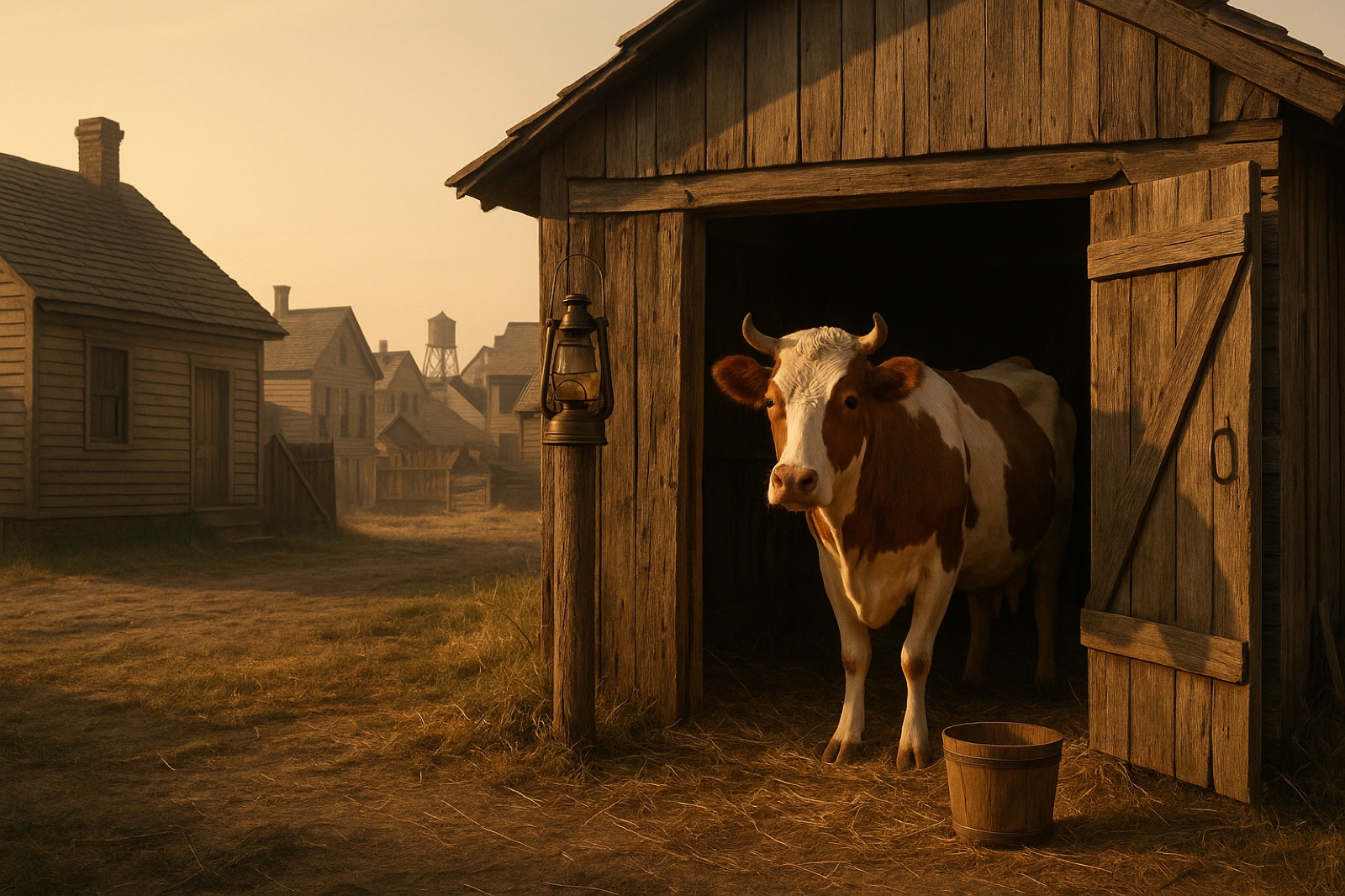
You probably know the story. A woman goes out to her barn at night to milk her cow. She sets down a lantern. The cow kicks it over. The hay catches. And by the next morning, a whole city is gone.
It is one of the most famous stories about the Great Chicago Fire of 1871. Children have sung songs about it. People still make jokes about it.
There is just one problem. The cow story was made up. A newspaper reporter later said he invented it. And the woman it blamed, Catherine O’Leary, carried it for the rest of her life. Chicago did not officially clear her name until 1997.
This week is Fire Prevention Week, and the reason it lands in early October is that fire. So it is a good moment to look at what really happened, and at the part of the fire that kept burning long after the flames went out.
What Really Happened in the Great Chicago Fire
The fire started on the evening of Sunday, October 8, 1871, in or near the barn behind the O’Leary family’s small home on the city’s west side. That part is true. The O’Learys kept a few cows, and Catherine sold milk to help feed her family.
Chicago in 1871 was a city made mostly of wood. Wooden houses. Wooden sidewalks. Even some wooden streets. It had been a dry summer and autumn, and the wind that night was strong.
The fire burned for about two days. When it was over, roughly 300 people were dead, more than 100,000 had lost their homes, and around 17,500 buildings were gone across about 3.3 square miles (roughly 9 square kilometres) of the city.
Here is the part most people never hear. An official inquiry was held within weeks of the fire. It could not say for certain what started it, and it found no proof that Catherine O’Leary was to blame. She told investigators she had been in bed when the fire began.
So the truth was on the record almost right away. It just did not matter.
Where the Cow Story Came From
The cow and the lantern showed up in the newspapers soon after the fire. It was a perfect story. It had a villain, a moment, and a picture you could see in your head. It was easy to tell and easy to remember.
The papers did not stop at the cow. Reporters described Catherine O’Leary and her home in cruel, mocking ways that leaned on her being poor and Irish. A grieving city wanted someone to point at, and she was easy to point at.
Years later, a reporter named Michael Ahern, who had worked for the Chicago Republican at the time of the fire, said that he and two other reporters had simply made the cow story up. According to the account kept by the Chicago History Museum’s Great Chicago Fire project, he said this in the Chicago Tribune around the fire’s fortieth anniversary. Other sources date his admission to 1893.
The Twist: Even the Confession Was Messy
You might expect the confession to settle everything. It did not.
The sources do not even agree on when Ahern said it. After his story ran, a longtime colleague claimed he had actually written it for Ahern. Another man who knew him said Ahern was not someone you could trust, and hinted that drinking was the reason.
Think about what that means. The lie went out clean and simple: a cow, a lantern, a careless woman. The correction came back tangled: disputed dates, a ghostwriter, a storyteller nobody fully believed.
That is how it usually goes. A false story spreads because it is simple. The truth often limps in later, carrying footnotes. If you have ever tried to correct something said about you, you already know this. It is the same reason people still believe Marie Antoinette said “Let them eat cake”, even though there is no evidence she ever did.
It took until the 1990s for the record to be properly fixed. A lawyer and amateur historian named Richard Bales dug through property records and the old inquiry papers. He argued the fire more likely started with a neighbour, Daniel “Peg Leg” Sullivan, who was one of the first to report it. Nobody can prove exactly what happened. But Bales’s work helped push the Chicago City Council to pass a resolution in 1997 clearing Catherine O’Leary, and her cow, of blame.
Catherine O’Leary had died in July 1895. She never saw it.
The Bigger Fire Nobody Remembers
Here is something even stranger. On the very same night, October 8, 1871, a much bigger fire swept through the forests and towns around Peshtigo, Wisconsin, a few hundred kilometres to the north.
The Peshtigo fire is generally estimated to have killed somewhere between 1,200 and 2,500 people. That makes it the deadliest wildfire in recorded American history. The town of Peshtigo itself was destroyed in less than two hours.
Many times more people died at Peshtigo than in Chicago. Yet almost everyone has heard of the Chicago fire, and hardly anyone has heard of Peshtigo.
Part of the reason is simple. Chicago was a big city with newspapers and telegraph lines. Peshtigo was a remote logging town. But part of it, surely, is the cow. Chicago had a story people could tell. Peshtigo had only a terrible number.
A good story can outlast a much bigger truth. That works for us, and against us.
A Small Spark, a Whole City
Here is what stays with me about all of this.
The flames in Chicago did their damage in two days. The story did its damage for 126 years. It followed Catherine O’Leary into every room she walked into. It followed her family after she was gone. It is still being sung in schoolyards today.
There is a very old piece of wisdom, written almost two thousand years ago, that compares the human tongue to a small fire. It marvels at how big a forest one little flame can set burning. It was not written about Chicago, of course. But it is hard to find a better picture of it: one barn, one spark, one city. One rumour, one woman, more than a century.
That old writing is not trying to scare anyone into silence. It is simply telling the truth about how much weight our words carry. They can burn a life down. And, used well, they can help rebuild one too.
What We Can Do With This
A few simple things, none of which cost anything:
- Pause before passing it on. If a story about a real person is perfect, simple, and a little cruel, that is a reason to slow down, not speed up.
- Ask who it costs. Behind every “funny” rumour there is usually a Catherine O’Leary who has to live with it.
- Correct it out loud. The truth is slower than a lie, so it needs more help. When you learn a story was false, say so, the same way you would have shared the story.
- Check your charger, too. This year’s Fire Prevention Week theme is about safe charging of lithium-ion batteries in phones, e-bikes, and other devices. Simple habits help: use the charger made for your device, charge on a hard surface rather than a bed or sofa, and unplug things once they are full.
If you like a good myth taken apart, you might also enjoy how memory quietly rewrites familiar lines in the Mandela effect. It is the same human habit: we keep the version that is easiest to remember.
Something real is waiting for anyone who wants more than a story to repeat.
A good place to start:
The Beginner’s Guide to Feeling God’s Presence Every Day
A short, simple video guide for noticing something bigger in the ordinary moments of your day.
Get the free guide
Free.
Questions People Ask About the Great Chicago Fire
Did Mrs. O’Leary’s cow really start the Great Chicago Fire?
No evidence shows that Mrs. O’Leary’s cow started the Great Chicago Fire of 1871. The fire did begin in or near the O’Leary family’s barn, but the official inquiry could not find the cause and found no proof Catherine O’Leary was to blame. Reporter Michael Ahern later said he and other reporters invented the cow-and-lantern story, and the Chicago City Council formally cleared Catherine O’Leary and her cow in 1997.
Why is Fire Prevention Week in October?
Fire Prevention Week is held in October because it marks the anniversary of the Great Chicago Fire, which began on October 8, 1871. The National Fire Protection Association runs the week each year during the week containing October 9. In 2026, Fire Prevention Week runs from October 4 to 10, with a theme focused on safely charging lithium-ion batteries.
How many people died in the Great Chicago Fire?
About 300 people died in the Great Chicago Fire of 1871. The fire burned for roughly two days, destroyed around 17,500 buildings across about 3.3 square miles (about 9 square kilometres) of the city, and left more than 100,000 people homeless.
What was the Peshtigo fire?
The Peshtigo fire was a huge wildfire in northeastern Wisconsin on October 8, 1871, the same night the Great Chicago Fire began. Its death toll is generally estimated at between 1,200 and 2,500 people, making it the deadliest wildfire in recorded United States history. It is far less famous than the Chicago fire, even though many more people died.
Discussion Question
Why do you think a simple, made-up story like the cow and the lantern outlived both the official inquiry and the reporter’s own confession? Share your thoughts in the comments below.
Share This
“Mrs. O’Leary’s cow never started the Great Chicago Fire. A reporter later said he made it up, and it took Chicago until 1997 to clear her name. A lie burned longer than the city did. https://bgodinspired.com/?p=118104”
“Same night as the Chicago fire in 1871, a wildfire at Peshtigo, Wisconsin killed many times more people. Almost nobody remembers it, because it didn’t come with a story about a cow. https://bgodinspired.com/?p=118104”
“Fire Prevention Week reminder: the most lasting damage from the Great Chicago Fire wasn’t the flames. It was a rumour. Worth thinking about before you hit share. https://bgodinspired.com/?p=118104”