 0
0
 0
0
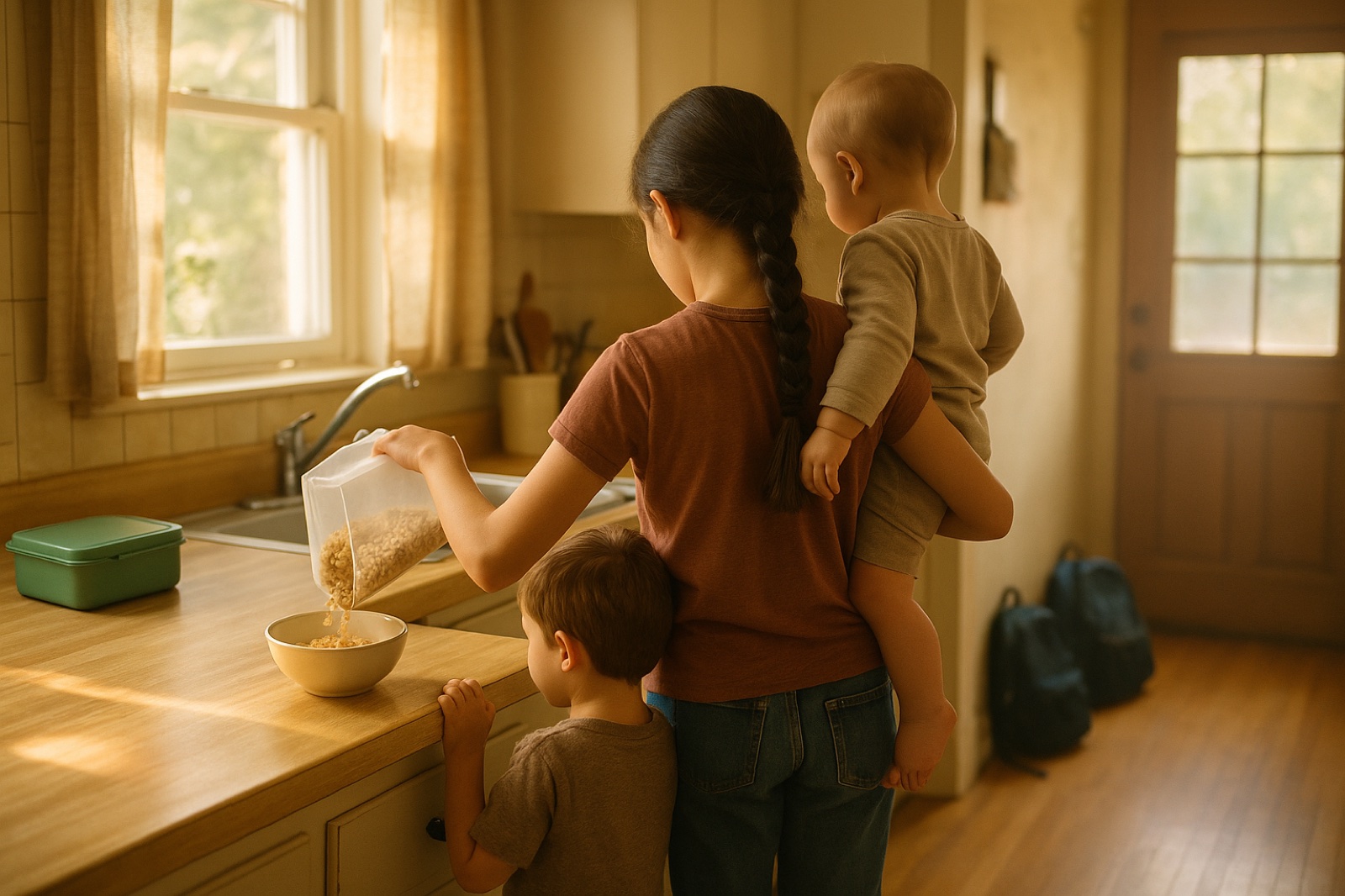
You were nine, maybe ten. You knew how to warm the baby’s milk. You knew which brother would not eat unless the food was cut small. You knew, from the sound of the front door, what kind of evening it was going to be.
Nobody sat you down and gave you the job. It just became yours. And now you are grown, and you are still the one who books the appointments, remembers the birthdays, and gets the phone call when something goes wrong.
The internet has a name for this: eldest daughter syndrome. Thousands of people search for it every month, and most of them are not curious about a trend. They are looking for a word for their own childhood.
So let us look at it honestly. What it is, what the research really says, and the one thing about it that most articles get backwards.
What Is Eldest Daughter Syndrome?
Eldest daughter syndrome is a popular name for what happens when the oldest girl in a family takes on adult work early. She helps raise the younger children. She keeps the house running. She becomes the one her parents lean on, and sometimes the one they confide in.
People sometimes call her the family’s third parent.
The first thing to say plainly: this is not a medical diagnosis. No doctor can test you for it. It is not in any manual that doctors or therapists use. It is a name people gave to a shared experience, and it spread because so many women read it and thought, that is me.
That does not make it fake. It makes it a description, not a disease. And that difference turns out to matter a great deal, as we will see.
It also does not mean your parents were bad. Most families that lean on the oldest girl do it because they are stretched thin. Someone is sick. Someone works nights. There is not enough money, or not enough hands. The oldest daughter is simply the nearest pair.
If you grew up being needed more than you were noticed, we made something free for you. It is a short video guide and a printable page about finding a quiet sense of being seen and held, right in the middle of an ordinary, busy day.
Signs of Eldest Daughter Syndrome
Not every oldest girl carries this, and some people who are not the oldest, or not girls, carry all of it. But these are the signs people most often describe:
- You feel responsible for how everyone in the room is feeling.
- Resting makes you feel guilty, as if you are getting away with something.
- You find it very hard to ask for help, and harder still to accept it.
- You are the one the family calls first in a crisis, even now.
- You were praised as a child for being “so grown up” or “no trouble at all.”
- You hold yourself to a standard you would never ask of anyone else.
- You are good at looking after people and not sure what you like when nobody needs you.
That last one is the quiet heart of it. The fear underneath is not really about work. It is the fear that you are only wanted for what you do.
If the high-standard one stood out to you, our free Am I a Perfectionist? check takes a few minutes and gives you a straight answer.
Is Eldest Daughter Syndrome Real? What the Research Found
In 2024, headlines around the world announced that science had proved eldest daughter syndrome is real. It is worth knowing what that study actually measured, because it is not what the headlines said.
The study was led by Molly Fox, an anthropologist at the University of California, Los Angeles, and published in the journal Psychoneuroendocrinology. The team followed families for 15 years, starting in pregnancy. They found that when mothers had high levels of stress while pregnant, their firstborn daughters showed the earliest signs of body maturing, such as skin changes and body hair, sooner than other girls. They did not find this in sons. They did not find it in daughters who were born later. (UCLA’s summary of the study is here.)
The researchers offered an idea about why. In hard times, a first daughter who grows up a little faster could help her mother keep the younger children alive. They called it a “helper at the nest.”
Here is the part that got lost. The study did not measure chores. It did not count who cooked, who babysat, or who felt responsible. It measured mothers’ stress and children’s bodies. The link to helping at home is the researchers’ idea about what the early maturing might be for. It is an interesting idea. It is not a finding.
Now put that next to a second piece of research, which almost never appears in the same article.
In 2015, three researchers, Julia Rohrer, Boris Egloff and Stefan Schmukle, looked at more than 20,000 adults in Germany, Britain and the United States. They wanted to know whether birth order shapes personality. Their answer was clear. Apart from a very small edge for firstborns on intelligence tests, birth order had no lasting effect on broad personality traits. Firstborns were not more careful, more anxious or more agreeable than anyone else.
The Part Most Articles Get Backwards
Read those two studies together and something important falls out.
If being born first does not change your personality, then the carefulness, the guilt and the watching over everyone are not who you are. They are not built in. They are what you learned to do in a job you were handed.
Eldest daughter syndrome is not a personality. It is a role.
That is good news, even if it does not feel like it at first. A personality you are stuck with. A role can be put down. Not all at once, and not without some fear, but it can be done. You were not born the responsible one. You were cast as her. And you played the part so well that everyone, including you, forgot it was a part.
The research on children who take on adult work too early is real, and it has its own name. We wrote about it in what parentification is. And the grown-up version, being the one who remembers everything for everyone, is what people now call the mental load.
How to Heal From Eldest Daughter Syndrome
None of this needs money or a therapist. It needs small, repeated practice.
- Name the job out loud. Say it to yourself, or write it down: “I was given adult work as a child.” You are not blaming anyone. You are just telling the truth about what happened.
- Let one thing drop on purpose. Pick something small that you always catch. Do not remind anyone. Do not fix it. Watch what happens. Usually somebody else picks it up, or it turns out not to matter.
- Wait ten seconds before you say “I’ll do it.” The offer comes out of you before you have even thought. A short pause gives someone else the chance to step in.
- Ask for one small thing a week. A lift. A meal. An opinion. Asking is a skill you were never allowed to practise, so start with things that do not matter much.
- Do one thing that is of no use to anyone. Walk with nowhere to go. Sing badly. Sit in the sun. The point is to spend time as a person and not as a helper.
- Tell a brother or sister what it was like. Not as a charge against them. They were children too. Many younger siblings have no idea, and many are glad to finally be told.
The Oldest Big Sister Story There Is
There is a very old story about a big sister, and it begins exactly where this article began.
A mother in a dangerous time hides her baby in a basket among the reeds at the edge of a river. Then she goes home. The one left standing on the bank, at a distance, watching to see what will happen to the baby, is his sister. She is a child. When a princess finds the basket, it is the sister who steps forward, thinks fast, and offers to find a nurse. She brings back the baby’s own mother. She fixes it.
In that scene the story does not even give her a name. She is only “his sister.” She is a job.
The baby was Moses. And the long tradition around the story says the girl on the riverbank was Miriam, who does get her name later on. When she appears again she is a grown woman, leading a whole crowd in a song, and the story calls her a prophet. She is not perfect, either. At one point she gets something badly wrong, in front of everybody, and has to spend a week outside the camp. The detail that is easy to miss is that the whole nation waits. They do not pack up and move on until she is back.
Then, hundreds of years later, comes the line that stopped me. God is reminding the people how they were led out of slavery, and lists who was sent ahead of them. Three names. Moses, Aaron, and Miriam.
Not “Moses and his helpers.” Not “the sister.” Her name, in full, beside her brothers.
The family saw a girl who could watch the baby. God, it seems, saw Miriam the whole time.
You Were a Person Before You Were Useful
You may always be the one who notices when the milk is low. That is not a flaw. Care is a good thing to be good at.
But the job was never your name. You were somebody before you were the helper, and you are still somebody on the days when you help no one at all.
So start small this week. Let one thing drop. Ask for one thing. And the next time the phone rings and you feel the old pull to fix it, take the ten seconds. The girl on the riverbank did her job well. She is allowed to come home now.
What Do You Think?
Do you think families lean on the oldest daughter more than the oldest son, or is it simply whoever is oldest? Tell us in the comments. We would love to hear how it was in your home.
Share This
Post 1: Eldest daughter syndrome is not a personality. It is a job you were handed as a kid. And a job can be put down. https://bgodinspired.com/?p=117410
Post 2: The study everyone says “proved” eldest daughter syndrome never measured a single chore. And a study of 20,000 people found birth order barely changes personality. So the “responsible one” is not who you are. It is a role you learned. This helped me: https://bgodinspired.com/?p=117410
Post 3: To every oldest sister who was called “so grown up” at ten: you were a person before you were useful. https://bgodinspired.com/?p=117410
Questions People Ask About Eldest Daughter Syndrome
What is eldest daughter syndrome?
Eldest daughter syndrome is a popular, non-medical name for the pattern in which the oldest girl in a family takes on adult responsibilities early, such as caring for younger siblings, running the household and supporting her parents emotionally. As an adult she often feels responsible for everyone, finds it hard to rest or ask for help, and worries that she is valued only for what she does.
Is eldest daughter syndrome a real diagnosis?
No. Eldest daughter syndrome is not a medical or psychological diagnosis and does not appear in any diagnostic manual. It is an informal term that spread on social media to describe a common family experience. The experience itself is real, and the research on children who take on adult roles, known as parentification, is well established.
Did a study prove eldest daughter syndrome is real?
Not exactly. A 2024 study led by UCLA anthropologist Molly Fox, published in the journal Psychoneuroendocrinology, followed families for 15 years and found that firstborn daughters of mothers who had high stress in pregnancy showed earlier signs of adrenal puberty. The study did not measure caregiving or household chores. The idea that early maturing helps a daughter care for siblings is the researchers’ proposed explanation, not something the study measured.
Does being the oldest child change your personality?
Large studies say it barely does. A 2015 study by Julia Rohrer, Boris Egloff and Stefan Schmukle examined more than 20,000 adults in Germany, Britain and the United States and found that birth order had no lasting effect on broad personality traits, apart from a very small advantage for firstborns on intelligence tests. This suggests the habits of an eldest daughter come from the role she was given, not from her birth position itself.
How do you heal from eldest daughter syndrome?
Healing from eldest daughter syndrome starts with naming the role honestly and then practising small acts of putting it down. Helpful steps include letting one small task drop without fixing it, pausing before volunteering, asking for one small favour each week, spending time on something that is of no use to anyone, and talking openly with siblings about what childhood was like. None of these steps requires money or professional help, although a counsellor can help if one is available.