 0
0
 0
0
In August 2008, Liu Huan stood on top of a giant globe in the middle of Beijing’s National Stadium. Beside him was the British soprano Sarah Brightman. Around them, huge screens filled with the smiling faces of children from all over the world. Together they sang the song of the Olympic Games, “You and Me,” to one of the biggest audiences any singer has ever had.
A few weeks later, he was back in a university classroom, teaching the history of Western music.
Liu Huan died in Shanghai on September 25, 2026. He was 63. His university and the charity that runs his music fund both said he died that morning with his family around him. For most of the world, he was the man on the globe. For more than three decades of students, he was simply their teacher.
Who Was Liu Huan?
Liu Huan was born in Tianjin, in northern China, in August 1963. He did not train as a musician. He studied French literature at the University of International Relations in Beijing, and his voice was noticed at singing competitions in the mid-1980s.
What came next made him one of the best-known voices in China. He sang theme songs for some of the country’s most-watched television dramas. His “Heroes’ Song,” written for the 1998 series The Water Margin, became something close to a national anthem for anyone who grew up with that show. “Asking Myself a Thousand Times” sat at the top of Chinese radio for ten weeks. Songs like “Young Ambition Knows No Sorrow” and “The Curved Moon” are still sung at karaoke nights across the Chinese-speaking world.
He sang at two of the biggest moments of modern China. In 1990 he sang at the Asian Games in Beijing. In 2008 he sang “You and Me” at the Olympic opening ceremony, a song written by the composer Chen Qigang. The director Zhang Yimou paired him with Brightman on purpose. She stood for London, the next host city. He stood for China. The Games’ motto was “One World, One Dream.”
The English words of the song are almost childlike in how simple they are: “You and me, from one world. We are family.” The Chinese lyric goes a little further. It says the two of them live heart to heart, in the same village. The whole planet, in that song, is one small village.
The Singer Who Kept His Day Job
Here is the part of Liu Huan’s life that most of the world never saw.
In July 1991, before most of his big hits, he joined the University of International Business and Economics in Beijing. He taught there for 32 years, until he retired in September 2023. He rose to associate professor. He even wrote the university’s own song.
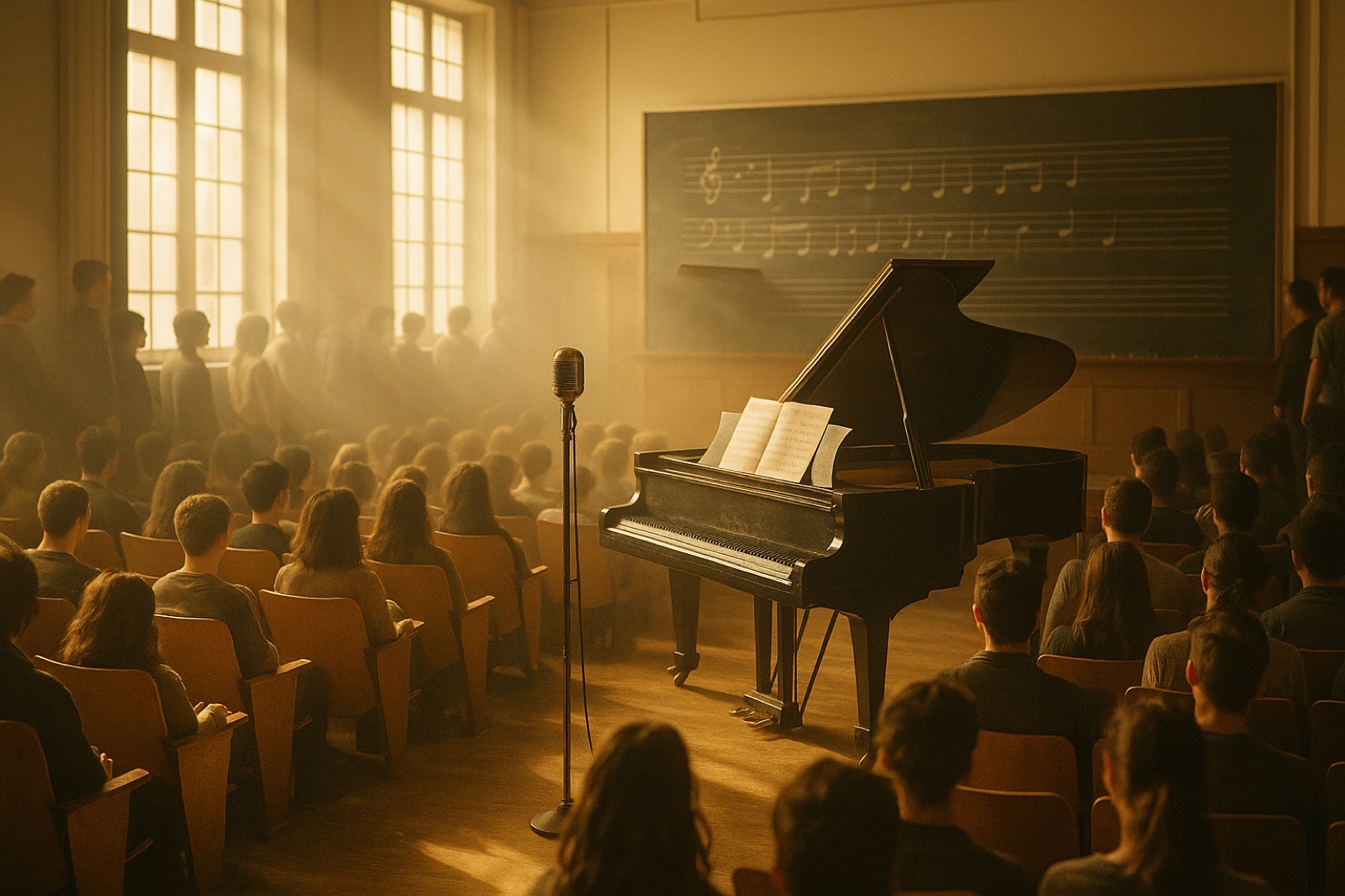
His course on the history of Western music became famous on campus. It was so popular that students who weren’t signed up for it squeezed into the room anyway, standing along the walls just to listen. Picture it: a man who had sung to billions, explaining Bach and Beethoven to a room of business students who had come for no grade at all.
People often asked him why a star would keep teaching. His answer, as it is widely quoted, was plain: “There doesn’t have to be any contradictions between being a singer and a teacher, although they are totally different jobs.” He did not seem to think he had made a sacrifice. He seemed to think he had two jobs, and he liked both of them.
Later in life he turned his fame toward young people too. He was a judge on The Voice of China and a coach on Sing! China. He helped start a TV show built only around new, original songs. With the Mango V Foundation he set up a fund to support young musicians writing songs in Chinese, promising about one million yuan every year. The foundation has said that giving will carry on after him, as he wished.
If you have ever felt a song give you chills, you know the pull music has on people. (There’s a real reason for that feeling. We looked into it in what frisson is and why music gives you chills.) Liu Huan spent his life on both sides of that pull. He made the moments that give people chills. Then he taught others why those moments work.
What Liu Huan Asked For at the End
This is the detail that stays with you.
Liu Huan asked for a simple funeral. There was to be no funeral committee. No farewell ceremony. No memorial service. A man whose voice once filled the largest stadium in China asked to leave quietly.
That is not how most famous people go. We are used to big tributes, packed halls, long speeches. He seems to have wanted none of it. And yet his leaving is not quiet at all. It carries on in thousands of former students, in a fund that will keep handing money to young songwriters he will never meet, and in a song that still says the whole world is one family.
There is a very old way of seeing a life, much older than pop music. It says the things we do without applause are the ones that matter most. It says God notices the quiet work, the unseen giving, the lesson taught to a room with no cameras in it. And it says what we give away is the only part of our lives we truly get to keep. A man who asked for no ceremony, and left behind a fund, a classroom and a song about one family, seems to have lived close to that idea, whether or not he ever put it that way.
We recently wrote about another man remembered for staying, the grown-up who kept showing up for kids on Saved by the Bell. Two very different lives, two very different countries. The same thread: the people we remember longest are often the ones who kept showing up for somebody else.
What We Can Take From a Life Like His
Most of us will never sing on top of a globe. But nearly all of us have a “day job” of some kind: a child we raise, a friend we check on, a younger coworker we help, a neighbor who needs a hand. It rarely feels important. Nobody claps.
Liu Huan’s life suggests that the quiet job may be the one that lasts. The Olympic moment happened once. The classroom happened thousands of times.
If a song of his ever meant something to you, one simple way to honor him is to pass something on this week. Teach someone a thing you know. Share a song you love with someone younger and tell them why it matters to you. It costs nothing, and it is exactly the kind of thing he spent 32 years doing.
If you like to think about the faith and meaning hidden inside the music you love, you can explore it with our free Music & Faith AI assistant (it opens in ChatGPT).
Questions People Are Asking About Liu Huan
When did Liu Huan die and how old was he?
Chinese singer Liu Huan died in Shanghai on September 25, 2026, at the age of 63. His university and the Mango V Foundation said he died that morning with his family around him. At his own request, there was no farewell ceremony or memorial service.
What song did Liu Huan sing at the 2008 Beijing Olympics?
Liu Huan sang “You and Me,” the official theme song of the 2008 Beijing Olympics, with British soprano Sarah Brightman at the opening ceremony. The song was composed by Chen Qigang. The two singers performed on top of a giant globe while images of children’s faces from around the world surrounded them.
Was Liu Huan really a university teacher?
Yes. Liu Huan taught at the University of International Business and Economics in Beijing from July 1991 until he retired in September 2023, rising to associate professor. His course on the history of Western music was so popular that students who were not enrolled often came to listen.
What are Liu Huan’s most famous songs?
Liu Huan’s best-known songs include “Heroes’ Song” from the 1998 TV series The Water Margin, “Asking Myself a Thousand Times,” “Young Ambition Knows No Sorrow,” “The Curved Moon,” and “You and Me,” the 2008 Beijing Olympics theme song he sang with Sarah Brightman.
What did Liu Huan do to help young musicians?
Liu Huan set up an original-music fund with China’s Mango V Foundation to support young musicians writing songs in Chinese, committing about one million yuan a year. He also mentored new singers on shows such as The Voice of China and Sing! China. The foundation has said the fund will continue after his death.
Discussion Question
Liu Huan could have left teaching once he became famous, but he stayed in the classroom for 32 years. Do you think the “quiet” work people do, like teaching or raising a family, shapes the world more than their big public moments? Tell us what you think in the comments.
Share This
Post 1: Liu Huan sang to billions at the 2008 Olympics. Then he went back to teaching music history to university students for decades. RIP to a voice and a teacher. https://bgodinspired.com/index.php/entertainment/music/liu-huan-dies-at-63/
Post 2: I didn’t know this: the man who sang “You and Me” at the Beijing Olympics taught at a university for 32 years, and his class was so full people stood along the walls. At the end he asked for no memorial service at all. https://bgodinspired.com/index.php/entertainment/music/liu-huan-dies-at-63/
Post 3: “You and me, from one world. We are family.” Remembering Liu Huan, who sang it, and who spent most of his life quietly handing music on to the next generation. https://bgodinspired.com/index.php/entertainment/music/liu-huan-dies-at-63/