 0
0
 0
0
Hebrew Word for Meekness: What Does “Anavah” Really Mean?
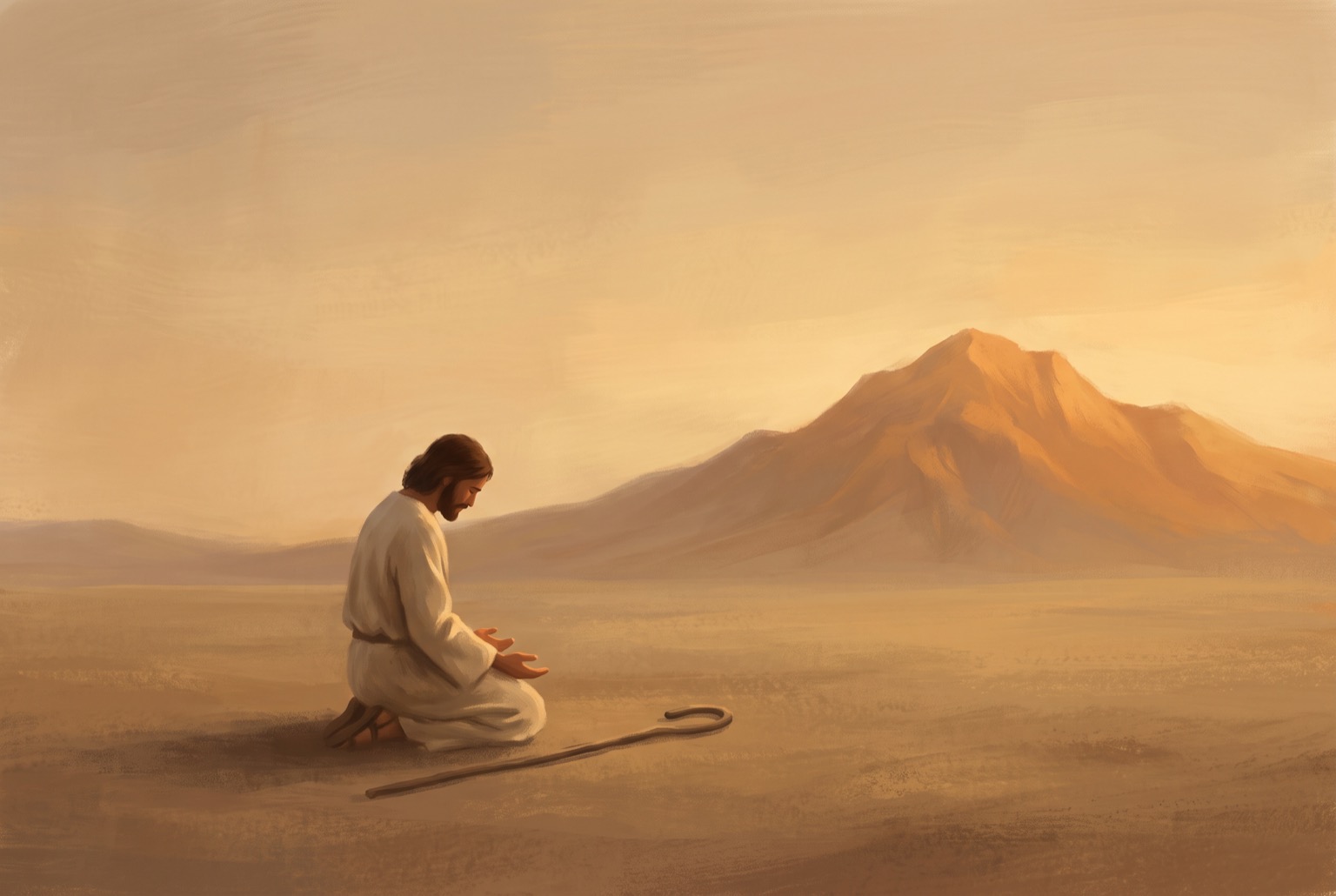
Quick answer: The Hebrew word for meekness is עֲנָוָה (anavah), pronounced ah-nah-VAH, Strong’s H6038. The KJV translates it as “meekness,” “humility,” and “gentleness.” Its adjective is anav (עָנָו, Strong’s H6035), “meek,” the word used of Moses in Numbers 12:3 and of “the meek” who “shall inherit the earth” in Psalm 37:11. Both come from a root that means “to be bowed down.” In Hebrew, meekness isn’t a soft personality. It is a posture: a strong person who has chosen to bow low before God, and who trusts God enough not to fight for their own place.
Word Study: Where “Anavah” Comes From
Anavah grows out of the Hebrew root ʿanah (Strong’s H6031), a verb that means “to be bowed down, to be brought low, to be afflicted.” It is not a gentle word. The same verb describes Israel being afflicted as slaves in Egypt and people “afflicting their souls” by fasting on the Day of Atonement. The picture underneath is a body pressed downward.
From that one root, Hebrew grew two words that sound almost the same and mean something very different:
- ʿani (עָנִי, H6041) means “poor” or “afflicted.” This is someone who has been bowed down by life: by poverty, by injustice, by stronger people.
- ʿanav (עָנָו, H6035) means “meek” or “humble.” This is someone who bows. Anavah is the quality itself: meekness, humility.
The two words sit so close together that in several psalms the written Hebrew text and the traditional reading disagree about which one is meant. That closeness is the lesson. Biblical meekness was learned by people who knew what it was to be pushed down. The difference is where they turned. The ʿani is bent by circumstances. The ʿanav has taken that bent-over place and turned it toward God: I am low, and I will look to You rather than claw my way back up on my own.
That is why the English word “meek” can mislead us. Modern English hears mild, timid, easily pushed around. Hebrew anavah doesn’t mean a lack of strength. It means strength that has stopped defending itself because it is held by Someone stronger. And Proverbs keeps putting it right before the thing we’d least expect: “before honour is humility” (Proverbs 15:33 and 18:12). The way up, in the Bible, starts by bowing.
Want to learn meekness from the One who called Himself meek? Jesus said, “learn of me; for I am meek and lowly in heart” (Matthew 11:29), and the best way to learn from Him is to walk with Him day by day through the Gospels. 30 Days Walking with Jesus is a set of short, easy-to-read devotionals that bring His words, actions, and love to life. It’s built for new Christians learning how to start and for long-time Christians who want the connection back. The 3-day sample below is free.
Where Meekness Appears in the Hebrew Bible
Anavah itself is rare, appearing only a handful of times, and its adjective anav appears roughly two dozen times, mostly in the Psalms and the Prophets. Here is where the word family does the most work:
| Reference | Text (KJV) | What the word is doing here |
|---|---|---|
| Numbers 12:3 | “(Now the man Moses was very meek, above all the men which were upon the face of the earth.)” | Anav: the Bible’s one-line portrait of Moses |
| Proverbs 18:12 | “Before destruction the heart of man is haughty, and before honour is humility.” | Anavah as the doorway to honor, the opposite of a haughty heart |
| Proverbs 22:4 | “By humility and the fear of the LORD are riches, and honour, and life.” | Anavah paired with the fear of the LORD |
| Zephaniah 2:3 | “Seek ye the LORD, all ye meek of the earth … seek righteousness, seek meekness: it may be ye shall be hid in the day of the LORD’s anger.” | Both words at once: the meek (anavim) told to keep seeking meekness (anavah) |
| Psalm 37:11 | “But the meek shall inherit the earth; and shall delight themselves in the abundance of peace.” | Anavim: the verse Jesus quotes in Matthew 5:5 |
Look at Zephaniah 2:3. The prophet is speaking to people who are already meek, and his instruction to them is: seek meekness. Anavah isn’t a box you tick once. Even the humble are told to keep going lower.
Two more places show how big this word can get. In Psalm 45:4, a royal psalm, the king is told to “ride prosperously because of truth and meekness and righteousness.” Meekness is part of how a king wins, not something he sets aside to win. And in Psalm 18:35, David says to God, “thy gentleness hath made me great,” using a form of anavah. David credits his greatness to God’s willingness to stoop down to him. In the Hebrew Bible, even God bends low.
Verse Deep Dive: Numbers 12:1–13, The Meekest Man on Earth
“(Now the man Moses was very meek, above all the men which were upon the face of the earth.)” (Numbers 12:3)
This verse is famous, but it is easy to read it on its own and miss why it’s there. It sits in the middle of a family fight.
1. Moses is being attacked by his own family. “And Miriam and Aaron spake against Moses because of the Ethiopian woman whom he had married” (Numbers 12:1). Then the real complaint comes out: “Hath the LORD indeed spoken only by Moses?” (Numbers 12:2). Hasn’t God spoken through us too? Moses’ own sister and brother, his closest co-leaders, are questioning whether he should be leading at all. That’s the kind of attack most of us would answer fast and loud.
2. The verse is a parenthesis, and it explains a silence. Right after the complaint, the text says: “And the LORD heard it” (Numbers 12:2). Then the narrator stops the story, and the KJV even puts it in brackets, to tell us Moses was very meek. Why stop there? Because Moses says nothing. He doesn’t defend his record, remind them who went up the mountain, or call a meeting. The parenthesis is the narrator’s way of saying: here is why he didn’t answer. Meekness, in this verse, looks like a man who doesn’t need to win the argument about himself.
3. God answers instead. In the very next verse, “the LORD spake suddenly” to all three of them, and God takes up the defense Moses never made: “With him will I speak mouth to mouth, even apparently, and not in dark speeches; and the similitude of the LORD shall he behold: wherefore then were ye not afraid to speak against my servant Moses?” (Numbers 12:8). Moses left his reputation in God’s hands, and God handled it.
4. Then Moses prays for the people who attacked him. When Miriam is struck with leprosy, Moses doesn’t say “she had it coming.” He cries out: “Heal her now, O God, I beseech thee” (Numbers 12:13). That is anav in action. Not weakness, but a man so secure in God that he can spend his strength on the person who wounded him.
And remember who this is. This is the man who stood in front of Pharaoh. Forty years earlier, as a young prince, he had killed an Egyptian with his own hands to set things right (Exodus 2:11–12). Moses was not born mild. The meekest man on earth was a strong man who had learned, through forty years in the desert, to stop fighting for his own place and let God fight for it.
Not All Lowliness Is the Same
Because Hebrew builds meekness out of a word for being pushed down, it helps to see anavah next to its neighbors:
| Word | Meaning | Picture |
|---|---|---|
| ʿani (עָנִי, H6041) | Poor, afflicted | Bowed down by circumstances; something done to you |
| ʿanav / anavah (H6035 / H6038) | Meek; meekness, humility | Bowed down before God; a posture you choose |
| ga’on (גָּאוֹן, H1347) | Pride, arrogance | Rising up, swelling tall; the opposite direction |
The first two are closer than they look. Many of the “meek” in the Psalms really were poor and powerless. What made them anavim wasn’t that life had knocked them down. It was that, once down, they looked up to God instead of looking for a way to push someone else down. Pride goes the other way: it stands up tall and claims the height for itself. Proverbs 18:12 draws the line exactly: “the heart of man is haughty” before destruction, but “before honour is humility.”
Why the Original Word Changes the Meaning
“Blessed are the meek: for they shall inherit the earth” (Matthew 5:5) is one of the best-known lines Jesus ever said, and one of the most misunderstood. In English it can sound like a reward for being a pushover. But Jesus is quoting Psalm 37:11, “the meek shall inherit the earth,” and the psalm’s “meek” are the anavim.
Read Psalm 37 and you’ll see what kind of people they are. The whole psalm is written to people watching the wicked succeed, grab land, and get away with it. Its advice, again and again, is: don’t fret, don’t copy them, trust God and wait. The anavim are the people who refuse to grab. And the promise to them is inheritance, which is the one way of getting land you can’t take by force. You inherit because you belong to a family and someone gives it to you.
So when Jesus says “blessed are the meek,” He isn’t blessing timid people. He’s blessing the ones who have stopped fighting for their own place in the world and trust God to give it. That’s also why Isaiah 61:1 says the Anointed One was sent “to preach good tidings unto the meek,” the lowly who had been waiting. And it’s why Jesus can describe Himself with the same word: “I am meek and lowly in heart” (Matthew 11:29). The One with every right to defend Himself chose, like Moses, not to.
Knowing anavah turns meekness from a personality type into a direction. It isn’t “be quiet and small.” It’s “bow toward God, and let God be the one who lifts.” As Psalm 147:6 puts it, “The LORD lifteth up the meek.” (For the peace the meek are promised in Psalm 37:11, see our study Hebrew Word for Peace.)
Living It Out
Think of the last time someone spoke against you: a coworker, a relative, a comment online. Now picture Moses in Numbers 12, saying nothing, because “the LORD heard it.” This week, when you feel the urge to defend yourself, try one small act of anavah: don’t answer right away. Tell God about it first. You may still need to speak, but you’ll speak as someone who isn’t fighting for their own place.
Then take the second step Moses took. Pray for the person who hurt you, by name. That’s the part that shows meekness is strength and not weakness. It takes a lot more strength to bless someone than to win against them.
Journal Prompts
- Hebrew has two “bowed down” words: ʿani, bowed down by life, and ʿanav, bowed down before God. Where has life pushed you low lately, and what would it look like to turn that low place toward God instead of away from God?
- In Numbers 12, Moses didn’t defend himself, and “the LORD heard it.” Where are you working hardest right now to defend your reputation or your position? What would it mean to leave that defense in God’s hands?
- Psalm 37:11 promises that the meek will inherit the earth, not take it. What is something you have been trying to grab that God may want to give you instead?
Prayer
Lord, I confess I often fight for my own place. I defend myself quickly, and I grab what I’m afraid I won’t be given. Teach me anavah. Teach me to bow low before You, not because life has knocked me down, but because I trust You to lift me up. When people speak against me, help me be like Moses: quiet, secure in You, and ready to pray for the one who hurt me. Jesus was meek and lowly in heart; let me learn from Him and find rest for my soul. In Jesus’ name, Amen.
Share This
If this study helped you, here are two posts you can copy and share:
- The Hebrew word for meekness, anavah, comes from a root meaning “to be bowed down.” Meekness isn’t weakness. It’s strength that has chosen to bow before God and let God do the lifting. [Post URL]
- “The meek shall inherit the earth” (Psalm 37:11). You can grab land, but you can’t grab an inheritance. It’s given to people who belong to the family. That’s what Jesus meant in Matthew 5:5. [Post URL]
FAQ
What is the Hebrew word for meekness?
The Hebrew noun for meekness is anavah (עֲנָוָה, Strong’s H6038), which the KJV also translates “humility” and “gentleness.” The related adjective anav (עָנָו, Strong’s H6035) means “meek” and is the word used of Moses in Numbers 12:3 and of “the meek” in Psalm 37:11.
Does meekness in the Bible mean weakness?
No. Anavah comes from a root meaning “to be bowed down,” but it describes a strong person choosing to bow before God, not a person without strength. Moses, called the meekest man on earth, confronted Pharaoh and led a nation. His meekness showed in refusing to defend himself when attacked and praying for the sister who opposed him (Numbers 12:13).
Is meekness the same as humility in Hebrew?
Largely, yes. Hebrew uses the same word, anavah, for both, and the KJV translates it “humility” in Proverbs 15:33, 18:12, and 22:4 but “meekness” in Zephaniah 2:3. Hebrew doesn’t separate the two ideas as sharply as English or Greek does.
Where does “the meek shall inherit the earth” come from?
Jesus’ words in Matthew 5:5 quote Psalm 37:11, “But the meek shall inherit the earth; and shall delight themselves in the abundance of peace.” The Hebrew word for “the meek” there is anavim, the plural of anav: people who wait on God instead of grabbing what the wicked grab.
Learn meekness from the One who is meek and lowly in heart. 30 Days Walking with Jesus offers 30 days of short, easy-to-read devotionals that bring Jesus’ words, actions, and love to life, whether you’re just starting out or rekindling a faith that has gone quiet. Start with the free 3-day sample: