 0
0
 0
0
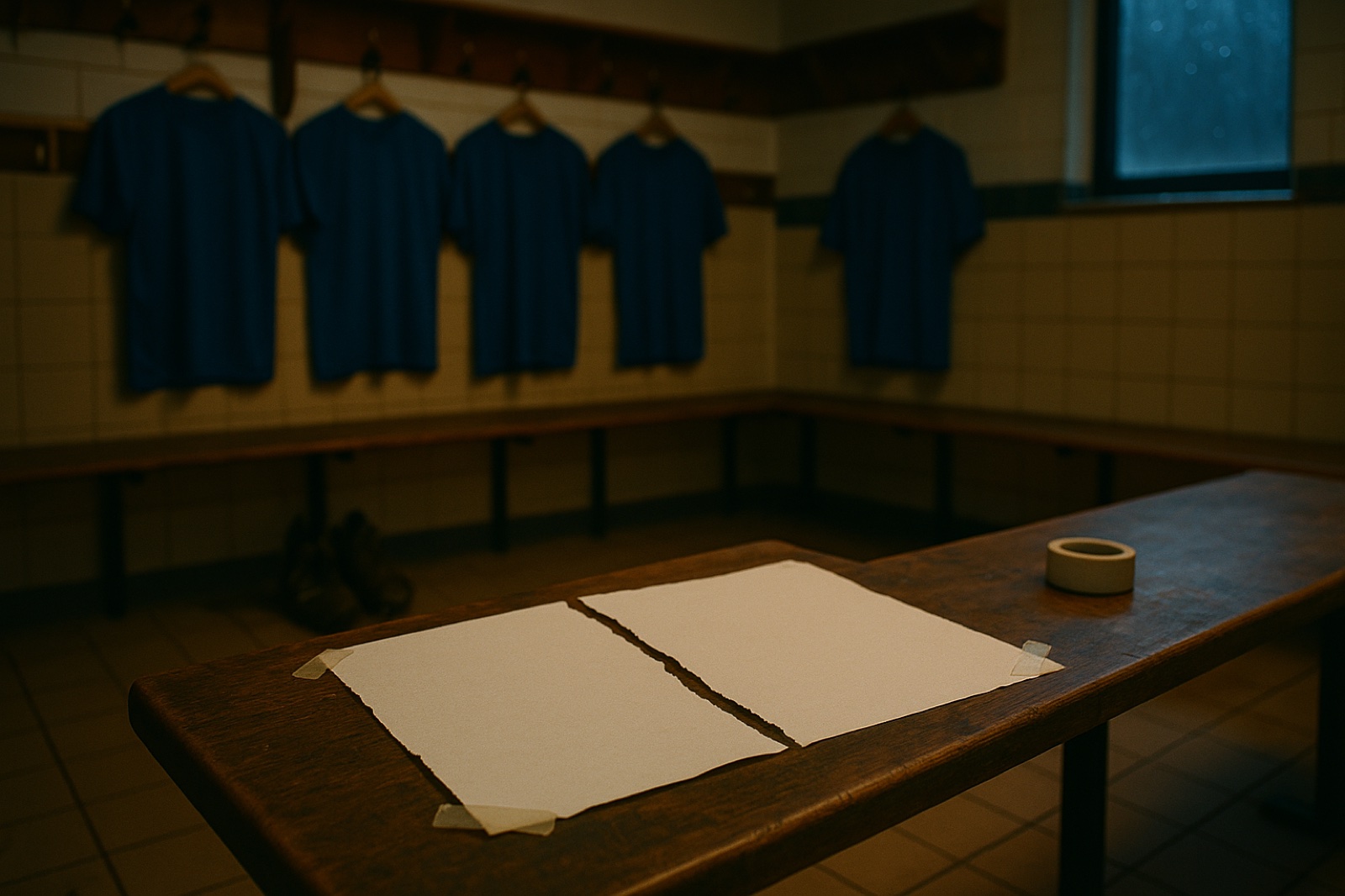
The sign is just paper. In the pilot of Ted Lasso, a new coach from Kansas who knows almost nothing about football hangs a single word in AFC Richmond’s locker room, with Keeley’s help. BELIEVE. The players roll their eyes. It looks like the kind of thing you’d buy at a motivational poster shop.
Two seasons later, the sign comes down. And the person who tears it in half is not a player who hated Ted from day one. It’s Nate Shelley, the kit man Ted noticed first, the man who had more reason than anyone in that building to believe in belief.
That moment is the key to the real Ted Lasso meaning – what the show is actually about. And once you see it, the whole show rearranges itself around it.
What Ted Lasso Is Really About (It Isn’t Kindness)
The easy summary of Ted Lasso is “be kind and things work out.” The Apple TV+ comedy, created by Jason Sudeikis, Bill Lawrence, Brendan Hunt and Joe Kelly, and first released in 2020, gets described that way all the time. But watch the first three seasons closely and kindness loses constantly.
Richmond is relegated at the end of season one, in an episode titled “The Hope That Kills You.” Ted’s marriage ends anyway. Being nice to Jamie Tartt doesn’t fix Jamie Tartt, not for a long while. And the man Ted is kindest to of all, Nate, betrays him.
So the show isn’t arguing that kindness wins. It’s arguing something stranger and harder. Belief given to someone before they have earned it is what changes them – even though it doesn’t always work, and even though it sometimes gets thrown back in your face.
Look at the shape of Ted’s big moments. He doesn’t wait for people to prove themselves. He goes first.
When Rebecca confesses, in season one’s “All Apologies,” that she hired him to wreck the club, Ted forgives her almost at once. She hasn’t done anything to deserve that yet. She has only just stopped lying. The show doesn’t treat his forgiveness as a reward for good behaviour. It treats it as the thing that makes her good behaviour possible. Rebecca becomes the owner she is after that scene, not before it.
Nate is the same pattern. Ted asks the invisible kit man what he thinks about the team. He lets him speak to the players. He brings him onto the coaching staff. Every step is belief extended in advance – a bet on a Nate who doesn’t exist yet.
Why Nate Tore the Believe Sign
Here is the part most summaries skip. The bet doesn’t pay out the way it’s supposed to.
Being believed in doesn’t cure Nate. It feeds something hungry in him. He wants more of Ted’s attention, then more credit, then more of everything. In season two he leaks Ted’s panic attack to the press. In the season two finale, “Inverting the Pyramid of Success,” he tells Ted, in effect, that Ted made him feel special and then stopped paying attention. Then he rips the sign on his way out and goes to work for Rupert at West Ham.
Notice what he chooses to destroy. Not Ted’s office. Not a trophy. The one object in the building that is Ted’s idea. Nate isn’t attacking a man so much as attacking the gift he was given – because receiving it, and still feeling small, has become unbearable.
That is a painfully honest thing for a comedy to show. Grace doesn’t always land on a heart that’s ready for it. Sometimes it lands on a wound, and the wound bites.
And the show won’t let Ted off the hook either. The man handing out belief isn’t fine. He has panic attacks. He sits with the club’s sports psychologist, Dr. Sharon Fieldstone, and finally talks about losing his father to suicide when he was a teenager, in “No Weddings and a Funeral.” Ted doesn’t give belief away because he’s overflowing with it. He gives it away while he is running low. That is what keeps the show from being sentimental.
The Detail That Changes the Ending
Near the end of the third season, Nate comes back. Beard goes to find him first and forgives him. When he returns to Richmond, it isn’t as a coach. He comes back as the assistant to the kit man – a job lower than the one he started in.
Then, in the third-season finale, “So Long, Farewell,” it turns out the players kept the pieces of the torn sign. At halftime they put it back together. After the match, Nate glues it and helps hang it back up in the locker room. The tear is still part of it now.
Here is the observation worth sitting with. The sign is not repaired by Ted. Ted has already decided to go home to Kansas. The belief he hung up in the pilot is restored by the one person who tore it, after the man who brought it is leaving. Belief given early didn’t fail. It just took the long way round, and it came back through the very hands that broke it.
There is one more thing, and it’s about us. A lot of viewers hated Nate’s return. Critics called it rushed and unearned, and to be fair, much of his change happens off screen. Nick Mohammed, who plays Nate, has said the arc is less about redemption than about “our capacity for forgiveness,” and that “part of the difficulty in forgiving Nate is because we believed in him from the start.”
Read that again. The complaint that Nate didn’t earn his way back is the show’s whole question, turned on the audience. Ted Lasso spent three seasons asking whether belief should wait until people deserve it. Then it handed viewers someone who didn’t deserve it, and watched what they did.
A Very Old Story About Coming Home
There is an older story with exactly this shape, and it’s one Jesus told.
A younger son takes his share of the family money and wastes it far from home. When he’s broke, he rehearses a speech on the road back: he’ll ask to be taken on as a hired worker, because he’s no longer worthy to be called a son. That is Nate, coming back as assistant kit man.
But the father sees him while he is still a long way off and runs to meet him, before the speech is even finished. The robe, the ring, the party – none of it is earned. Grace goes first. It always did.
And the story doesn’t end there. The older brother, who stayed and did everything right, is furious and refuses to come into the party. The father goes out to him too. Then the story simply stops. We never learn if the older brother walks in.
That open ending is the part Ted Lasso lands on. The fans who couldn’t accept Nate’s return are standing exactly where that older brother stood – outside the party, arguing about fairness. The show, like the parable, leaves the door open and doesn’t tell you whether to go in.
If you have ever been on either side of that door, the Am I Ready to Forgive? assessment is a quiet way to find out where you actually stand.
The Sign, Still Torn
When the sign goes back up, it isn’t a clean new poster. It’s the old one, glued back together, seams and all. That feels right. Belief in Ted Lasso was never the thing that stops you breaking. It’s the thing someone hangs back on the wall after you have.
If you like television that treats people’s worst moments as the middle of their story rather than the end, the Korean drama My Mister is working the same ground from a very different direction – here’s our reading of what My Mister is really about.
Let’s Talk About It
Did Nate’s return in Ted Lasso feel earned to you, or did the show skip too much of his change? And if it didn’t feel earned – does that make it wrong, or is that the point? Tell me in the comments.
Ted Lasso Questions and Answers
What is Ted Lasso really about?
Ted Lasso, the Apple TV+ comedy created by Jason Sudeikis, Bill Lawrence, Brendan Hunt and Joe Kelly, is less about kindness winning than about belief given before it’s earned. Ted keeps extending trust to people like Rebecca and Nate before they deserve it, the show admits this often fails in the short term, and it argues that this early belief is still what changes people over time.
Why did Nate rip the Believe sign in Ted Lasso?
In the Ted Lasso season two finale, “Inverting the Pyramid of Success,” Nate Shelley tears the Believe sign in half because he feels Ted made him feel special and then neglected him. The sign is Ted’s own idea in physical form, so ripping it is Nate rejecting the belief Ted gave him, just before he leaves AFC Richmond to coach West Ham under Rupert.
What happens to the Believe sign at the end of Ted Lasso season 3?
In “So Long, Farewell,” the season three finale of Ted Lasso, the Richmond players reveal they kept the pieces of the torn Believe sign and reassemble them at halftime. After the match, Nate glues the pieces back together and helps put the sign back up in the locker room, so the man who tore it is the one who restores it.
Is Nate’s redemption in Ted Lasso earned?
Many viewers felt Nate’s return in Ted Lasso season three was rushed, since much of his change happens off screen. Actor Nick Mohammed has described the arc as being about “our capacity for forgiveness” rather than redemption, which frames the storyline as a question about whether the audience can forgive someone who has not fully earned it.
Is Ted Lasso a Christian show?
No. Ted Lasso is a secular sports comedy with no religious agenda. Its central pattern – forgiveness and belief offered before they are deserved – happens to echo one of the oldest stories in the Bible, the parable of the prodigal son, but the show never frames it in religious terms.
Social Share Posts
The Believe sign in Ted Lasso is torn by the one person Ted believed in most – and put back up by that same person after Ted has decided to leave. The belief didn’t fail. It just came home the long way.
Everyone who says Nate didn’t earn his way back in Ted Lasso is kind of proving the show’s point. Three seasons asking whether belief should wait until people deserve it – then it hands you someone who doesn’t.
Nate coming back as the ASSISTANT kit man is the most quietly devastating choice in Ted Lasso. Less than he started with.