 0
0
 0
0
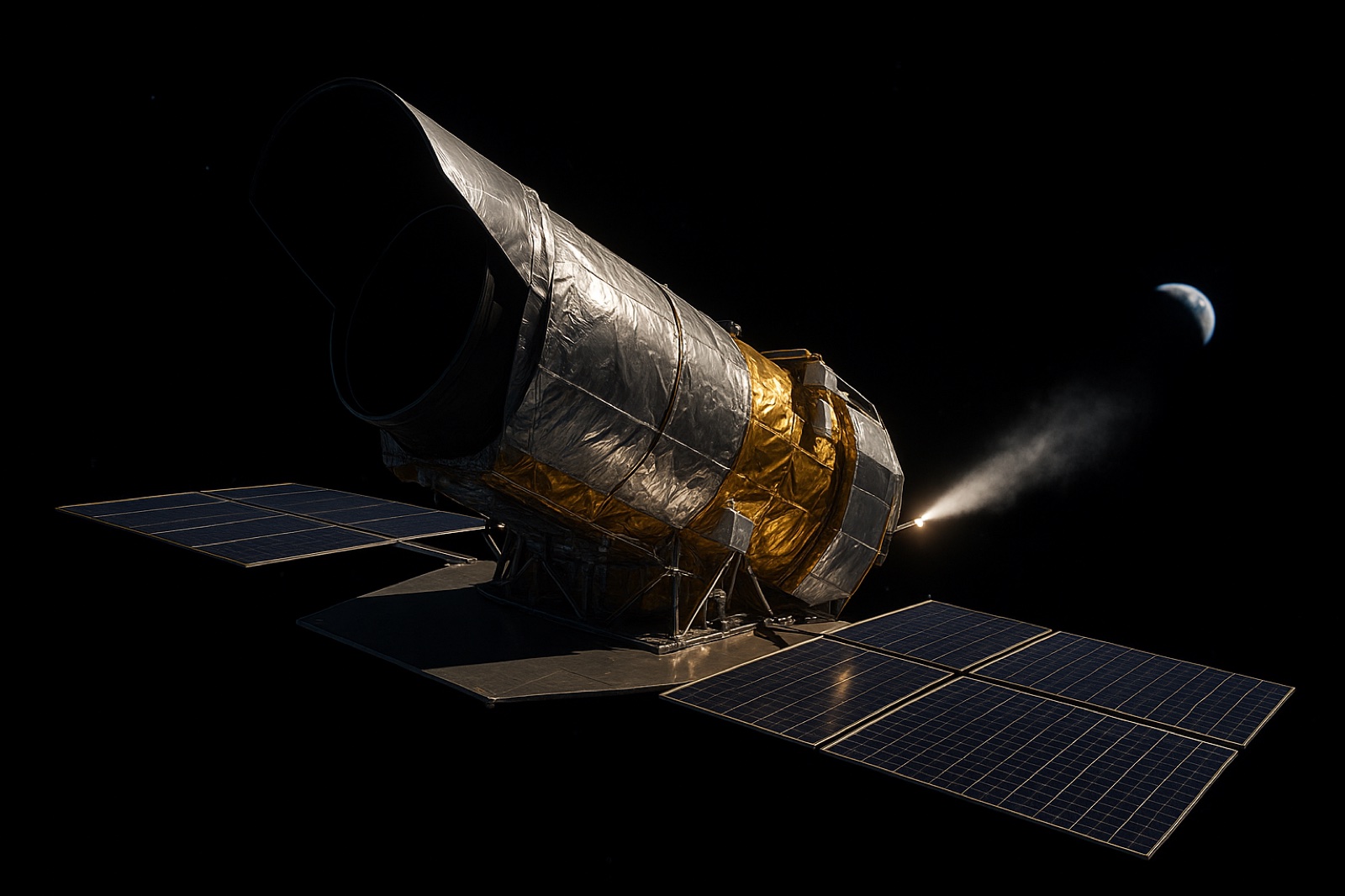
On 30 August 2026, a Falcon Heavy rocket threw NASA’s Nancy Grace Roman Space Telescope off the Earth and toward a point in space about 1.5 million kilometres away. The next day, the team fired its engines for the first course correction.
They had set aside about 200 kilograms (441 pounds) of fuel for that one fix. They used about 18 kilograms (40 pounds).
That is less than a tenth of the budget. And it is a big part of why the Roman Space Telescope, which was built to run for 10 years, now has fuel for “at least 22 years of potential science operations,” in the words of Jamie Dunn, director of NASA’s Goddard Space Flight Center.
That is the headline. But the real story is a little different from the headline, and I think the difference is the most useful part.
How the Roman Space Telescope Gained 12 Years of Fuel
It is tempting to read the news as “one perfect burn doubled the telescope’s life.” That is not quite what NASA said. NASA’s own breakdown splits the extra time into three roughly equal pieces:
- About 4 years from the first burn. It was more than 99% accurate, so it needed only a small push.
- About 4 years from weight. The team had planned for a spacecraft that could weigh as much as 9,800 kilograms (21,605 pounds). The finished telescope weighed 8,056 kilograms (17,760 pounds). Because it came in lighter, they could fill the fuel tanks all the way up.
- About 4 years still to come. NASA expects the second course correction, planned for later in September, and the final move into orbit to use less fuel than planned too. That part is a forecast, not a result yet.
So the first burn is only about a third of the story. Another third came from a decision made years ago, on the ground, long before launch day. And the last third hasn’t happened yet.
If you want the bigger picture of what this telescope will actually do once it gets there, we wrote about it before launch: NASA’s Roman Space Telescope will see billions of galaxies.
Why a Small Correction Early Costs So Little
Here is the simple physics. When you are aimed at something very far away, a tiny error at the start grows over the whole trip. A nudge that is hardly anything on day one would need a much bigger shove to fix weeks later, because by then you are far off the line.
It works the other way too. Fix it early, and a small push is enough. That is why the team did not wait. They corrected on day two, while the error was still small and cheap.
The accuracy did not come from luck either. Dunn credited “exquisite planning by our orbital dynamics team, brilliant execution by the operations team, and a precise launch from SpaceX.” Three groups, each doing their small part well, added up to a burn that barely needed to happen.
The Detail Almost Everyone Skips: The Margin
The part of this story I keep coming back to is the weight.
Alison Rao, who leads propulsion for Roman at Goddard, explained why the fuel was budgeted against a heavy spacecraft in the first place: “A spacecraft’s mass changes throughout the design and build process, so we base the propellant budget on a set maximum value so we won’t come up short.”
In other words, they planned for the worst version of the telescope. They left room. And when the real telescope turned out lighter, that room became years.
Nobody celebrates margin while you are building it. It looks like waste. It looks like being too careful. Then one day it is the reason something that was meant to last 10 years might last more than 20.
Once Roman arrives, it will keep needing small burns, about once every 28 days, just to hold its place. Nothing out there stays on course by itself. Space is not so different from the rest of life in that way.
What “Potential” Is Doing in That Sentence
It’s worth being honest about one word. NASA keeps saying “potential” science operations. Fuel is only one limit on a telescope’s life. Parts wear out. Instruments age. Missions need funding to keep running after their planned years are up.
The sad version of this is NASA’s Swift telescope, which is slowly falling, with no engine to push itself back up. Fuel doesn’t guarantee a long life. But running out of it guarantees a short one. Roman now has a lot more room to work with.
A Very Small Helm
There is a picture in some very old writing that fits this story almost too well. It describes a great ship, pushed hard by strong winds, and yet turned wherever the pilot wants by a very small helm.
That old writer was talking about how much our small words can steer. But the image holds for more than words. The small turn, made early, is the cheap one. The same turn made late costs far more, and sometimes it is too late to make at all.
Most of us know what drifting feels like. It rarely starts with a big wrong turn. It starts with a tiny angle nobody fixes. (We wrote about that too: why you’re slowly drifting away from what matters most.) And the thing that pulls a life back on course is usually not one heroic effort. It is a small, humble correction, made today, while it is still small. I think that is one of the quiet kindnesses built into the way God made the world: the earliest fix is almost always the easiest one.
Small Corrections You Can Make This Week
- Fix the small thing on day two. A short apology today costs less than a long repair next year.
- Leave some margin. Keep a little time, rest or patience unspent. It can feel like waste until the day it’s what saves you.
- Check your course often. Roman will adjust about every four weeks. A few quiet minutes to ask “am I still pointed where I meant to go?” is enough.
- Give credit to the team. The best burn in this story came from many people each doing a small job well.
Roman still has a long way to go. Its first science images are expected in early 2027, and nobody knows yet exactly how many years it will get. But it starts that journey with more room than anyone planned for, because someone fixed a small thing early, and someone else left space for the unexpected.
Not a bad way to start any journey.
Discussion Question
Which do you think matters more for going the distance: getting it almost perfect at the start, or leaving extra margin for when things go wrong? Tell us what you think in the comments.
Share This
“NASA budgeted 200 kg of fuel for one course correction. The Roman Space Telescope used 18. Small fixes, made early, are cheap. https://bgodinspired.com/?p=116104”
“The Roman telescope got about 4 extra years just because it was built lighter than the worst case they planned for. Leaving margin feels like waste until it doesn’t. https://bgodinspired.com/?p=116104”
“A telescope built for 10 years may now last 22. Not from one miracle burn, but from three small things done well. Worth a read. https://bgodinspired.com/?p=116104”
Questions People Ask About the Roman Space Telescope
How long will the Roman Space Telescope last?
The Nancy Grace Roman Space Telescope was designed with fuel for 10 years: a 5-year main mission plus 5 more years. In September 2026, NASA said the telescope has fuel for at least 22 years of potential science operations. Fuel is only one limit, though. Aging parts and future funding decisions could also affect how long it actually runs.
Why did the Roman Space Telescope save so much fuel?
NASA credits three things. The first course correction, on 31 August 2026, was more than 99% accurate and used about 18 kilograms (40 pounds) of the 200 kilograms (441 pounds) set aside for it. The finished spacecraft weighed 8,056 kilograms, well under the 9,800-kilogram maximum it was planned around, so the fuel tanks could be filled completely. NASA also expects later maneuvers to use less fuel than budgeted.
When did the Roman Space Telescope launch?
The Nancy Grace Roman Space Telescope launched on 30 August 2026 on a SpaceX Falcon Heavy rocket from Kennedy Space Center in Florida. It is travelling to the second Lagrange point (L2), about 1.5 million kilometres from Earth, with its first science images expected in early 2027.
Why are early course corrections cheaper for spacecraft?
A small aiming error at the start of a long trip grows the farther a spacecraft travels. Fixing it early takes only a small push, while waiting lets the error grow until a much bigger, more fuel-hungry burn is needed. That is why mission teams usually make the first correction within days of launch.