 0
0
 0
0
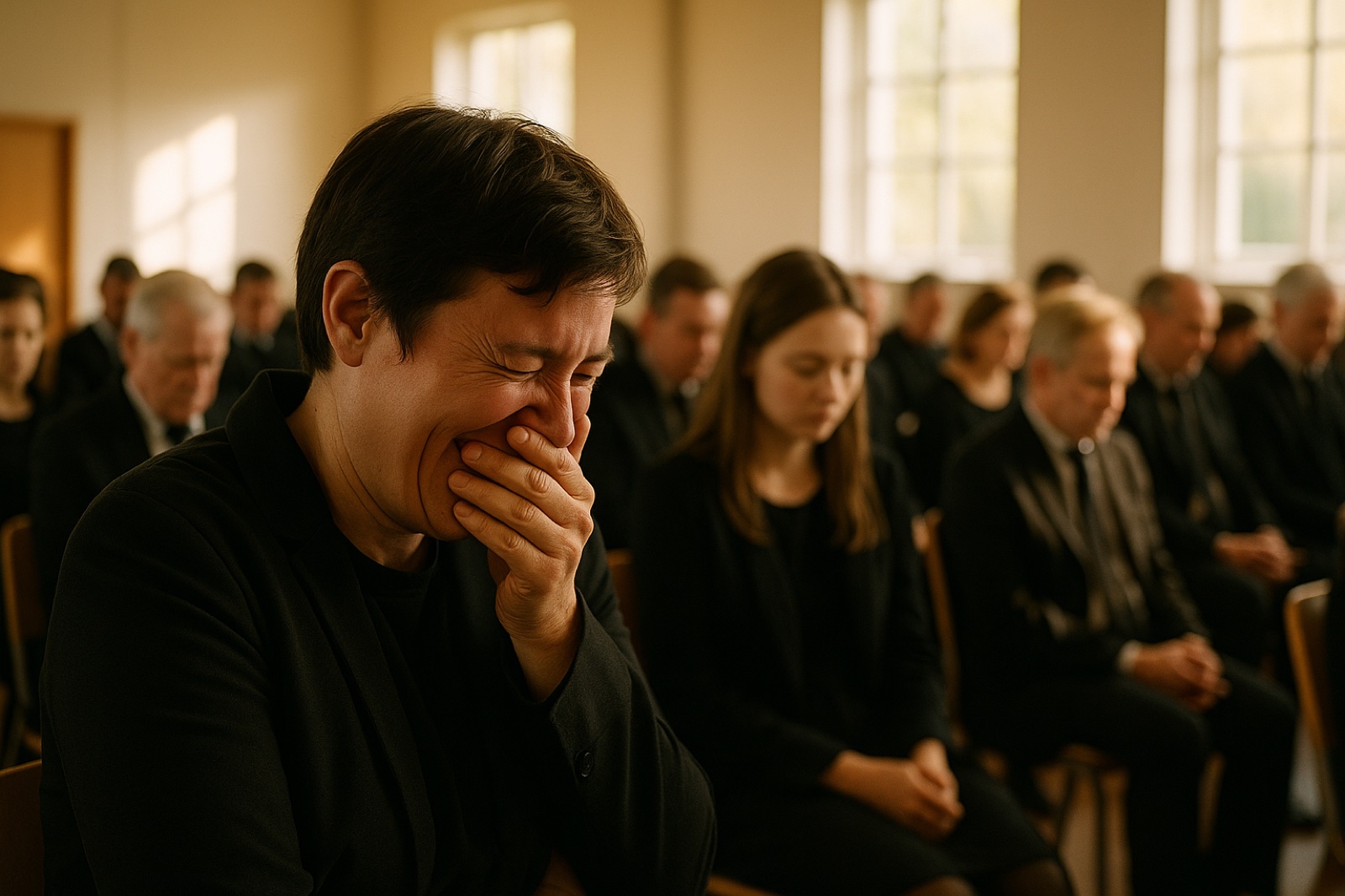
Someone is telling you bad news. Or you are standing at a funeral. Or your boss is giving you a hard talk.
And then it happens. A laugh bubbles up. You press your lips together. You look at the floor. It comes out anyway.
Afterward, the question follows you home: why do I laugh in serious situations? Does it mean I don’t care? Is something wrong with me?
Here is the short answer, and it may surprise you. The laugh is usually not a sign that you feel nothing. Very often, it is a sign that you are feeling a lot.
Why Do I Laugh in Serious Situations?
Psychologists have names for this. The most common is nervous laughter. You may also see it called paradoxical laughter — laughter that shows up when the moment calls for the opposite.
To understand it, it helps to know one odd fact about laughing in general. Most of the time, we don’t laugh because something is funny.
The neuroscientist Robert Provine spent years listening to people laugh in everyday public places. He found that most laughter came after plain, everyday remarks, not jokes. Laughter, it turns out, is mostly a social signal. It says things like “we’re okay,” “I’m not a threat,” or “this is a lot.”
So when a moment gets heavy, awkward, or scary, the body sometimes reaches for that old signal. It is trying to ease the pressure. It just picks a bad time to do it.
That is also why laughter can do real good in the right moment. (We looked at that side of it in why laughter is good medicine, according to science.) The same tool that lifts a good day is trying to lift a hard one.
The Most Famous Stress Experiment Was Full of Laughter
In the early 1960s, a psychologist at Yale named Stanley Milgram ran one of the best-known experiments ever done. Volunteers were told to give electric shocks to another person each time that person got an answer wrong. The shocks weren’t real — the other person was an actor — but the volunteers didn’t know that.
Most people remember the headline: many volunteers kept going when told to. Fewer people remember what Milgram wrote about how those volunteers looked while they did it.
In his 1963 report, Milgram noted that 14 of the 40 men in the study showed “definite signs of nervous laughter and smiling.” He called the laughter “entirely out of place, even bizarre.”
Then comes the part almost nobody quotes. In interviews afterward, the volunteers “took pains to point out that they were not sadistic types, and that the laughter did not mean they enjoyed shocking the victim.”
Think about who was laughing. Not the people who felt fine. The laughter showed up in people caught in a terrible inner fight — told to do one thing, sure in their gut it was wrong. Milgram also saw sweating, trembling, and lip-biting in the same room. The laughter belonged to that list. It was stress with nowhere else to go.
Why Do I Laugh When Something Bad Happens — or When Someone Dies?
This one carries the most shame. So it is worth knowing what one careful study found.
In 1997, psychologists Dacher Keltner and George Bonanno published a study of adults whose husband or wife had died. About six months after the loss, the researchers asked each person to talk about the spouse they had lost. They recorded their faces while they spoke.
Some people laughed. Not polite laughs — real ones, the kind that crinkle the eyes. Researchers call that a Duchenne laugh.
Those genuine laughs were linked to less distress, less anger, and better relationships with the people around them. Strangers who later watched the recordings responded more warmly to them. And in follow-up interviews years later, the people who had laughed were generally coping better.
Two honest cautions. First, this shows a link, not proof that laughing causes healing. Second, it was the real, eye-crinkling laughter that mattered. Forced, polite laughter did not show the same link.
But the main point stands. A laugh in grief did not mean these people loved less. For a moment, it gave them a little room to breathe inside something too big to hold all at once.
If you are the one sitting with someone near the end, you may worry about saying or doing the wrong thing, too. This may help: what to say to someone who is dying.
Crying When You’re Happy Is the Same Thing, Backwards
Here is a pattern that makes the whole picture click.
You have probably cried at a wedding. Or seen a baby so cute you wanted to squeeze it. In 2015, a team at Yale led by Oriana Aragón studied exactly these reactions and published their work in the journal Psychological Science. They called them “dimorphous expressions” — a face showing the opposite of the feeling underneath.
Their finding: these mixed-up reactions tend to show up when a feeling gets very strong. And they seem to help people come back to balance. People who reacted this way appeared to recover from those big feelings better.
Tears of joy. Laughter in sorrow. Same thing, facing two directions. When a feeling is too big for one face, the body borrows the other one.
When Laughing at the Wrong Time Is Worth Checking
For most people, nervous laughter is normal and harmless. But there is one situation where it is worth telling a doctor, nurse, or health worker.
Some people have sudden bursts of laughing or crying that don’t match how they feel at all, and they can’t stop them. This can be a condition called pseudobulbar affect. It can follow a stroke or a brain injury, or come with illnesses such as multiple sclerosis, ALS, or dementia.
The difference is simple. Nervous laughter follows a feeling — tension, shock, awkwardness. Pseudobulbar affect can come out of nowhere and feel like it isn’t yours. If that second one sounds familiar, or if the laughter is new and very hard to control, get it checked.
And if your nervous laughter comes with constant worry, it may help to see how much tension you are carrying day to day. Our free How Anxious Am I? assessment takes a few minutes.
What to Do When the Laugh Starts
None of these cost anything, and you can do them anywhere.
- Breathe out slowly. A long, slow breath out calms the body’s alarm. Laughter is made of short, sharp breaths, so a long one works against it.
- Put your attention in your feet. Press them into the floor. Notice the weight. It gives the tension somewhere to go.
- Look down or away. Eye contact can make it worse. Looking at something plain gives your face a moment to settle.
- Don’t fight it too hard. Clamping down can make the laugh burst out bigger. Let a small one pass quietly.
- Say one honest sentence later. “I’m sorry. I laugh when I’m nervous. It isn’t that I don’t care.” Most people understand. Many have done it themselves.
The Laugh Isn’t Always Joy
Here is the part worth sitting with.
Psychologists only started measuring nervous laughter in the last century. But people noticed it long before that. An ancient proverb, traditionally dated to around three thousand years ago, says it plainly: even while someone laughs, their heart can be full of sorrow.
Whoever first wrote that down wasn’t embarrassed by the mismatch. They just saw it. They understood that a face and a heart don’t always say the same thing — and they believed in a God who looks at the heart, not the face. A God who isn’t confused or offended when a laugh comes out at the wrong time, because God can see what the laugh is carrying.
That is not a bad thing to remember the next time it happens.
Because it will happen again. You will be in a quiet room, and something will be too heavy, and the laugh will come. When it does, you don’t have to add shame on top. You can let it pass, breathe out, and know what it really was.
Not coldness. Just a heart doing its best to carry a lot.
Questions People Ask About Laughing in Serious Situations
Why do I laugh in serious situations?
Laughing in serious situations is usually nervous laughter, also called paradoxical laughter. It is a common stress response, not a sign of not caring. Laughter works mainly as a social signal that eases tension, so when a moment feels heavy, awkward or frightening, the body can reach for it to release pressure. In Stanley Milgram’s 1963 obedience study at Yale, 14 of 40 participants showed nervous laughter while under intense stress, and they said afterward that it did not mean they were enjoying the situation.
Is it normal to laugh when someone dies?
Yes, laughing after a death is a normal part of grief for many people. A 1997 study by psychologists Dacher Keltner and George Bonanno recorded bereaved adults talking about their late spouse about six months after the loss. Those who laughed genuinely were linked with less distress, less anger and better relationships, and were generally coping better years later. The study shows an association rather than proof that laughter causes healing.
Does laughing at bad news mean I don’t care?
No. Laughing at bad news usually means a person is feeling strong emotion, not a lack of emotion. Research on “dimorphous expressions,” published by a Yale team led by Oriana Aragón in 2015, found that very intense feelings often produce the opposite outward expression, such as tears of joy, and that these expressions may help people return to emotional balance.
How do I stop laughing when I’m nervous?
Nervous laughter can usually be calmed by slowing the breath with a long exhale, pressing the feet into the floor to ground attention, looking down or away from other people’s eyes, and not clamping down so hard that the laugh bursts out. Afterward, a simple explanation such as “I laugh when I’m nervous, it isn’t that I don’t care” is usually understood.
When is uncontrollable laughing a medical problem?
Uncontrollable laughing or crying that does not match how a person actually feels can be a sign of pseudobulbar affect, a neurological condition that can follow a stroke or brain injury or occur with multiple sclerosis, ALS or dementia. Unlike nervous laughter, which follows a feeling such as tension or shock, these episodes can come suddenly and feel disconnected from the person’s emotions. Anyone with new or hard-to-control episodes should speak with a doctor or health worker.
Let’s Talk
Do you think laughing at the wrong moment should be treated as rude, or as something people should simply understand and let pass? Tell us what you think in the comments.
Share This
- In Milgram’s famous obedience study, 14 of 40 people laughed nervously. Afterward they insisted it didn’t mean they enjoyed it. The laugh was the stress. https://bgodinspired.com/
- If you’ve ever laughed at a funeral and hated yourself for it: one study found grieving people who genuinely laughed were coping better years later. https://bgodinspired.com/
- Tears when you’re happy. A laugh when you’re heartbroken. Same thing, facing two directions — a feeling too big for one face. https://bgodinspired.com/