 0
0
 0
0
You gave it your best. You showed up, you did the work, you brought what you had. And someone else got the nod.
Maybe it was a promotion. Maybe it was a parent’s praise. Maybe it was just a smile across a room that went to the other person. You know the feeling that comes next. Your face gets hot. Your stomach drops. And a quiet, ugly thought starts to grow.
That feeling is the oldest story between two brothers in the Bible. So it is worth asking the question plainly: why did God reject Cain’s offering? The surprising answer is that Genesis never actually tells us. But it does tell us something better. It tells us what God said to Cain next.
What Genesis 4 Actually Says About Cain’s Offering
The whole scene takes only three verses. Here they are, word for word:
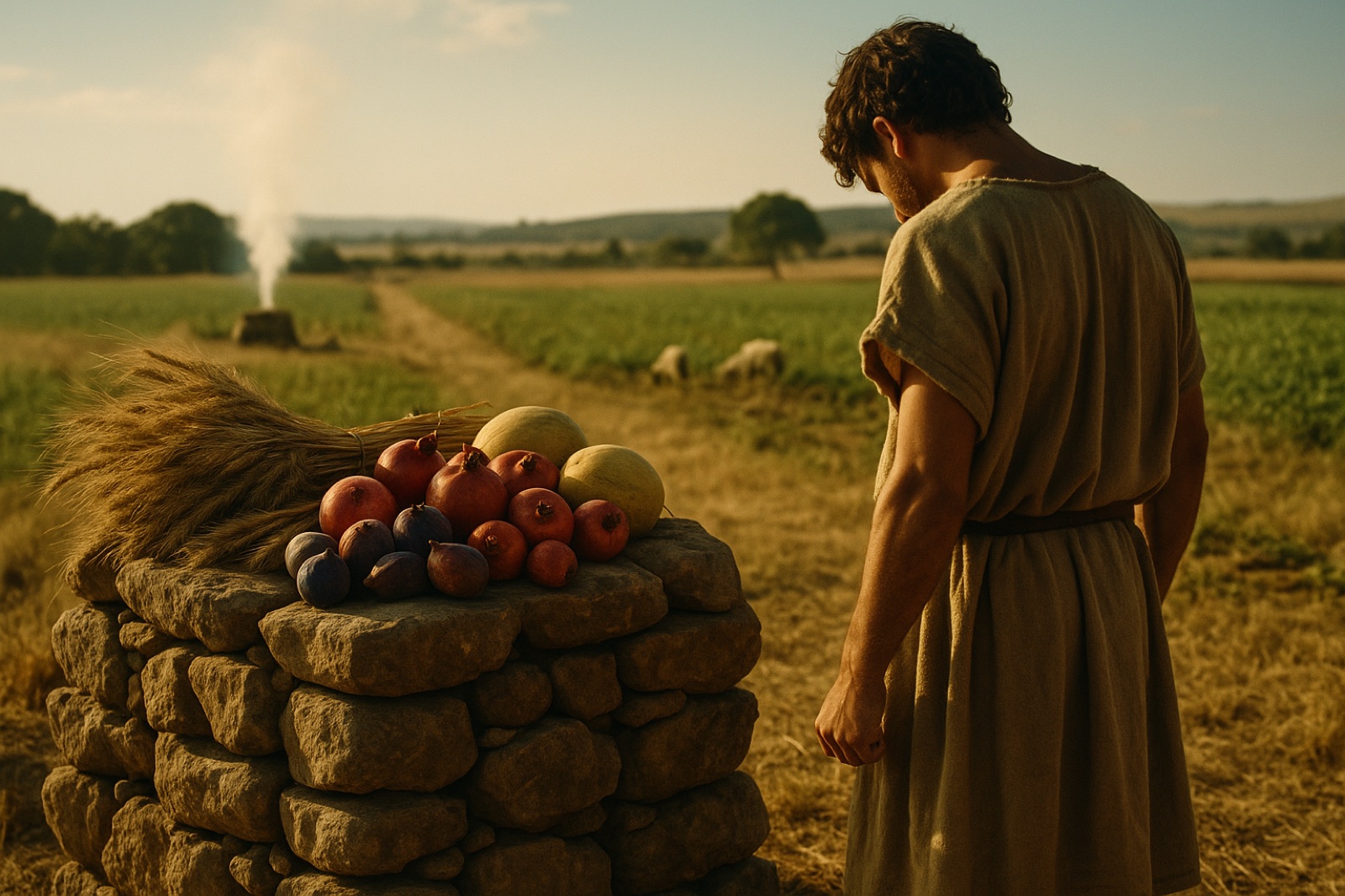
“And in process of time it came to pass, that Cain brought of the fruit of the ground an offering unto the LORD. And Abel, he also brought of the firstlings of his flock and of the fat thereof. And the LORD had respect unto Abel and to his offering: But unto Cain and to his offering he had not respect. And Cain was very wroth, and his countenance fell.” (Genesis 4:3-5, KJV)
Read it slowly. There is no reason given. No rule was broken on the page. No one says “grain is not allowed.” The text simply reports what happened, and then it reports how Cain felt: very angry, with a fallen face.
That silence has made this one of the most-asked questions about Genesis. People want the rule. The text gives a relationship instead.
The Popular Answers (and What They Get Wrong)
“Abel’s was a blood sacrifice, and Cain’s wasn’t”
This is the answer you will hear most. It sounds tidy. But the Hebrew text makes it harder to hold.
Genesis uses the same word for both gifts: minchah. It means a gift or a tribute. Later in the Bible, that exact word becomes the name for the grain offering. The King James calls it the “meat offering,” in the old sense of “food,” and Leviticus 2:1 says it “shall be of fine flour.” In other words, the law God later gave welcomed offerings from the field. So “grain was the wrong thing to bring” is an inference people add. Genesis itself does not say it.
“Abel brought his best, and Cain didn’t”
This one has more support. Abel brought “the firstlings of his flock and of the fat thereof.” That means the first and the richest. Cain brought “of the fruit of the ground.” No “first.” No “best.” Just some.
That detail is real, and it is worth noticing. But it is still a hint, not a stated reason. The text lets us see the difference without explaining it.
What the New Testament adds
Two later writers do comment on the story, and both point past the gift to the person giving it.
Hebrews 11:4 says: “By faith Abel offered unto God a more excellent sacrifice than Cain.” The difference was faith.
And 1 John 3:12 says Cain slew his brother “Because his own works were evil, and his brother’s righteous.”
Then look again at Genesis 4:4. Notice the order of the words: “the LORD had respect unto Abel and to his offering.” The person comes first. The gift comes second. The same order is used for Cain. The question was never mainly about sheep versus wheat. It was about the heart of the one holding it.
If you have wondered about other gaps in this chapter, the same pattern shows up in who Cain’s wife was. Genesis often leaves out what we want to know and keeps what we need to know.
What God Said to Cain Next
This is the part most answers skip. Before anything terrible happens, God goes to the angry brother. Not to Abel. To Cain.
“And the LORD said unto Cain, Why art thou wroth? and why is thy countenance fallen? If thou doest well, shalt thou not be accepted? and if thou doest not well, sin lieth at the door. And unto thee shall be his desire, and thou shalt rule over him.” (Genesis 4:6-7, KJV)
Look at how God starts: with questions. Why are you angry? Why has your face fallen? It is the same way God spoke to Adam in the garden: “Where art thou?” (Genesis 3:9). God did not need the answer. Cain did.
The fallen face and the lifted face
Here is the detail that is easy to miss in English. Cain’s “countenance fell.” His face dropped. Then God asks, “shalt thou not be accepted?”
The Hebrew word behind “accepted” is se’et. Its plain meaning is “lifting up.” So God is saying something like this: Your face has fallen. If you do well, won’t it be lifted up?
That is not a verdict. That is an invitation. The rejection was not the end of the story. The door back was open, and God was the one pointing at it.
“Sin lieth at the door”
This is the first time the word “sin” appears in the Bible. (We unpack that word in our study of the Hebrew word for sin.) And the picture is vivid. The word for “lieth” is robets, which describes an animal lying down, crouched. It is the same root used of Judah in Genesis 49:9: “he couched as a lion.”
So sin is not described as a list of bad deeds. It is described as something crouching by the doorway of Cain’s life, waiting. “Unto thee shall be his desire.” It wants him.
And then comes the hope: “thou shalt rule over him.” You can master it. God did not tell Cain he was doomed. God told Cain he could still win.
One more small thing. The word for “desire” here is teshuqah. It appears only three times in the whole Old Testament, and one of them is Genesis 3:16, just one chapter earlier, paired with the same word for “rule.” Genesis is quietly connecting Cain’s struggle to the struggle that began in the garden. This is not a new problem. It is the human problem.
The Answer Cain Never Gave
Here is what the text records next: nothing from Cain. No reply to God at all.
Verse 8 says, “And Cain talked with Abel his brother.” But the Hebrew literally reads “Cain said to Abel his brother,” and then the words he said are missing. Some ancient translations, including the early Greek version, fill the gap with “Let us go out to the field.” Either way, Cain turned from the conversation with God to a conversation with his brother. And “when they were in the field,” he killed him.
Even then, God came again with a question: “Where is Abel thy brother?” (Genesis 4:9). And after the judgment, when Cain feared for his life, “the LORD set a mark upon Cain, lest any finding him should kill him” (Genesis 4:15). God pursued Cain before the worst thing he ever did, and God kept watch over him after it.
Brothers and favor come up again and again in Genesis. If this chapter stirs questions, you may also find it helpful to read why the Bible says God “hated” Esau, which turns out to mean something very different from what it sounds like.
When Your Face Has Fallen
Most of us are never going to do what Cain did. But almost all of us have stood where Cain stood in verse 5. Passed over. Hot-faced. Staring at the door where something is crouching.
And this is the moment the story is really about. Not the offering. Not the rule we wish Genesis had written down. The space between verse 5 and verse 8. The space where God comes close to an angry, hurt person and asks, Why? And says, You can still do well. Your face can still be lifted.
Jesus told a story that sounds a lot like it. In Luke 15, the older brother is out “in the field” when he hears the party for his returning brother. “And he was angry, and would not go in: therefore came his father out, and intreated him” (Luke 15:28). Whether or not Jesus meant the echo, the picture is the same. The father leaves the celebration to go find the angry son.
That is still who God is. If you are angry right now because someone else was chosen, you have not been left alone with it. The invitation is being spoken to you before the anger gets the last word.
Hebrews says that Abel, “being dead yet speaketh” (Hebrews 11:4). His blood cried out from the ground. But Hebrews 12:24 points to Jesus and “the blood of sprinkling, that speaketh better things than that of Abel.” Abel’s blood cried for justice. Jesus’s blood speaks mercy, even to the Cains.
Actions to Take
- Name the moment. Think of the last time someone else got what you hoped for. Say out loud, in one sentence, what you felt. Cain’s first step back would have been answering God’s question: “Why art thou wroth?”
- Find the crouching thing. Write down the one thought that tends to “lie at the door” when you feel passed over. It might be “they always win” or “I’ll never be enough.” Seeing it plainly is the start of ruling over it.
- Do one “well” thing toward the person. Send a short, honest message of congratulations, or simply pray for them by name. Do it before the feeling fades. It is the opposite of Cain’s walk to the field.
Journaling Prompts
- When you feel overlooked, what does your “fallen face” look like in how you treat the people closest to you?
- What question do you think God might be asking you right now, the way God asked Cain, “Why art thou wroth?”
- If your face were “lifted up” in this situation, what would actually change in you, even if nothing changed around you?
A Prayer
God, I know that hot feeling of being passed over, and I don’t always like what grows in me afterward. Thank you for coming to Cain before the worst happened, and thank you for coming to me now. Show me what is crouching at my door, and help me rule over it instead of letting it rule me. Lift my fallen face. Help me do well today, even toward the person I’m struggling with. Amen.
Discussion Question
Why do you think Genesis tells us exactly what God said to Cain, but never tells us why Cain’s offering wasn’t accepted? Share your thoughts in the comments below.
Share This
- Genesis never says why God rejected Cain’s offering. But it does record that God went to the angry brother first and said, “If thou doest well, shalt thou not be accepted?” That changed how I read the whole story.
- “Why is thy countenance fallen?” God asked Cain. The word for “accepted” in the next line means “lifted up.” A fallen face, and an offer to lift it. That’s grace before the worst day of his life.
- Felt passed over lately? Genesis 4:7 says sin crouches at the door, but “thou shalt rule over him.” You are not stuck with the anger.
Questions and Answers About Cain’s Offering
Why did God reject Cain’s offering?
Genesis 4 does not state a reason for why God rejected Cain’s offering. The text says the LORD “had respect unto Abel and to his offering” but not to Cain and his. Hebrews 11:4 says Abel offered “by faith,” and 1 John 3:12 says Cain’s “own works were evil.” Together these point to Cain’s heart, not the type of gift, as the issue.
Was Cain’s offering rejected because it wasn’t a blood sacrifice?
Genesis does not say Cain’s offering was rejected for lacking blood. The Hebrew word minchah, meaning gift or tribute, is used for both Cain’s produce and Abel’s animals in Genesis 4:3-5. The same word later names the grain offering in Leviticus 2, which God’s law accepted. The blood-sacrifice explanation is a common interpretation, not something the text states.
What did God say to Cain after rejecting his offering?
In Genesis 4:6-7, God asked Cain, “Why art thou wroth? and why is thy countenance fallen?” God then said, “If thou doest well, shalt thou not be accepted? and if thou doest not well, sin lieth at the door.” God warned Cain that sin desired him but told him, “thou shalt rule over him.” It was an invitation to turn back before Cain killed Abel.
What does “sin lieth at the door” mean in Genesis 4:7?
In Genesis 4:7, the Hebrew word translated “lieth” is robets, which describes an animal crouching or lying in wait. The same root describes Judah as a lion that “couched” in Genesis 49:9. The verse pictures sin as a crouching animal at the doorway of Cain’s life, wanting him, while God says Cain can still rule over it. It is the first use of the word “sin” in the Bible.
Did God still care about Cain after he killed Abel?
Yes. After Cain killed Abel, God came to Cain with a question, “Where is Abel thy brother?” (Genesis 4:9). When Cain feared that others would kill him, Genesis 4:15 says “the LORD set a mark upon Cain, lest any finding him should kill him.” Cain faced real consequences, but God protected his life.