 0
0
 0
0
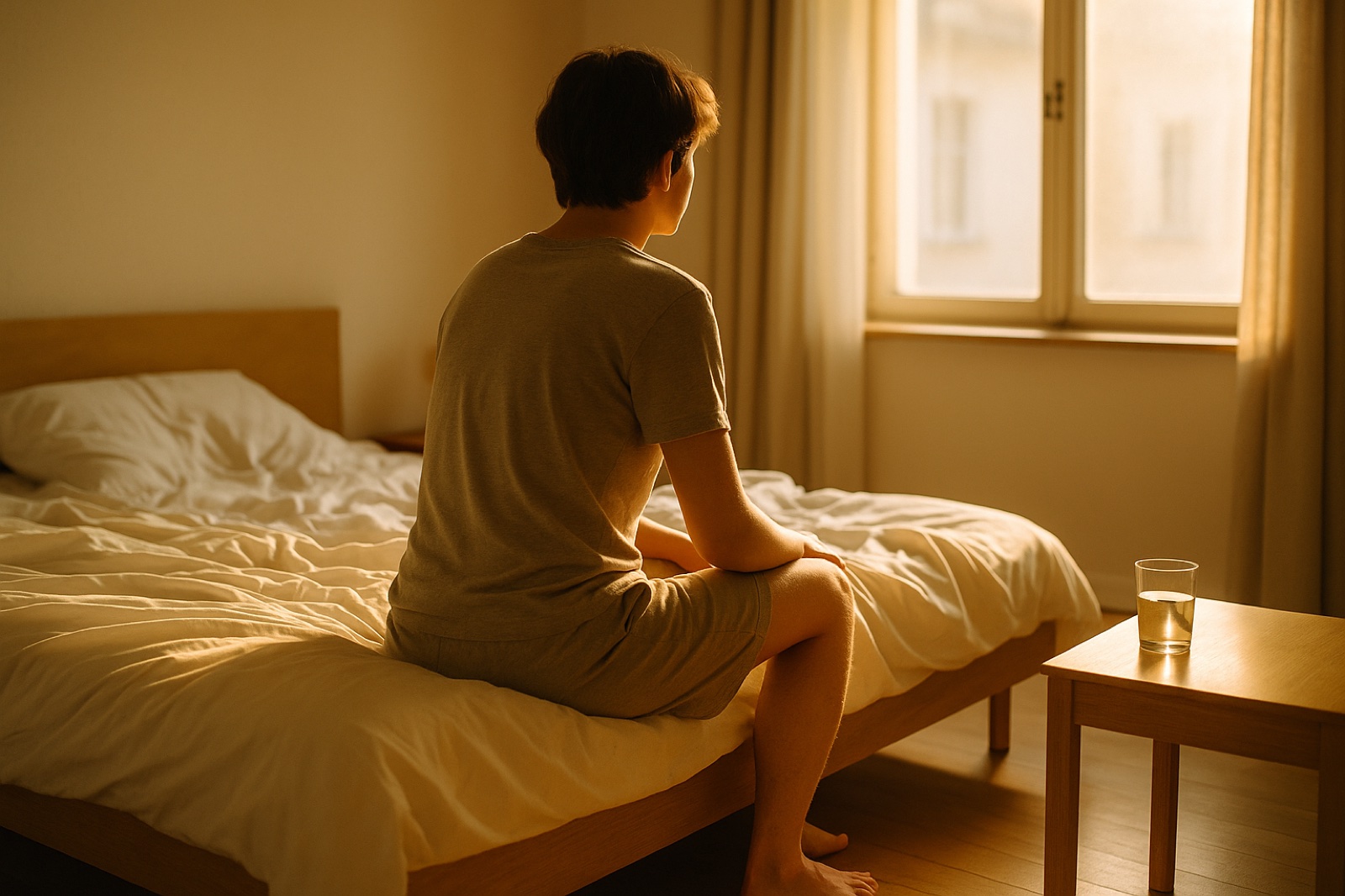
You slept. Not badly, either. Seven or eight hours, in a bed, with the door shut. And by the middle of the morning you are moving like someone who never went to bed at all.
So you picked up your phone and typed the question. And the answers came back the same way they always do. Go to bed earlier. Put the phone down. Keep the room cool. No coffee after lunch. Get more sleep.
You are already doing most of that. That is the whole problem. You are not short of sleep.
Here is the thing that reframed all of it for me, and it is sitting quietly in the sleep research rather than in the advice articles: the tiredness you have and the tiredness those articles are treating are not the same condition. They have different names, different measurements, and different answers. The search you typed collapses them into one word. Almost every result then answers the other one.
Why Am I So Tired All the Time If I’m Sleeping Enough?
Sleep researchers pull apart two things ordinary speech mashes together: sleepiness and fatigue.
Sleepiness is drowsiness — sleep pressure, reduced alertness, the pull toward actually falling asleep. If you are sleepy, sleep is the thing that fixes it.
Fatigue is described in the literature as tiredness and lack of energy without an increased tendency to fall asleep. Weariness. Weakness. Empty. You could lie down in a dark, quiet room for two hours and not drop off — and still get up with nothing in the tank.
They are not two words for one feeling. Researchers have tested that directly, and the measures of the two only line up moderately. Which means the everyday assumption — more tired equals more in need of sleep — is not reliable. A person can be flattened by fatigue and barely sleepy at all.
Read your own last week against that. Not “am I tired,” but this: have you actually fallen asleep during the day when you did not mean to? Nodded off in a chair, on a bus, mid-conversation.
If yes, sleepiness is genuinely part of what is happening, and the usual advice is aimed at you after all.
If no — if you are exhausted from morning to night and could not nap if someone paid you — then you have been reading advice written for a different problem. No wonder none of it worked.
The Questionnaire That Was Never Looking for Your Kind of Tired
This is where it stops being a matter of wording and starts having consequences.
The most widely used tiredness questionnaire in the world is the Epworth Sleepiness Scale. Eight everyday situations — sitting and reading, sitting quietly after lunch, a passenger in a car for an hour — and for each one you score from 0 to 3. Add them up. Ten or more counts as sleepy.
But look at what it asks you to score. Not how tired you feel in that situation. How likely you would be to doze off. The instructions say so plainly: rate your chance of falling asleep, not of feeling tired.
So picture the person this article is for. Dragging through every day for months. Never once falls asleep by accident. They sit down with that form and score low. Normal range.
Nothing about that result says they are fine. It says the ruler was measuring a different thing. The Epworth scale does its own job well — it is built to find sleep propensity, which is exactly what you want when you are looking for a sleep disorder. It was simply never designed to detect fatigue. Separate scales exist for that, and they get reached for far less often.
If you have ever come away from a conversation about your tiredness feeling quietly dismissed, that gap may be part of why.
Even Where Sleepiness Is the Textbook Symptom, Fatigue Is What People Complain About
The detail that surprised me most came from the one place you would least expect it.
Obstructive sleep apnoea is the condition where daytime sleepiness is the classic symptom — it is in every description of the illness. Researchers doing qualitative interviews with people living with it asked them to describe their symptoms in their own words.
Everyone brought up fatigue and sleepiness as two separate things without being prompted to. They used different vocabulary for each: “tired,” “exhausted,” “worn out,” “unrested” for one; wanting to lie down and take a nap for the other.
And when asked which symptom bothered them most, among the participants who were not using their breathing machine, 58% named fatigue. Five percent named sleepiness.
Worth being careful about what that does and does not show. It is a small interview study in one specific condition, not a survey of the general population, and those numbers should not be carried anywhere else. But even in the clinic built around sleepiness — the place where sleepiness is the whole point — the thing people actually wanted fixed was the other one. If it goes under-asked there, it is being missed everywhere.
What Actually Helps When Sleep Isn’t the Problem
None of this needs money, a device, an app, or a subscription.
- Stop trying to sleep your way out of it. If you are not sleepy, adding hours in bed mostly produces more time lying awake being annoyed with yourself. That is a real cost with no return.
- Look at the load, not the lack. Fatigue tends to track what you are carrying rather than what you are missing: ongoing worry, grief, caring for someone who needs you, pain, hunger, doing a hard thing every single day with no end date on it. Work that never resolves does this to people particularly reliably — if that is your version, our free Am I Burned Out at Work? check runs through it in a couple of minutes. And if the load is a season you cannot fix or walk out of, we wrote about why the daily re-attempt is the part that drains you.
- Check whether your nights actually are broken. Some people who feel this way are sleeping less than they think — waking in the small hours and lying there. That is a different mechanism with a different answer, and we pulled it apart in why do I wake up at 3am.
- Take one real stop, not a shorter version of the work. Scrolling is not a stop. Ten minutes sitting outside doing nothing, with no screen, is a stop. The point is not the ten minutes. It is proving to yourself that the world does not fall over when you halt.
- Say it out loud to one person. “I’m tired all the time and sleep isn’t fixing it” is a sentence most people have never actually said to another human. Saying it changes what help you get offered.
- Daylight and a short walk are worth testing on yourself. Both are free, both are commonly recommended for low energy, and you will know within a fortnight whether they do anything for you personally.
One thing that needs saying plainly rather than buried: tiredness that goes on and on can have physical causes, and no article can tell you whether yours is one of them. If you can reach a health worker, this is worth raising — and worth describing precisely. “I am exhausted all day but I never fall asleep” points somewhere quite different from “I keep nodding off,” and the difference is genuinely useful information to hand over.
The Word We Quietly Redefined
There is something odd hiding in how we use the word rest.
Ask most people what rest is and you get a description of an absence — the leftover time once everything is finished. Which sounds harmless until you notice the trap in it. Nothing is ever finished. So rest becomes a reward for completion, and completion never arrives, and you end up permanently owing yourself something you can never qualify for.
The older idea was almost the opposite of that. Rest was not what remained after the work; it was a deliberate stop laid into the shape of the week itself, arriving on its own schedule whether the work was done or not — and understood as something handed to people rather than earned by them. A gift, with nothing to qualify for. The whole point was that it came from outside the ledger. People who hold that idea say it came from God, and that the reason it does not have to be earned is that it never belonged to the ledger in the first place.
Which lands somewhere strange for a tiredness article: the stop was never meant to be the thing you get to at the end. It was meant to be the thing you are allowed to take in the middle.
So, the Tired That Sleep Won’t Touch
You are probably not going to fix this tonight. That is a fair thing to know going in.
But you can stop looking in the wrong place, and that is not nothing — it is most of the exhaustion that comes from trying. You are not failing at sleep. You have been handed a shelf of answers to a question you were not asking, and then quietly blamed yourself for the answers not working.
The tiredness that survives a full night was never asking for more sleep.
It was asking you to put something down.
Questions People Ask About Being Tired All the Time
Why am I so tired all the time even though I sleep 8 hours?
Sleep researchers distinguish two different states that ordinary speech treats as one. Sleepiness is drowsiness and an increased tendency to actually fall asleep, and it responds to sleep. Fatigue is tiredness and lack of energy without any increased tendency to fall asleep, and more sleep does not reliably shift it. Measures of the two correlate only moderately, so a person can be severely fatigued while barely sleepy at all. Someone sleeping eight hours and still exhausted is usually dealing with fatigue, which is why sleep-focused advice does not help them.
What is the difference between fatigue and sleepiness?
Sleepiness means drowsiness, reduced alertness and a raised likelihood of falling asleep. Fatigue means weariness, weakness and depleted energy without that raised likelihood of falling asleep. The practical test is whether you actually doze off during the day when you did not intend to. If you do, sleepiness is involved. If you feel wiped out but could not nap if you tried, that points to fatigue, which is a separate construct with separate measurement scales.
Does the Epworth Sleepiness Scale measure fatigue?
No. The Epworth Sleepiness Scale asks how likely you would be to doze off in eight everyday situations, scored 0 to 3 each, with 10 or more indicating sleepiness. Its instructions specifically tell you to rate your chance of falling asleep rather than of feeling tired. It is designed to detect daytime sleep propensity, which makes it useful for identifying sleep disorders, but a person with heavy fatigue who never actually falls asleep can score in the normal range. Fatigue is assessed with separate scales.
Is being tired all the time a sign of something serious?
Persistent tiredness has many possible causes, some of them medical, and no article or online quiz can determine which applies to any individual. What is worth doing is describing the symptom precisely to a health worker if one is reachable, because “exhausted all day but never falling asleep” and “constantly nodding off” point toward different explanations. Being specific about which one you have gives whoever is helping you far more to work with than the word “tired” on its own.
Why doesn’t more sleep fix my tiredness?
Because extra sleep addresses sleep debt, and sleep debt is only one cause of feeling tired. Fatigue is more closely associated with what a person is carrying — ongoing stress, grief, illness, caregiving, pain, or work with no end point — than with how many hours they spent in bed. When the underlying driver is load rather than lack, adding hours in bed tends to produce time lying awake rather than restored energy.
What Do You Think?
Here is what we are actually curious about: do you think we treat rest as something that has to be earned because of how work is organised now, or is that just how people have always been? There is a decent case either way. Tell us where you land in the comments.
Share This
- Turns out “tired” is two different things. Sleepiness means you’d fall asleep. Fatigue means you’re empty but couldn’t nap if you tried. Almost all the advice out there only treats the first one. https://bgodinspired.com/index.php/health-and-wellness/why-am-i-so-tired-all-the-time-2/
- The most-used sleepiness questionnaire in the world asks how likely you are to doze off — not how tired you feel. So if you’re exhausted every day but never actually nod off, you score completely normal. https://bgodinspired.com/index.php/health-and-wellness/why-am-i-so-tired-all-the-time-2/
- I spent years assuming I was bad at sleeping. I was sleeping fine. I was carrying too much. Nobody tells you those are different problems with different answers. https://bgodinspired.com/index.php/health-and-wellness/why-am-i-so-tired-all-the-time-2/