Spiritual Devotional about Rituals of Passage
Title: Embracing the Journey: The Spiritual Power of Rituals of Passage
Greetings, dear friends! 🌟
In the vast tapestry of life, there are extraordinary moments that sparkle with transition and transformation. These moments, known as rituals of passage, mark significant changes in our lives. Whether it’s a baptism, a wedding, or a graduation, these rituals carry deep spiritual meaning and offer us a chance to celebrate growth and new beginnings.
The Biblical Foundation
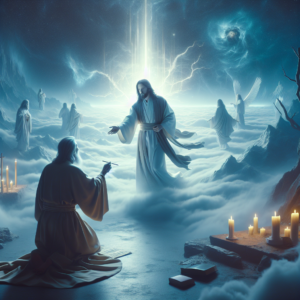
Let’s dive into the wisdom of the Bible, where rituals of passage are beautifully highlighted. Take, for instance, the story of Jesus’ baptism by John the Baptist (Matthew 3:13-17). This was not just a ceremonial washing but signified the beginning of Jesus’ public ministry, and God’s affirmation as He proclaimed, “This is my beloved Son, with whom I am well pleased.”
Similarly, the Israelites’ crossing of the Red Sea (Exodus 14) marked their passage from slavery into freedom—an incredibly powerful transition orchestrated by God.
Significance of Rituals of Passage
These sacred events serve as waypoints in our spiritual journeys. They are opportunities to pause, reflect, and realign our lives with God’s purpose. Through these rituals, we are reminded of His grace and presence as we step into new phases.
-
Baptism is more than just a symbolic cleansing; it’s our public declaration of faith and our commitment to a life in Christ. As we are submerged and rise again, it echoes the death and resurrection of Jesus, empowering us to walk in newness of life.
-
Marriage is celebrated as a sacred union, reflecting the covenant between Christ and the Church (Ephesians 5:25-33). It’s a joyful commitment to love and serve one another, with God’s love as the foundation.
-
Graduations and Milestones remind us of the growth bestowed upon us by God. They are a time to praise Him for the journey completed and the path ahead, filled with promise and purpose.
Embracing Each Transition
In celebrating these rituals, remember that they are not mere ceremonies. They are infused with divine purpose and significance. Here are a few ways to embrace each passage:
-
Pray for Guidance: Seek God’s wisdom and presence as you navigate new chapters. Trust that He will guide your steps faithfully.
-
Celebrate Community: Share these sacred moments with others. The support and love from your community are crucial as you embrace change.
-
Reflect and Renew: Use these times to deepen your relationship with God, acknowledging His hand in every season of your life.
Closing Thoughts
Friends, as we journey through life, let’s cherish these rituals that God has so lovingly woven into our stories. They remind us of who we are and where we are headed. With every passage, we draw closer to Him, discovering more about His unending grace and boundless love.
Let’s rejoice in these spiritual milestones and step forward in faith, knowing that God walks with us every step of the way.
Blessings and peace be upon you! 🙏🌈
- [Your Name]
If you want to want to know more about this topic, check out BGodInspired.com or check out specific products/content we’ve created to answer the question at BGodInspired Solutions
Q&A about Rituals of Passage
Certainly! Here’s a Q&A based on the concept of Rites of Passage:
Q: What are rites of passage?
A: Rites of passage are ceremonies or rituals that mark significant transitions or milestones in a person’s life. These can include birth, puberty, marriage, and death, among others.
Q: Why are rites of passage important in different cultures?
A: Rites of passage play a crucial role in cultural identity and community cohesion. They help individuals transition to new roles, instill values, and reinforce the community’s social structure and traditions.
Q: Can you give some examples of rites of passage?
A: Yes, examples include the Bar or Bat Mitzvah in Jewish cultures, the quinceañera in Latin American cultures, and the Maasai warrior initiation in Kenya and Tanzania.
Q: How do rites of passage differ across cultures?
A: They differ in form, significance, and practices. For example, while a quinceañera involves a celebratory dance and religious ceremony, a Maasai warrior initiation includes a series of physical challenges and trials.
Q: What stages are typically involved in a rite of passage?
A: Anthropologist Arnold van Gennep identified three stages: separation (preparing to leave the old status), transition (the period of change), and incorporation (reintegration into society with a new status).
Q: Are there modern equivalents to traditional rites of passage?
A: Yes, modern equivalents include graduations, weddings, and retirement parties. These events similarly mark transitions in an individual’s life.
Q: Can rites of passage have psychological effects?
A: Absolutely. They can provide a sense of belonging, purpose, and identity, as well as help individuals cope with change and understand their new roles within a community.
Q: How have rites of passage evolved in contemporary society?
A: With globalization and changing social norms, rites of passage have often been adapted to fit contemporary lifestyles. Some traditional elements may be simplified or combined with modern practices.
Feel free to ask if you need more information on any specific rite of passage!