
 0
0
 0
0
Spiritual Devotional about Rituals of Passage
Embracing Life’s Transitions: The Divine Magic of Rituals of Passage
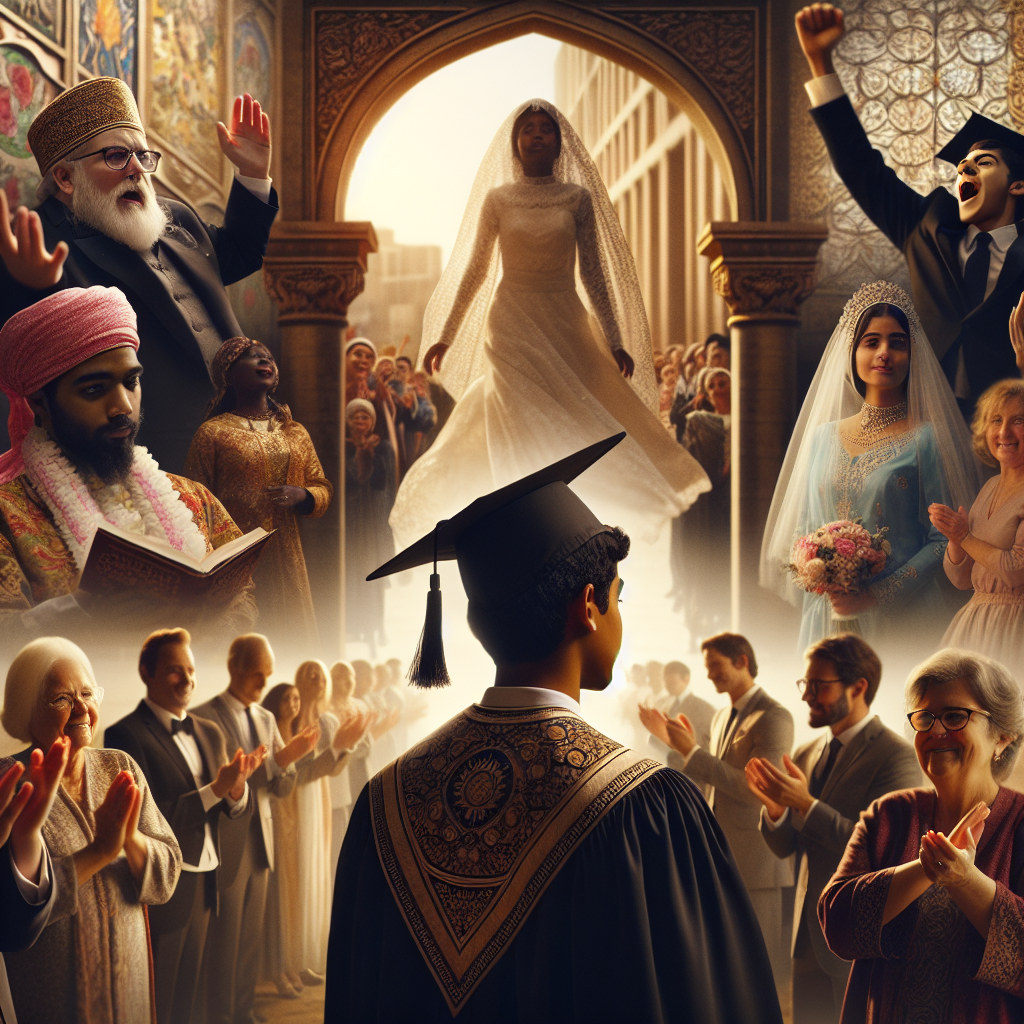
Life is a beautiful tapestry woven with moments of joy, growth, and transformation. As we journey through life, we encounter significant milestones that mark our progress and script the stories of our existence. These transformative moments, often known as rites of passage, are doors to new dimensions of our spiritual voyage. Today, let’s explore the beauty and divine magic of these sacred rituals, and how they echo the timeless principles found in the Holy Bible.
The Significance of Rituals of Passage
Rituals of passage are age-old ceremonies that symbolize transitions – from birth, adolescence, and adulthood to marriage, and even to the transition from this life to the next. These rituals serve as communal acknowledgments of our growth and evolution. They help us frame our experiences, celebrating the old while inviting the new with grace and anticipation.
Biblical Reflections on Transition
The Bible is rich with stories of transitions and divine guidance through change. One of the most compelling accounts is the journey of the Israelites from Egypt to the Promised Land. This epic journey symbolizes the ultimate passage from bondage to freedom and from despair to hope. As we navigate our own rites of passage, we too can find strength and guidance in these sacred stories.
Joshua 1:9 beautifully reassures us, "Have I not commanded you? Be strong and courageous. Do not be afraid; do not be discouraged, for the Lord your God will be with you wherever you go." This verse is a powerful reminder that we are never alone during our times of transition. God walks with us, guiding and supporting us as we step into new chapters of our lives.
Birth: The Beginning of the Journey
The birth of a child is perhaps the most joyous and awe-inspiring of all passages. It is a reminder of the miraculous gift of life. In the Bible, the birth of Jesus Christ marks the most significant event heralding hope, redemption, and divine love. The angel’s proclamation in Luke 2:10-11 states, "Do not be afraid. I bring you good news that will cause great joy for all the people. Today in the town of David a Savior has been born to you; he is the Messiah, the Lord."
Just as the birth of Jesus Christ brought the promise of salvation, every new birth carries the promise of potential, purpose, and the unfolding of a divine story.
Baptism: The Rite of Spiritual Awakening
Baptism is a profound rite of passage in Christianity symbolizing rebirth and spiritual awakening. When Jesus was baptized by John the Baptist, the heavens opened, and a voice from heaven said, "This is my Son, whom I love; with him I am well pleased" (Matthew 3:17).
Through baptism, we acknowledge our spiritual rebirth and our commitment to a life led by faith and divine connection. It is a celebration of embracing a new life in Christ, leaving behind old ways and stepping into a renewed, purpose-driven existence.
Marriage: The Union of Souls
Marriage is another significant rite of passage, symbolizing the union of two souls coming together in love and harmony. The Bible beautifully describes this sacred union in Ecclesiastes 4:9-12, emphasizing the strength and support a partnership provides: "Two are better than one, because they have a good return for their labor. If either of them falls down, one can help the other up. But pity anyone who falls and has no one to help them up."
The sacrament of marriage is a testament to God’s love and His design for companionship, mutual support, and the joy of shared journeying.
Embracing the Eternal Transition
The final rite of passage in our earthly life is the transition from this world to the next. While this passage can be shrouded in sorrow, it is a moment of profound spiritual significance. 2 Corinthians 5:1 comforts us with the promise of eternal life: "For we know that if the earthly tent we live in is destroyed, we have a building from God, an eternal house in heaven, not built by human hands."
This passage is a gentle reminder that death is not an end but a transition to an everlasting life with our Creator.
Celebrating Every Step of the Journey
Rituals of passage are more than ceremonies; they are sacred reminders of our growth, our evolution, and our connection to the divine. Let us embrace every milestone with an open heart, celebrating each transition as a reflection of God’s unending love and grace.
With every rite of passage, let us be strong and courageous, knowing that the Lord our God is with us every step of the way. May our journey be filled with faith, hope, and love, and may we continue to find inspiration and strength in the divine stories that guide us.
Embrace your journey, celebrate your transitions, and let the light of God’s promises illuminate your path. Blessings to you all!
Explore and dig up answers yourself with our BGodInspired Bible Tools! Be careful – each interaction is like a new treasure hunt… you can get lost for hours 🙂
Q&A about Rituals of Passage
Question: What are rituals of passage?
Answer: Rituals of passage are structured ceremonies or practices that mark significant transitions in an individual’s life. These rituals often signify the person’s movement from one status or phase to another within their community or society. Common examples include birth, coming of age, marriage, and death rituals.
Question: What are the key components of a typical ritual of passage?
Answer: A typical ritual of passage usually consists of three key components:
-
Separation: The initiate is separated from their previous status or group. This may involve physical separation, such as moving to a different location, or symbolic acts that signify leaving the old status behind.
-
Liminality: The individual enters a transitional phase where they are no longer in the old status but have not yet fully transitioned to the new one. This is often a time of uncertainty and ambiguity. Special teachings, trials, or symbolic acts often occur during this stage to prepare the initiate for their new status.
-
Incorporation: The initiate is formally introduced into their new status and reintegrated into the community with their new role or identity. This phase often includes celebrations, symbolic gifts, and public recognition.
Question: Can you provide an example of a coming-of-age ritual from a specific culture?
Answer: One well-known example of a coming-of-age ritual is the Bar Mitzvah in Jewish culture. When a Jewish boy turns 13, he becomes a "Bar Mitzvah," meaning "son of the commandments." The ceremony involves reading from the Torah in the synagogue, and it signifies his responsibilities as an adult member of the Jewish community. Similarly, a Jewish girl becomes a Bat Mitzvah at the age of 12 or 13, depending on the tradition followed.
Question: How do marriage rituals function as a rite of passage?
Answer: Marriage rituals serve as rites of passage by marking the transition from single to married life. These rituals typically involve several stages, including engagement, preparation, and the wedding ceremony itself. During the wedding, various symbolic acts, such as exchanging vows and rings, taking part in religious or cultural rituals, and celebrating with family and friends, signify the couple’s commitment and new status as a married pair. The community’s participation in these events helps to reinforce and validate the new social identity of the married individuals.
Question: Why are rituals of passage important in societies?
Answer: Rituals of passage are important because they help to structure and give meaning to the significant transitions in an individual’s life. They provide a sense of stability and continuity, helping people to navigate changes and uncertainties. Furthermore, these rituals reinforce community bonds and shared values, integrating individuals into the social fabric and affirming communal identity and cohesion. By marking these transitions publicly, societies support and validate personal growth and changes in social status.
Question: How do death rituals help people cope with loss?
Answer: Death rituals provide a structured process for mourning and commemorate the deceased, helping the bereaved to cope with their loss. These rituals, which may include wakes, funerals, memorial services, and interments, offer a communal space for expressing grief, honoring the life of the deceased, and finding comfort in shared cultural and religious practices. The rituals help individuals and communities to process their emotions, find closure, and support each other through the grieving period. Additionally, they aid in the transition of the deceased’s social status from living to ancestor or remembered figure, reinforcing cultural beliefs about death and the afterlife.


