Spiritual Devotional about Sacred Music
Harmony of the Heart: Embracing Sacred Music
Hello, dear friends,
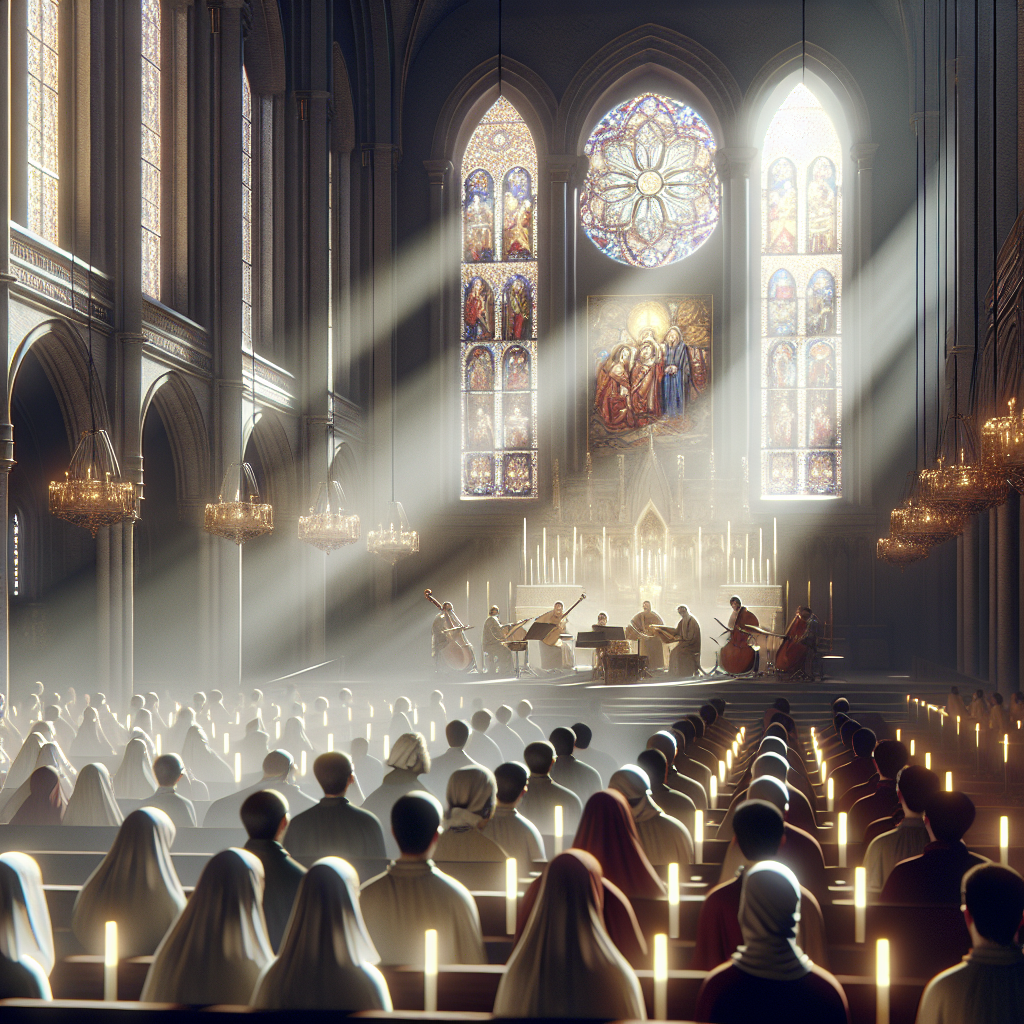
Today, let’s embark on a melodic journey into the soul-enriching world of sacred music. Imagine the gentle brush of a harp’s strings, the powerful resonance of a choir’s harmonies, or the soft, lilting notes of a flute drifting through the air. Sacred music has the remarkable ability to elevate our spirits, open our hearts, and draw us closer to the divine.
In the realm of sacred music, every note sung and every chord played serves a unique purpose: to glorify the Creator and stir our souls. As Psalm 150:1-6 so beautifully declares, "Praise Him with the sounding of the trumpet, praise Him with the harp and lyre… Let everything that has breath praise the Lord." These timeless words remind us that music is an essential avenue through which we can express our love, adoration, and gratitude towards God.
But why does sacred music resonate so deeply within us? The answer lies in its divine design. Music, in its purest form, mirrors the harmonious order and beauty of creation itself. It speaks a universal language that spans across cultures and centuries, touching the core of our shared humanity. As we listen, our spirits are soothed, our minds are uplifted, and our hearts are moved.
Sacred music also plays a vital role in our worship experiences. When we gather as a community to sing hymns or spiritual songs, we unite our voices in a tapestry of praise that transcends the ordinary. It’s a reflection of what the early church experienced, as described in Colossians 3:16: "Let the word of Christ dwell in you richly… singing psalms, hymns, and spiritual songs, with gratitude in your hearts to God." These gatherings allow us to draw strength from one another, to offer encouragement, and to renew our faith.
Moreover, sacred music can serve as a gentle reminder of God’s promises. It can help us meditate on Scripture, guiding us into deeper reflection and understanding. Many songs are crafted directly from the Bible, embedding eternal truths in our hearts and minds. They become a soundtrack to our spiritual journey, helping us to navigate the peaks and valleys of life with grace and hope.
So, how can we bring the beauty of sacred music into our daily lives? Here are a few ideas to get you started:
-
Create a Sacred Playlist: Compile a selection of songs that resonate with your spirit. Let this playlist become a sanctuary of sound that you can retreat to anytime you seek peace or inspiration.
-
Participate in Worship: Whether in a choir, band, or simply from the pews, immerse yourself in the musical fabric of your worship community. Every voice matters and contributes to the greater harmony.
-
Learn an Instrument: Consider learning an instrument or reviving a skill you once had. Even simple melodies can open new pathways for spiritual connection and expression.
-
Reflect on Lyrics: As you listen, take a moment to reflect on the lyrics. Ask yourself what they reveal about God’s nature, His love for us, and the call He places on our lives.
In closing, let sacred music be a constant companion on your spiritual journey. Allow it to envelop you in its warmth, inspire you towards greater love, and lead you ever closer to the heart of God.
May the music of heaven fill your days with joy and your nights with peace.
With a harmonious heart,
[Your Name]
Explore and dig up answers yourself with our BGodInspired Bible Tools! Be careful – each interaction is like a new treasure hunt… you can get lost for hours 🙂
Q&A about Sacred Music
Certainly! Here’s a Q&A based on the topic of Sacred Music:
Q: What is Sacred Music?
A: Sacred music is a category of music that is composed for religious purposes or to be performed in a sacred context. It is often used in worship, religious ceremonies, and spiritual events across various faith traditions. Sacred music can include hymns, chants, masses, psalms, and other musical forms.
Q: What are some examples of Sacred Music in Christianity?
A: In Christianity, sacred music encompasses a wide range of styles, including Gregorian chants, hymns, choir anthems, and liturgical music. Famous examples include the "Ave Maria," Handel’s "Messiah," and the "Hallelujah Chorus."
Q: How does Sacred Music differ from Secular Music?
A: Sacred music is intended for religious or spiritual use, often with texts that focus on devotion, worship, and divine themes. In contrast, secular music is meant for entertainment or personal enjoyment, often addressing everyday human experiences and emotions.
Q: What role does Sacred Music play in religious ceremonies?
A: Sacred music serves to enhance the spiritual experience during religious ceremonies. It helps to set a reverent tone, encourages reflection, aids in worship, and fosters a sense of community among participants. In many traditions, music is an integral part of ritual and liturgy.
Q: Can Sacred Music be performed outside of a religious setting?
A: Yes, sacred music can be performed outside of religious settings. Concerts, festivals, and educational programs often feature sacred music. Many choirs and orchestras perform sacred works for their musical and artistic value, regardless of the venue.
Q: How does Sacred Music vary across different religions?
A: Sacred music varies significantly across religions, reflecting diverse beliefs and cultural traditions. For example, in Islam, the call to prayer, or Adhan, has a distinct melodic form. In Hinduism, bhajans are devotional songs. Jewish sacred music includes psalms and the chanting of Torah. Each tradition uses music to express faith and devotion in unique ways.
Q: What influence has Sacred Music had on the development of Western Classical Music?
A: Sacred music has had a profound influence on Western classical music. Many renowned composers, such as Bach, Mozart, and Beethoven, wrote extensively for church services and used sacred themes in their compositions. The structure and harmony of sacred music laid foundations for classical music development.
Q: How have modern technologies impacted the production and dissemination of Sacred Music?
A: Modern technologies have significantly impacted the production and dissemination of sacred music. Recording technology, the internet, and streaming services have made sacred music more accessible to global audiences. Technology has also enabled innovative forms of composition and performance, broadening the reach and influence of sacred music.
Feel free to let me know if you have further questions or need additional information on Sacred Music!