
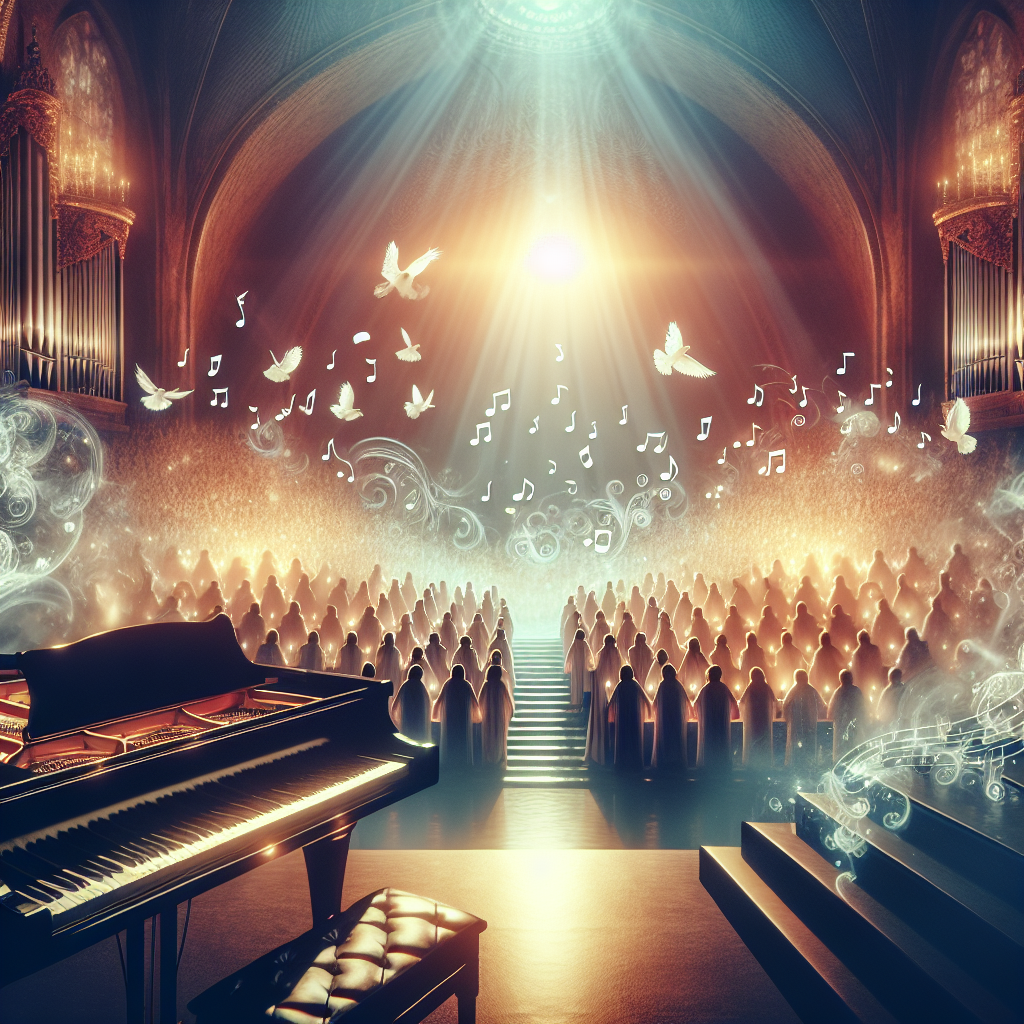
Spiritual Devotional about Sacred Music
The Divine Melody: Embracing Sacred Music in Our Spiritual Journey
In the symphony of life, sacred music plays a divine melody that resonates deep within our hearts, lifting our spirits and drawing us closer to God. Whether it’s the soulful hymn sung in church, the majestic chorus of Handel’s "Messiah," or the soft strumming of an acoustic guitar during worship, sacred music transcends earthly boundaries and propels us into a sacred space where we can communicate with the divine.
The Bible is rich with examples of the power of music in worship and spiritual transformation. One of the most beautiful instances occurs in 2 Chronicles 5:13-14, when Solomon’s temple is dedicated: “The trumpeters and musicians joined in unison to give praise and thanks to the Lord… Then the temple of the Lord was filled with the cloud, and the priests could not perform their service because of the cloud, for the glory of the Lord filled the temple of God.” Here, music becomes a vessel for divine presence, illustrating that when we unite in song, we open our hearts to experience God’s glory.
The sacred nature of music is also evident in the Psalms. King David, the "sweet psalmist of Israel," knew well the power of music to express profound emotions and praise. Psalms were crafted to be sung, each one inviting the faithful to harmonize their voices in celebration and prayer. Psalm 95:1-2 encourages us with these words: “Come, let us sing for joy to the Lord; let us shout aloud to the Rock of our salvation. Let us come before him with thanksgiving and extol him with music and song.”
Yet, the influence of sacred music isn’t confined to grand biblical narratives or historic cathedrals; it is alive and vibrant in our daily walk with God. When we sing or listen to worship music, we are participating in a tradition that spans millennia, connecting us with believers across generations. These melodies are a reminder of the timeless truths of God’s love, grace, and mercy.
Every time you turn on your favorite worship playlist or join your church congregation in song, consider the profound opportunity in front of you. You’re not just enjoying a pleasant tune; you are standing in the stream of a rich spiritual legacy, opening your heart to transformation and allowing God’s presence to fill you with peace and joy.
Here are a few practical ways to let sacred music enrich your spiritual life:
-
Start Your Day with Praise: Begin your morning with a favorite hymn or worship song. Let the lyrics guide your prayers and set a positive, hopeful tone for your day.
-
Create a Sacred Space: Dedicate a corner of your home to quiet reflection with music. Whether it’s a cozy chair or a nook by the window, let this be your sanctuary for encountering God through music.
-
Join in Communal Worship: Whether during a church service or a small group gathering, participating in communal singing magnifies joy and strengthens community bonds.
-
Explore New Music: Expand your playlist with different genres of sacred music. From classical oratorios to contemporary gospel, every style offers a unique expression of praise.
As we dive into the vast ocean of sacred music, we encounter a divine rhythm that can guide our hearts toward God’s divine purpose. Let us embrace it with joy and anticipation, knowing each note and lyric can carry us closer to the heart of God. May your spiritual journey be enriched and your soul be uplifted by the transformative power of sacred music; our Creator is rejoicing with us in every note sung and every chord played.
Explore and dig up answers yourself with our BGodInspired Bible Tools! Be careful – each interaction is like a new treasure hunt… you can get lost for hours 🙂
Q&A about Sacred Music
Certainly! Here’s a Q&A about Sacred Music:
Q1: What is sacred music?
A1: Sacred music is a genre that is created or performed for religious or spiritual purposes. It includes compositions that have been used in religious ceremonies, liturgical services, or rituals across various cultures and religions.
Q2: Can you give examples of sacred music in Christianity?
A2: In Christianity, sacred music includes hymns, psalms, masses, and oratorios. Notable examples are Gregorian chant, the works of Johann Sebastian Bach such as his "Mass in B Minor," and hymns like "Amazing Grace."
Q3: What distinguishes sacred music from secular music?
A3: Sacred music is primarily distinguished by its purpose and content. It is intended to inspire spiritual reflection, worship, or religious communication, often containing religious texts or themes, while secular music is meant for entertainment or other non-religious purposes.
Q4: How has sacred music evolved over time?
A4: Sacred music has evolved significantly over the centuries, influenced by cultural, linguistic, and musical developments. From the early monophonic Gregorian chants to the complex polyphony of the Renaissance, and eventually to the diverse contemporary styles seen today, each era has contributed to its richness and diversity.
Q5: What role does sacred music play in non-Christian religions?
A5: Sacred music plays a vital role in many world religions, serving as a medium for worship and spiritual connection. In Islam, the melodious recitation of Quranic verses known as Tajweed is considered sacred. In Hinduism, bhajans and kirtans are devotional songs sung in praise of deities. Similarly, in Judaism, traditional hymns and cantillation are integral to religious ceremonies.
Q6: How are technology and modern trends influencing sacred music today?
A6: Technology and modern trends have significantly influenced sacred music, allowing for broader dissemination and diversity in expression. Digital recording, streaming platforms, and online communities have made sacred music more accessible. Additionally, contemporary composers integrate modern instruments and styles, creating new forms of expression while maintaining traditional elements.
Q7: What is the significance of music in religious rituals?
A7: Music in religious rituals serves to enhance the spiritual experience, unify congregants, and facilitate an atmosphere of reverence and contemplation. It supports the liturgy, aids in worship, and can evoke powerful emotional responses that deepen the participants’ connection to the divine.
Feel free to ask more about specific aspects or explore other related topics!


