 0
0
 0
0
Spiritual Devotional about Prayer
Title: The Transformative Power of Prayer: Connecting with the Divine
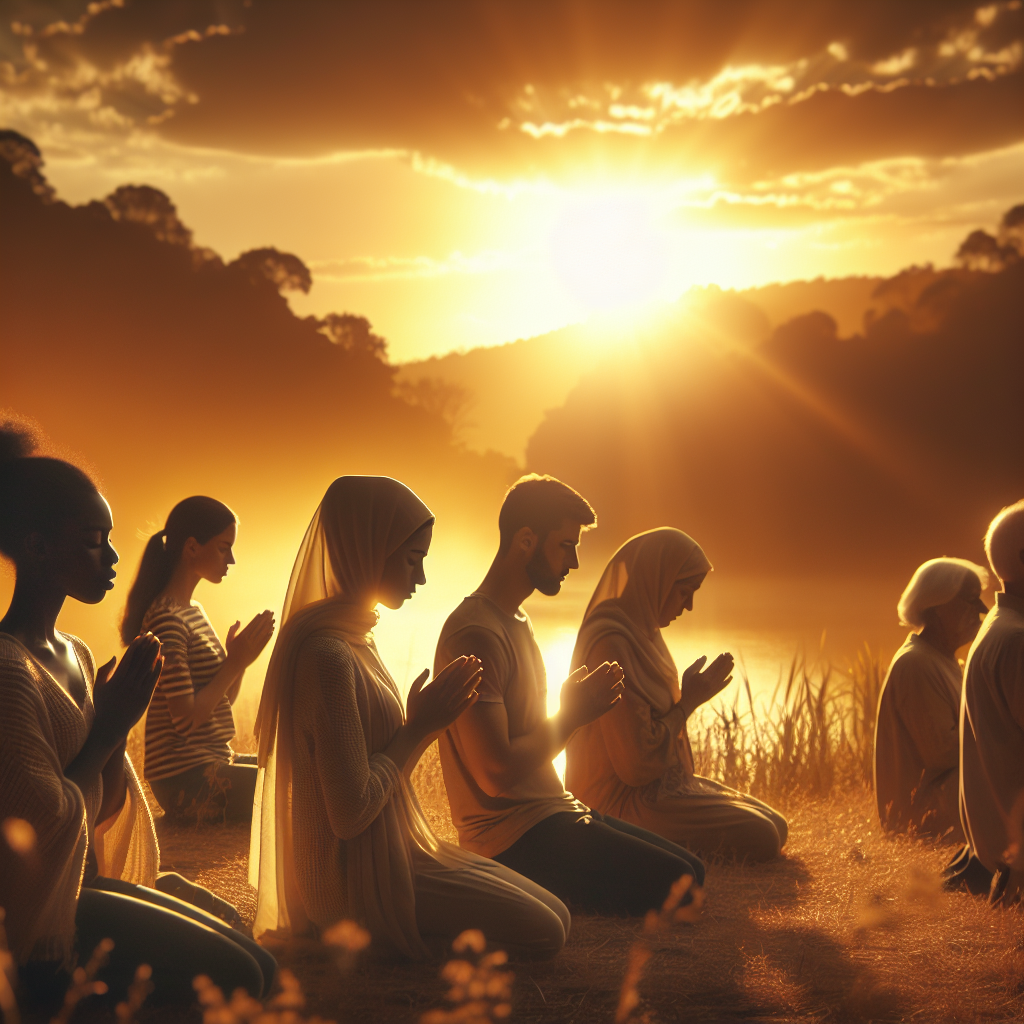
Prayer is one of the most profound gifts we have as believers. It’s the bridge that connects our hearts and souls to God, empowering us in ways beyond our understanding. There’s something truly uplifting about knowing that the Creator of the universe not only hears our cries but delights in our conversation with Him. Today, let’s explore the transformative power of prayer and how it can reshape our lives.
1. Prayer as a Relationship Builder
In any relationship, communication is key. The same holds true in our relationship with God. Through prayer, we carry on an ongoing conversation with our Heavenly Father, sharing our thoughts, worries, and joys. The Holy Bible tells us in 1 Thessalonians 5:16-18, "Rejoice always, pray without ceasing, give thanks in all circumstances; for this is the will of God in Christ Jesus for you." This passage reminds us that prayer is not a one-time event but a continuous conversation that strengthens our spiritual bond with God.
2. Prayer as a Source of Peace
In our fast-paced world, peace can sometimes feel elusive. However, through prayer, we can find a sanctuary of calm within the storm. In Philippians 4:6-7, we are encouraged, "Do not be anxious about anything, but in every situation, by prayer and petition, with thanksgiving, present your requests to God. And the peace of God, which transcends all understanding, will guard your hearts and your minds in Christ Jesus." When we lay our worries at His feet, He covers us with a peace that surpasses all human comprehension.
3. Prayer as a Catalyst for Change
Prayer is not just about changing circumstances; it’s about changing us. As we draw closer to God, He molds us into the people we are meant to be. In James 5:16, we read, "The prayer of a righteous person is powerful and effective." Our prayers have the power to bring about transformation—not only in our lives but also in the lives of those around us. Every prayer uttered in faith carries the potential to ignite change.
4. Prayer as an Act of Gratitude
Gratitude is a powerful component of prayer. In 1 Chronicles 16:34, we are reminded, "Give thanks to the Lord, for he is good; his love endures forever." When we approach God with thankful hearts, acknowledging His goodness and love, we open the doors to deeper blessings and joy. Gratitude in prayer helps us to see the abundance of God’s provision and cultivates a spirit of thankfulness in every area of our lives.
5. Prayer as a Tool for Guidance
In moments of uncertainty, prayer provides clarity and direction. Proverbs 3:5-6 advises us, "Trust in the Lord with all your heart and lean not on your own understanding; in all your ways submit to him, and he will make your paths straight." As we surrender our plans and seek His wisdom, God directs our steps and leads us on the path He has designed for us.
Conclusion
Prayer is not just a ritual, but a lifestyle—a divine dialogue that brings us closer to God’s heart. It is a powerful tool for change, a source of peace, and a way to express gratitude. As we cultivate a life of consistent prayer, may we be filled with joy, empowered in faith, and transformed by His presence.
Let us embrace prayer with open hearts, trusting that with every whispered word and silent thought, we are drawing nearer to the One who loves us beyond measure. Remember, God is always listening, and through prayer, the miraculous becomes possible. Let us rejoice in this beautiful gift and make it a cornerstone of our spiritual journey.
Explore and dig up answers yourself with our BGodInspired Bible Tools! Be careful – each interaction is like a new treasure hunt… you can get lost for hours 🙂
Q&A about Prayer
Certainly! Here’s a Q&A focused on the topic of prayer:
Q1: What is prayer?
A1: Prayer is a spiritual practice where individuals communicate with a higher power, deity, or their inner self. It involves expressing thoughts, emotions, gratitude, requests for guidance, or reflections. Prayer can be a deeply personal act or part of communal religious rituals.
Q2: What are some common purposes of prayer?
A2: People pray for various reasons including:
- Seeking guidance and wisdom
- Expressing gratitude
- Offering praise
- Asking for help or intervention in difficult situations
- Finding peace and comfort
- Reflecting on personal growth and spirituality
Q3: How can one pray?
A3: There is no singular way to pray; practices can vary widely depending on personal beliefs and religious traditions. Common methods include:
- Silent contemplation or meditation
- Vocal prayer, alone or in a group
- Reading or reciting prayers from a scripture or prayer book
- Writing prayers in a journal
- Engaging in repetitive chants or mantras
Q4: What are the benefits of prayer?
A4: Many people find that prayer can offer:
- A sense of peace and calm
- Improved mental and emotional health
- Enhanced focus and clarity
- Stronger connection to their faith or spirituality
- A sense of community when shared with others
Scientific studies have shown that prayer can positively impact stress levels and provide a sense of support and comfort.
Q5: Is prayer a part of all religions?
A5: Most major world religions incorporate some form of prayer as part of their spiritual practices. However, the form, purpose, and frequency can vary significantly. In some faiths, prayer is structured and formal, while in others it may be more spontaneous and personal.
Q6: Can non-religious individuals practice prayer?
A6: Yes, non-religious individuals may also engage in prayer, often as a form of meditation or reflection. For them, prayer may not involve communicating with a deity but can be a way to focus on intentions, seek inner peace, or express gratitude.
Q7: How often should one pray?
A7: There is no set frequency for prayer; it is a personal choice. Some people pray multiple times a day at specific intervals, following religious traditions, while others may pray only when they feel the need. Ultimately, the frequency can be tailored to fit individual needs and lifestyles.
Feel free to modify any of these Q&A entries if you have specific questions or a different focus in mind.