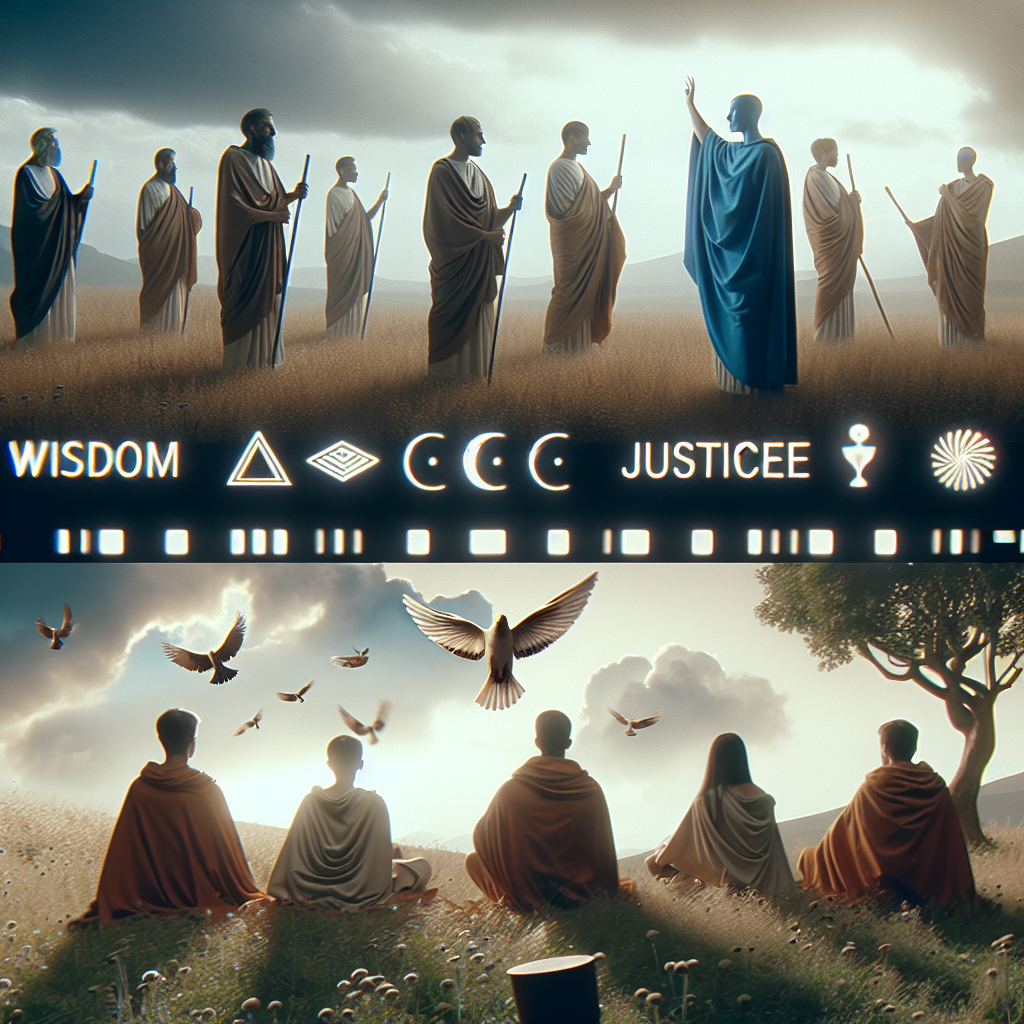
Short Devotional about Stoicism
Introduction
In a world filled with noise and constant change, finding peace in stillness and inner strength can seem like a daunting task. Yet, the ancient philosophy of Stoicism offers a powerful guide to navigating life’s storms with grace and resilience. Imagine being able to face any situation, good or bad, with a calm mind and a steady heart. That’s what Stoicism can help us achieve. Embracing this mindset can lead us to a life colored by wisdom, courage, and tranquility.
As we journey together through this devotional, you’ll discover how the timeless principles of Stoicism surprisingly align with biblical teachings, offering us profound insights for our modern lives. Lean in, because what awaits is a rich exploration of self-discipline, acceptance, and ultimately, faith, all woven together to bolster your spirit and guide your steps.
Bible Verse
Philippians 4:11-13 (NIV): “I am not saying this because I am in need, for I have learned to be content whatever the circumstances. I know what it is to be in need, and I know what it is to have plenty. I have learned the secret of being content in any and every situation, whether well-fed or hungry, whether living in plenty or in want. I can do all this through him who gives me strength.”
Meaning
In these verses from Philippians, the Apostle Paul speaks of a journey towards contentment, one that resonates strongly with the essence of Stoicism. Paul, much like the Stoics, discovered that true peace does not rest upon external circumstances but rather within the cultivation of our inner virtues. The Stoics teach that, by focusing on what we can control—our thoughts and actions—and releasing the need to control what we cannot, we find a sustainable serenity.
Just as Paul found solace and strength through his faith, the Stoics believed that by aligning our will with the natural course of the universe, we could live harmoniously. Both philosophies emphasize the power of perspective: the ability to transform our mindset from one of lack to one of abundance, from discontent to gratitude.
When Paul speaks of being content in every situation, he echoes what Stoics describe as ‘apatheia’—a state of inner equilibrium where one’s peace is unaffected by external turbulence. This wisdom is about embracing life fully, welcoming both its challenges and blessings, knowing that through faith and inner strength, we are equipped to triumph over any hardship.
Actions to Take
– Practice gratitude daily. Write down three things you are thankful for at the end of each day.
– Reflect on what you can control and release what you cannot. Focus your energy on what truly matters.
– Embrace silence. Spend a few minutes each day in quiet contemplation or meditation to center your mind and connect with your inner self.
– Cultivate acceptance by reminding yourself that challenges are opportunities for growth and learning.
– Seek wisdom through reading and meditating on scriptures and philosophies that encourage inner strength and resilience.
Journal Prompts
1. What areas of your life can you begin to let go of control, and how can that shift bring you peace?
2. How have your challenges shaped your character, and what strengths have you gained from them?
3. What are some routine actions you can take to practice gratitude and contentment in your daily life?
4. Reflect on a time when you experienced inner peace despite external chaos. What contributed to that experience?
5. How does your faith play a role in finding contentment and strength in difficult times?
Prayer
Dear God,
Thank you for the timeless wisdom of your Word and the guidance it provides. Help me to find contentment in every circumstance and to trust in the strength that comes from you. Teach me to focus on what I can control, to let go of what I cannot, and to live with a heart full of gratitude and peace. May my faith continue to sustain me and help me grow in resilience and serenity. Amen.
Social Posts
– “Contentment roots us in what truly matters, allowing our spirits to rise above life’s storms. #StoicFaith #InnerPeace”
– “Find peace not by escaping life but by embracing it wholly, knowing strength comes from within. #StrengthInFaith #Stoicism”
– “Letting go gives us freedom, and freedom is the only condition for happiness. #ControlWhatYouCan #BeContent”
– “Embrace the now, release what’s outside your control, and watch your inner peace flourish. #SerenityInFaith”
– “Gratitude transforms our perspective; start each day counting blessings, not burdens. #GratefulHeart #DailyContentment”
Conclusion
Embracing Stoicism through a biblical lens, like weaving threads of gold through an already magnificent tapestry, enhances our journey of faith and understanding. By exploring these principles, we learn that true contentment and strength come from aligning our lives with God’s will and focusing on nurturing our inner virtues.
As you continue this short devotional with us at BGodInspired.com, remember that each step you take in practicing these principles brings you closer to a life filled with peace, strength, and unwavering joy. Join us as we explore more avenues to enrich your spiritual path, bringing heaven’s wisdom into earthly practice.
Explore and dig up answers yourself with our BGodInspired Bible Tools! Be careful – each interaction is like a new treasure hunt… you can get lost for hours 🙂
Q&A about Stoicism
Sure, here’s a set of questions and answers based on Stoicism:
Q1: What is Stoicism?
A1: Stoicism is an ancient Greek philosophy that teaches the development of self-control and fortitude as a means to overcome destructive emotions. It was founded in Athens by Zeno of Citium in the early 3rd century BC. The philosophy holds that virtue, the highest good, is based on knowledge and that the wise live in harmony with the divine Reason that governs nature.
Q2: Who are some famous Stoic philosophers?
A2: Some notable Stoic philosophers include Zeno of Citium, who founded the school; Seneca the Younger, a Roman statesman and writer; Epictetus, a former slave who became a prominent teacher; and Marcus Aurelius, a Roman Emperor known for his work "Meditations," which is considered a seminal Stoic text.
Q3: What are the core principles of Stoicism?
A3: The core principles of Stoicism include practicing virtue (wisdom, courage, justice, and temperance), understanding what is within our control and what is not, maintaining an attitude of detachment towards external events, and accepting nature’s laws as inevitable. Stoics believe that emotional suffering is minimized by living in accordance with reason and virtue.
Q4: How do Stoics view emotions?
A4: Stoics don’t aim to eliminate emotions altogether but rather to transform harmful emotions into rational ones. They believe in experiencing "good passions" that are aligned with rational thinking. Stoicism teaches that destructive emotions (like anger and fear) come from false beliefs and perceptions, and by correcting these misconceptions, one can achieve tranquility and emotional stability.
Q5: What is the Stoic concept of ‘Amor Fati’?
A5: ‘Amor Fati’ is a Latin phrase meaning "love of fate." It is the Stoic acceptance and embrace of everything that happens in life, including suffering and loss, as necessary and beneficial. The idea is not merely to tolerate what happens but to enthusiastically accept and find meaning even in life’s challenges, seeing them as opportunities for personal growth.
Q6: How can someone practice Stoicism in daily life?
A6: Practicing Stoicism involves several daily exercises, such as:
- Reflecting on one’s thoughts and actions (journaling or meditation).
- Practicing mindfulness and staying present in the moment.
- Recognizing and concentrating on what is within one’s control while accepting what is not.
- Regularly contemplating the impermanence of life and embracing gratitude.
- Applying reason to difficult situations to understand and adjust one’s emotional responses accordingly.
Q7: How does Stoicism differ from Epicureanism?
A7: Though both philosophies seek happiness, Stoicism and Epicureanism differ significantly. Stoics emphasize virtuous living, self-control, and accepting fate, while Epicureans seek happiness through the pursuit of moderate pleasures and the avoidance of pain. Epicureans believe that pleasure is the highest good and that achieving a state of tranquility (ataraxia) comes from living modestly, gaining knowledge, and reducing desires. Stoicism focuses more on inner strength and virtue rather than external circumstances.