Where Faith Meets Inquiry: Exploring the Intersection of Biblical Narratives, Scientific Discoveries, and Ancient Civilizations
The dialogue between faith and inquiry has been a rich, complex journey throughout human history. It is a conversation that has manifested itself in diverse ways within the realms of theology, science, and archaeology. Particularly fascinating is the intersection where Biblical narratives, significant scientific discoveries, and ancient civilizations converge. This exploration not only reveals the depth of human understanding but also provides a profound appreciation for the narratives that have shaped cultures and societies across millennia.
Understanding Biblical Narratives in Context
Biblical texts are not merely religious scriptures; they are also historical documents that reflect the beliefs, experiences, and struggles of ancient peoples. From the epic stories of the Exodus to the parables of Jesus, these narratives offer rich insights into moral philosophy, human nature, and our relationship with the divine. They were crafted in specific historical contexts, intertwined with the realities of ancient civilizations such as Egypt, Babylon, and Rome. Understanding the historical background of these texts allows for deeper interpretations and an appreciation of their lasting significance.
Consider, for example, the creation accounts found in Genesis. They serve not only as spiritual allegories but also as reflections of ancient Near Eastern cosmologies. By studying these narratives alongside archaeological findings, which reveal how different cultures viewed the cosmos and humanity’s role within it, we can gain a fuller understanding of the writers’ intent and the message conveyed to their audiences.
Scientific Discoveries: Bridging the Gap
Scientific research and discoveries, particularly in fields such as archaeology, geology, and anthropology, have increasingly illuminated the historical contexts of Biblical stories. The uncovering of ancient artifacts, writings, and urban centers brings a new dimension to our understanding of these narratives.
For instance, the discovery of the Dead Sea Scrolls near the Qumran Caves has profound implications for Biblical scholarship, revealing variations in texts and shedding light on the practices of ancient Jewish communities. Such findings encourage a reconceptualization of the historical accuracy and richness of the Biblical story, showing it to be a living text, continuously dialoguing with its time.
Moreover, scientific advancements in carbon dating and soil analysis have the power to clarify historical timelines, anchoring Biblical events within the broader chronology of human history. This interplay provides a more holistic view, inviting believers and seekers alike to engage with both scripture and science.
Ancient Civilizations: A Shared Heritage
The ancient civilizations that intersect with Biblical narratives offer fascinating perspectives that enrich our understanding of faith and inquiry. Whether examining the monumental architecture of Egypt, the sophisticated governance of Mesopotamia, or the philosophical foundations of Greek culture, these societies contribute significantly to our understanding of human thought and spirituality.
The Code of Hammurabi, for example, showcases early human attempts at codifying laws and moral principles, paralleling the ethical teachings found in the Bible. Such comparisons foster a recognition that while cultures may differ in expression, the quest for justice, moral clarity, and a sense of the divine is universally inherent.
Encouraging Inquiry Through Dialogue
The intersection of faith and inquiry encourages a respectful dialogue that welcomes questions rather than shuns them. The intellectual tradition of the Abrahamic faiths, which includes Judaism, Christianity, and Islam, has historically celebrated inquiry as a pathway to greater understanding of the divine.
Encouraging this spirit of inquiry can lead to a more profound appreciation for both sciences and spiritual teachings. Educational pursuits in theology, philosophy, and the sciences can coexist harmoniously, reinforcing each other rather than standing in opposition. Universities and institutions around the world are beginning to recognize this crucial dialogue, providing platforms for scholars and students to explore questions of existence, morality, and the cosmos together.
Conclusion: Embracing the Journey
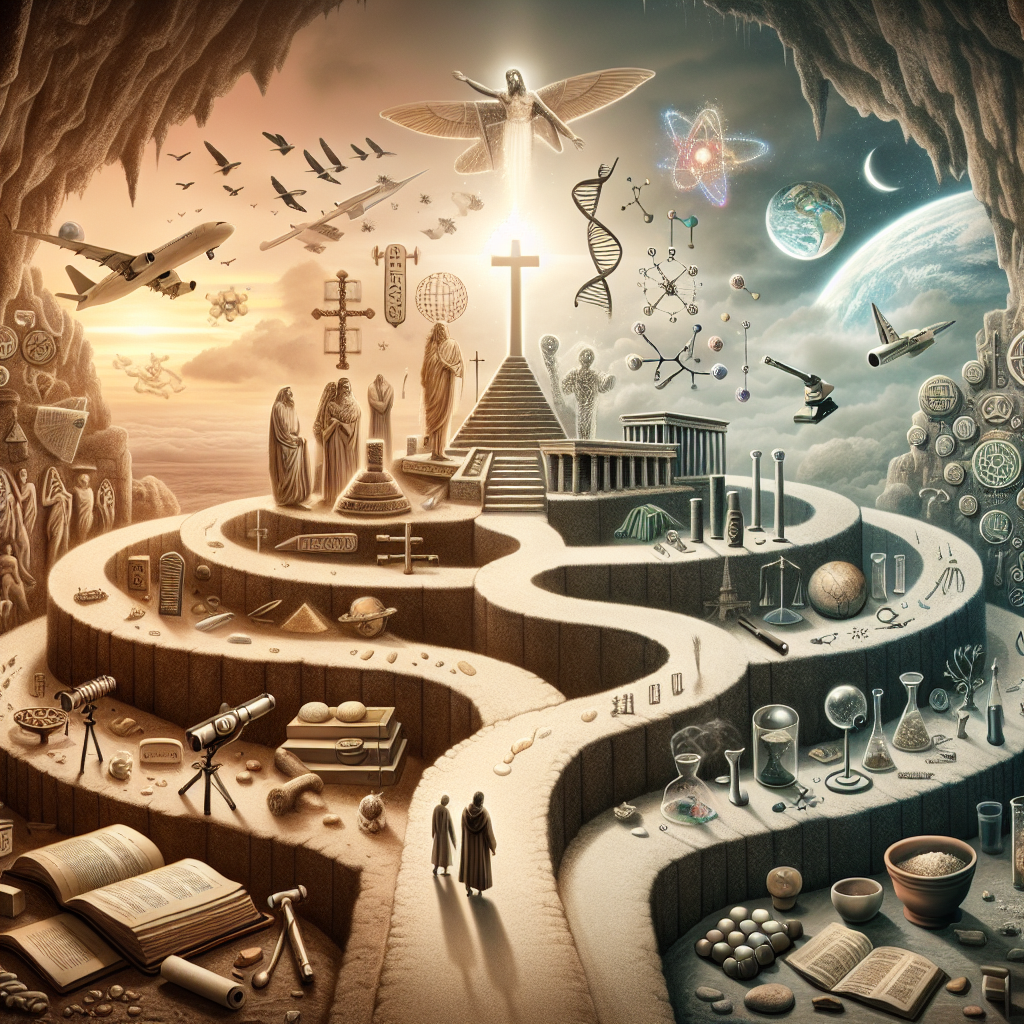
Ultimately, the intersection of Biblical narratives, scientific discoveries, and ancient civilizations is a tapestry of human experience, each thread adding richness and depth to our understanding. This exploration extends an invitation to all – to engage with faith with curiosity, to pursue inquiry with an openness to the transcendent, and to celebrate the shared heritage that binds us together.
As we navigate this journey, we embrace the idea that faith and inquiry do not need to be in conflict. Instead, they can work hand-in-hand, fostering a more integrated understanding of our world and ourselves. In this space of dialogue and discovery, we can find hope, wisdom, and a profound sense of unity in our quest for truth.
Explore and dig up answers yourself with our BGodInspired Bible Tools! Be careful – each interaction is like a new treasure hunt… you can get lost for hours 🙂