 0
0
 0
0
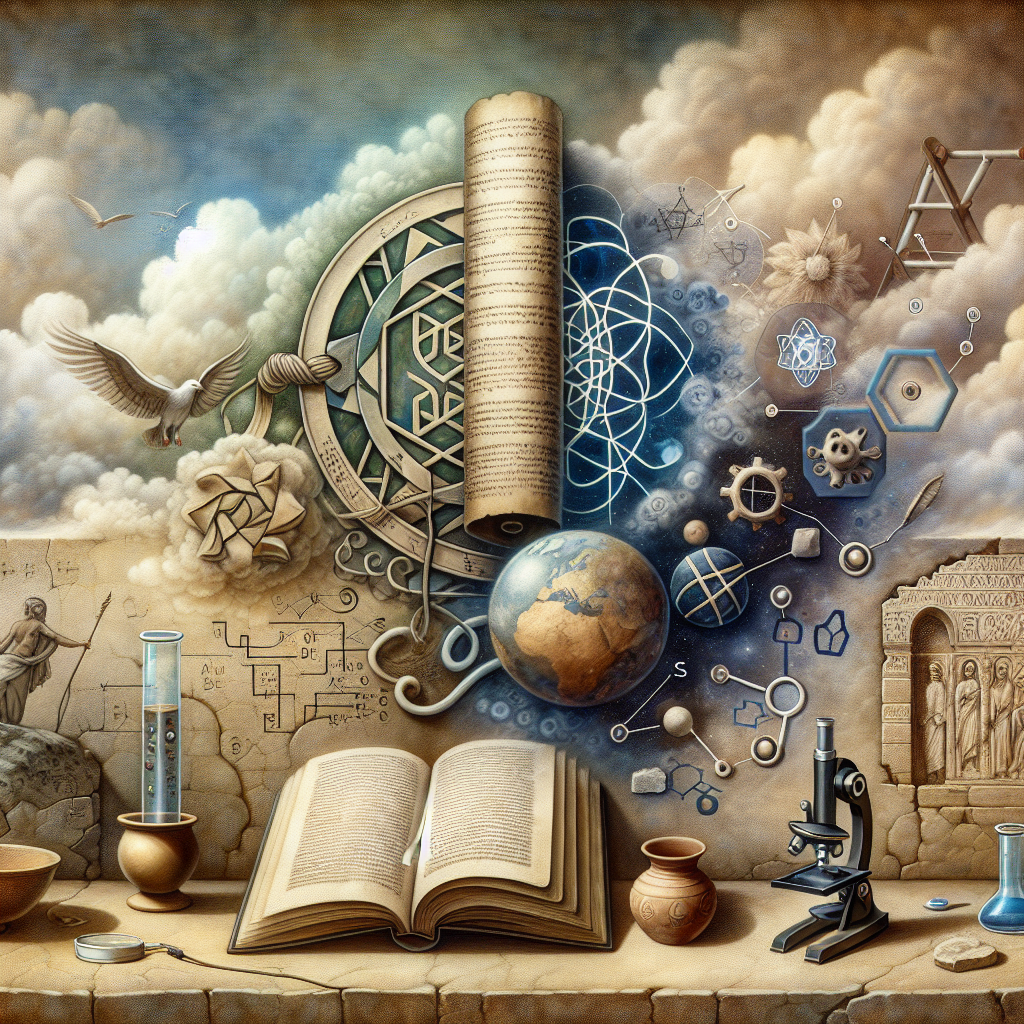
In an era where science and faith are often viewed as opposing forces, a remarkable convergence is taking place. Scholars, researchers, and enthusiasts from various disciplines are beginning to uncover the profound connections between biblical texts, scientific discoveries, and archaeological findings. Together, these realms of knowledge weave a rich tapestry that not only enhances our understanding of history and scripture but also inspires a deeper faith and curiosity about the world around us.
The Bible: A Historical Text
The Bible, revered as a sacred scripture by millions, is profoundly more than a religious document; it serves as a historical record that chronicles the experiences, beliefs, and aspirations of countless individuals across millennia. From the narratives of creation in Genesis to the prophetic writings of the Old Testament, and the life of Jesus in the New Testament, the scripture presents a story that offers insights into ancient civilizations and their worldviews.
Many scholars approach the Bible as a historical text, utilizing linguistic, historical-critical, and literary methods to uncover the nuances of its narratives. This academic engagement enriches our understanding and can affirm the historical authenticity of various biblical events and figures, fostering a more inclusive perspective where both faith and reason can coexist harmoniously.
The Role of Scientific Inquiry
Science, with its foundation in observation and experimentation, often seeks to answer the "how" of the universe. Fields such as archaeology, geology, and anthropology are instrumental in providing context and clarity to historical events and societal developments mentioned in biblical texts.
For instance, radiocarbon dating, dendrochronology, and stratigraphy have allowed archaeologists to establish timelines for ancient civilizations, many of which interact with biblical narratives. The Hittites, once thought to be purely a figment of biblical imagination, were identified as a real empire through archaeological discoveries, illustrating that, at times, modern science serves to validate ancient texts.
Moreover, disciplines such as astrophysics and biology challenge and refine our understanding of creation, prompting new interpretations of biblical passages. Concepts surrounding the Big Bang or evolutionary biology can coexist with theological discussions about creation, suggesting that the two are not in opposition but rather serve complementary purposes in addressing human existence and purpose.
Biblical Archaeology: A Bridge Between Worlds
Biblical archaeology stands as a bridge between scripture and science, a field dedicated to the study of material remains from periods described in the Bible. Excavations across the Levant have yielded remarkable artifacts, ancient inscriptions, and city ruins that bring the biblical world to life.
Sites like Jericho, Hazor, and Jerusalem have provided tangible evidence of the historical events depicted in the Bible. For instance, the discovery of the Dead Sea Scrolls in the mid-20th century not only affirmed textual traditions but also illuminated the life and times of the early Jewish community, influencing New Testament studies and early Christianity.
Such findings are not merely academic; they resonate with personal and spiritual significance. For believers, they offer assurance that the narratives of faith are grounded in real experiences, enriching the understanding of their heritage and fostering a sense of connection to the past.
Encouragement for the Journey
The convergence of the Bible, science, and archaeology exemplifies an encouraging truth: faith and inquiry are not mutually exclusive. Both can ignite a passionate pursuit of truth and understanding. This harmonic relationship invites individuals of all backgrounds to engage in open dialogue about faith and reason, breaking down barriers and cultivating respect between differing viewpoints.
Engaging with these intersecting realms can deepen one’s knowledge and inspire curiosity about the universe. It encourages believers to explore questions of existence, morality, and purpose through the lenses of both faith and scientific discovery.
Let us be inspired to approach the scriptures not just as ancient documents, but as living texts that connect with our understanding of the world. May we embrace the wonders of nature and the truths of the universe while finding joy in the stories and lessons interwoven throughout the Bible.
In conclusion, the exploration of the synergy between scripture, science, and archaeology offers a hopeful perspective for the future. By embracing this interplay, we can foster a culture of inquiry, understanding, and respect—celebrating the richness of human experience and the divine mysteries that continue to inspire us to seek, learn, and grow.
Explore and dig up answers yourself with our BGodInspired Bible Tools! Be careful – each interaction is like a new treasure hunt… you can get lost for hours 🙂