 0
0
 0
0
Faith, Reason, and the Cosmos: Bridging the Divide Between Biblical Teachings, Scientific Inquiry, and Philosophical Thought
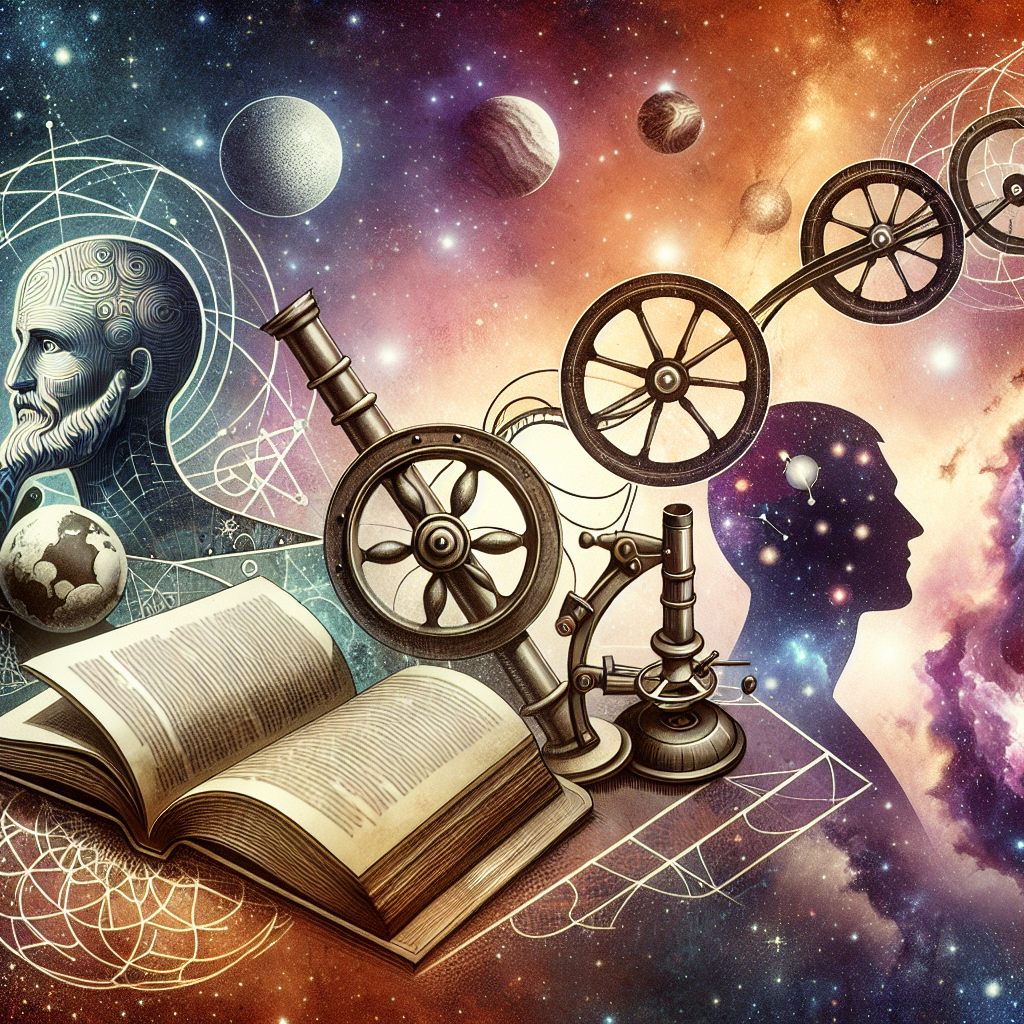
In a world ever increasingly defined by technological advancements and scientific discoveries, the conversation surrounding faith, reason, and the cosmos often emerges at the intersection of belief and inquiry. The narratives of biblical teachings, the rigor of scientific exploration, and the depth of philosophical thought do not exist in silos but can converge to create a more holistic understanding of our universe and our place within it. This article aims to illuminate the ways in which these three domains can complement rather than conflict with one another, fostering a sense of unity in our quest for knowledge and truth.
The Cosmos: A Shared Wonder
The cosmos has captivated human imagination across cultures and epochs. From the ancient stargazers who mapped constellations in light of myth and theology, to today’s astrophysicists who decode cosmic phenomena through mathematical equations, the quest to understand our universe is a shared human experience. Both biblical texts and scientific literature reveal an awe-inspiring universe teeming with mysteries. For instance, the Psalmist, over two millennia ago, gazed at the heavens and proclaimed, "The heavens declare the glory of God; the skies proclaim the work of his hands" (Psalm 19:1). This reverence echoes in modern science, where researchers, as modern-day explorers, unveil the intricacies of black holes, galaxies, and the origins of the universe.
Faith and Science: Partners in Exploration
Contrary to the common narrative that positions faith and science as adversaries, there is a compelling case to be made for their collaboration. Scientists, driven by a quest for truth, often find themselves asking profound questions about existence, purpose, and ethics—domains traditionally explored within philosophical and theological frameworks. Leaders in both scientific and religious communities have acknowledged that faith can inspire inquiry, fueling a passionate pursuit of understanding and unearthing the underlying beauty of creation.
Historically, many prominent scientists have been motivated by their faith. Figures such as Isaac Newton, Galileo Galilei, and more recently, Francis Collins, the director of the National Institutes of Health, have expressed how their spiritual beliefs intersect with their scientific work. Newton’s laws of motion and universal gravitation were guided by a desire to comprehend God’s creation, illustrating that scientific investigation can enhance, rather than negate, one’s faith.
Bridging Philosophical Thought
Philosophy serves as the bridge connecting faith and reason, probing questions about existence, morality, and human experience. It challenges us to think critically and reflectively, prompting inquiries that enrich both scientific and theological dialogues. For example, the influential philosopher Thomas Aquinas argued for the compatibility of reason and faith, positing that while faith might reveal truths beyond human comprehension, reason can explore and enhance those truths.
Moreover, the discipline of philosophy encourages an ethical framework, guiding scientific inquiry toward applications that are not only effective but also morally responsible. In today’s world, where biotechnology and artificial intelligence present unprecedented ethical dilemmas, philosophical discourse is invaluable in shaping science that aligns with human values and dignity.
A Call for Collaboration
As we progress through the 21st century, it becomes increasingly clear that the challenges we face—such as climate change, health crises, and the quest for social justice—require interdisciplinary collaboration that bridges faith, science, and philosophy. By fostering dialogue among religious leaders, scientists, and philosophers, we can cultivate a richer understanding of the complexities of life and the cosmos.
Educational institutions, communities, and individuals can play a pivotal role in this collaborative journey. Initiatives that encourage dialogue between scientists and faith communities can demystify misconceptions, promote mutual respect, and harness shared objectives. Interdisciplinary programs that blend scientific inquiry with ethical and philosophical discussions prepare future generations to embrace a more nuanced understanding of their world.
Conclusion: Embracing the Tapestry of Truth
The cosmos, with its myriad wonders, invites us to explore, question, and connect. Faith, reason, and philosophical thought can come together to enrich our understanding of reality, providing a multi-faceted approach to the age-old questions of existence. By viewing these domains as complementary rather than divisive, we pave the way for a more profound appreciation of life.
Let us engage in conversations that celebrate our differences while seeking common ground. As we navigate the mysteries of faith, science, and philosophy, we invite hope into our discourse—a hope that together, we can illuminate the cosmos and our shared humanity, forging a path toward a brighter, more connected future. By embracing the tapestry of truth that each perspective offers, we embark on an inspiring journey towards understanding the universe and our place within it.
Explore and dig up answers yourself with our BGodInspired Bible Tools! Be careful – each interaction is like a new treasure hunt… you can get lost for hours 🙂