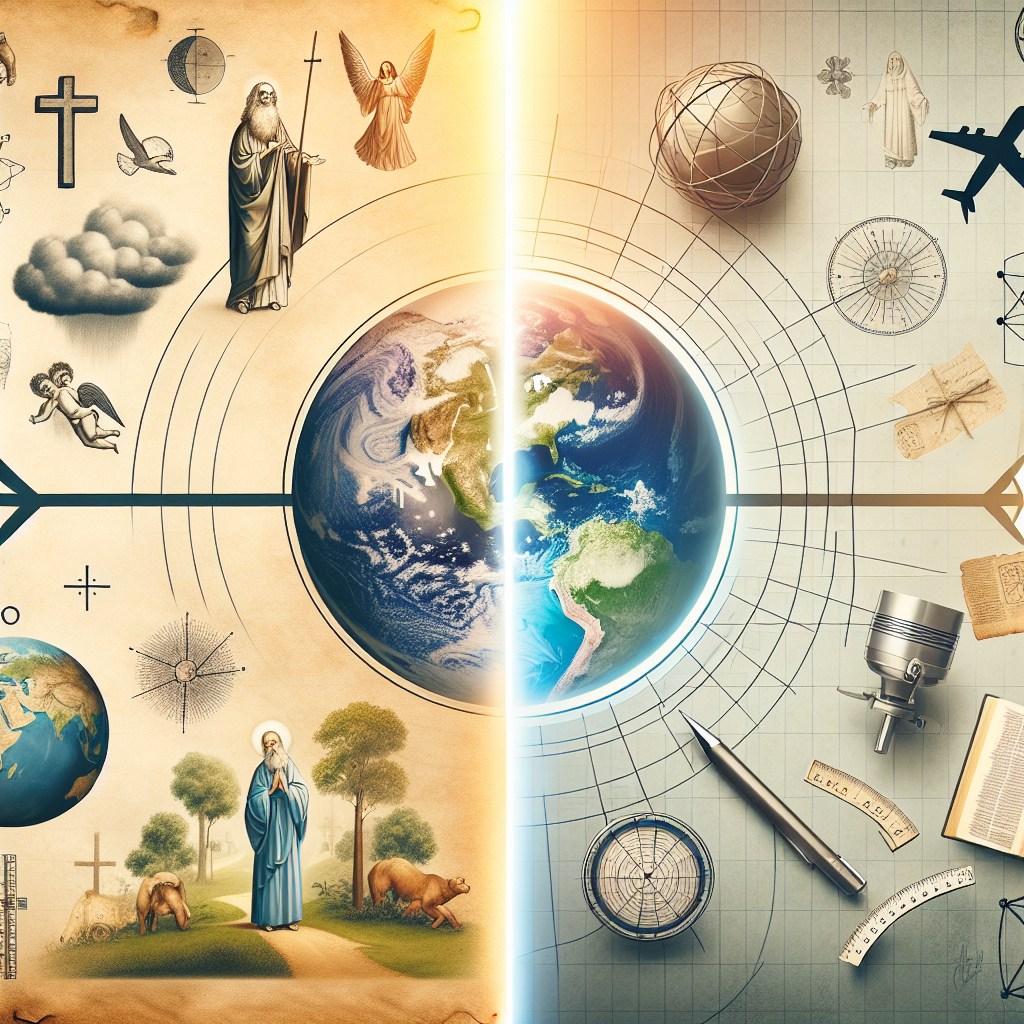
Faith and Facts: Bridging Biblical Teachings with Scientific Insights on Climate Change
As we navigate the challenges posed by climate change, a growing dialogue emerges that bridges faith and science. This intersection can inspire hope and action as we seek sustainable solutions to protect our planet. By celebrating the harmony between biblical teachings and scientific insights, we can cultivate a collective ethos promoting stewardship and responsibility for creation.
The Call to Stewardship
From the very first chapters of the Bible, we find an enduring message of stewardship. Genesis 1:26-28 highlights humanity’s divine mandate to care for the earth, granting us dominion not as conquerors, but as caretakers. This principle of stewardship invites us to engage in responsible management of God’s creation. As stewards, we bear an ethical responsibility to preserve the environment for future generations, reflecting our reverence for God’s handiwork.
Aligning Faith with Scientific Understanding
Scientific research reveals the current state of our planet in stark terms. Climate change is not merely a debate in academic circles; it entails profound implications for ecosystems, weather patterns, and human livelihoods. However, scientific insights do not exist in opposition to faith—they can enrich our understanding of the divine call to stewardship.
Take, for instance, the biblical directive found in Leviticus 25:23-24, which emphasizes the importance of land and its sustainable use: “The land must not be sold permanently, because the land is mine and you are but aliens and my tenants.” This ancient principle resonates with contemporary scientific findings: sustainable practices are crucial for soil health and biodiversity, safeguarding the Earth for all species.
Moreover, the concept of interdependence reflected in both Scripture and science allows us to understand our integral role in the ecosystem. As highlighted by environmental studies, the health of flora and fauna is intricately linked to our well-being. Scripture often uses nature as a metaphor for divine truth, encouraging us to engage with our surroundings intimately. For example, Matthew 6:26 notes, “Look at the birds of the air; they do not sow or reap or store away in barns, and yet your heavenly Father feeds them.” This illustrates not only God’s provision but also the interconnectedness of all life.
The Power of Community Action
Faith communities across the globe are stepping forward, recognizing the urgency of climate action. Churches, synagogues, mosques, and temples are not just places of worship but hubs for education and advocacy on environmental issues. Organizing community clean-up efforts, implementing waste reduction programs, and investing in renewable energy are practical steps many faith organizations are adopting.
The global youth climate movement has also found a significant ally in religious communities, with many young people motivated by their spiritual convictions to advocate for policy changes and sustainable practices. They are bringing fresh energy to this ancient narrative, reminding us that faith and science unite us in a shared purpose—one that transcends generations.
Hope and Renewal Through Innovation
In critically examining climate change, we can find hope in innovation. Technological advancements offer potential solutions and reflect our God-given creativity. Renewable energy sources like solar and wind power, advancements in carbon capture technologies, and sustainable agricultural practices showcase the remarkable capability of humanity to innovate in response to challenges.
Moreover, scriptures speak to renewal and restoration, echoing a divine promise that transcends despair. Isaiah 58:12 encourages us to be repairers of the breach, suggesting that our actions can create a ripple effect of healing within creation. This invites us to envision a world where both faith and science work together to restore balance to the earth.
Conclusion: A Shared Mission
As we face the reality of climate change, fostering a conversation between faith and science is essential. By grounding our actions in biblical teachings, we find a path toward stewardship, responsibility, and hope. Science provides the insights necessary to understand our impact, while faith offers the moral compass to guide our choices.
Let us move forward, emboldened by the call to protect our shared home. With each step taken in faith, grounded in facts, we can build a sustainable future that honors the divine in creation. Together, let us steward this beautiful planet, echoing the timeless truth that we are all interconnected, and our actions resonate far beyond ourselves.
Explore and dig up answers yourself with our BGodInspired Bible Tools! Be careful – each interaction is like a new treasure hunt… you can get lost for hours 🙂