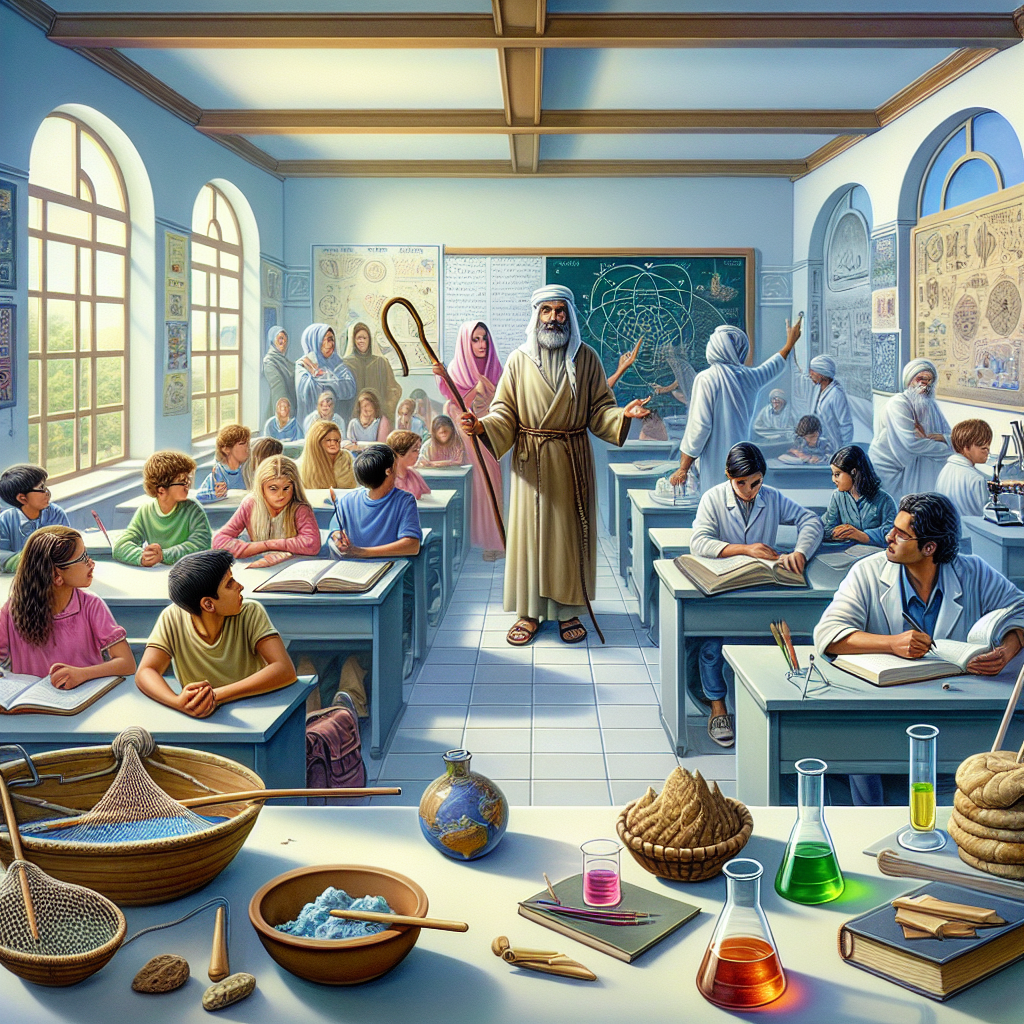
Bridging Faith and Reason: Integrating Bible Teachings and Scientific Inquiry in the Classroom
In an ever-evolving world where science and faith often appear at odds, educators face a unique but profound opportunity to create a cohesive learning environment that embraces both biblical teachings and scientific inquiry. The integration of these two streams of thought is not just a possibility; it can be a powerful educational approach that enriches the intellectual and spiritual lives of students. By bridging faith and reason, we can foster an atmosphere of curiosity, wonder, and respect for both spiritual beliefs and scientific discovery.
A Foundation of Wonder
At the core of education is the innate sense of wonder that fuels inquiry. Both the Bible and science invite us to explore the universe and our place within it. The biblical notion of creation, especially as articulated in the Book of Genesis, serves as a powerful introduction to discussions about the natural world. By framing scientific inquiry within the context of biblical narratives, educators can kindle a passion for exploration while reinforcing students’ spiritual beliefs.
For instance, teachers can introduce the concept of ecosystems through the lens of the biblical worldview. Using passages that emphasize stewardship of the Earth, such as Genesis 2:15, educators can lead discussions about environmental science. This not only enhances students’ understanding of ecology but also anchors their respect for creation in a spiritual framework.
Encouraging Critical Thinking
Integrating faith and reason does not mean sidestepping critical thinking; rather, it enhances it. In a classroom that respects both scientific rigor and biblical truths, students are encouraged to engage in thoughtful debate, ask probing questions, and seek evidence-based answers while considering their faith-based perspectives.
Science thrives on inquiry—the constant questioning of known facts and theories. Educators can promote this by allowing students to explore and discuss how various scientific discoveries relate to their understanding of faith. For example, conversations about the Big Bang theory can be transparent in addressing how some theologians reconcile this scientific viewpoint with scriptures that discuss creation. Such dialogues enrich critical thinking and allow students to formulate their perspectives by weighing faith against rational inquiry.
Promoting Interdisciplinary Learning
An effective integration of Bible teachings and scientific inquiry paves the way for interdisciplinary learning. Subjects like biology, chemistry, and physics can be taught alongside religious studies, promoting a holistic view of knowledge that respects multiple perspectives.
For instance, when discussing human anatomy or health sciences, the biblical principles of caring for the body (1 Corinthians 6:19-20) can be examined alongside relevant medical theories and discoveries. This approach can lead to a more comprehensive understanding of health and wellness that respects both the physical body and spiritual well-being.
Fostering a Community of Open-Mindedness
Creating a respectful dialogue among students with diverse beliefs is crucial in a classroom that marries faith and reason. Students come from a variety of backgrounds and may hold different religious beliefs, or none at all. Encouraging a culture of open-mindedness and respect allows for rich discussions where faith and reason untangle complex questions. Facilitated group discussions can not only enhance understanding but also promote empathy and tolerance among peers.
Educators can guide these conversations by promoting the idea that questioning—is a vital part of learning. Instead of seeing faith and science as opposing forces, students can come to appreciate them as complementary paths toward understanding life and existence.
A Call to Action
As educators, we have a remarkable calling to shape younger generations. By bridging the gap between faith and reason, we can nurture well-rounded individuals who are curious, respectful, and critically engaged with the world.
To embrace this vision, educators should feel empowered to explore innovative curricula that reflect both biblical teachings and scientific theories. Field trips to natural history museums, discussions about the ethics of scientific advancements, and integrative projects can provide various touchpoints for students to engage with both realms.
In conclusion, bridging faith and reason in the classroom is not merely a pedagogical choice; it is a transformative opportunity that nurtures intellectual depth and spiritual richness. By fostering an environment of exploration, critical thinking, and open dialogue, we can inspire students to navigate the world as informed, compassionate individuals who appreciate the wonders of both science and faith. In doing so, we set the stage for a future where these two realms coexist harmoniously, enriching both our minds and our spirits.
Explore and dig up answers yourself with our BGodInspired Bible Tools! Be careful – each interaction is like a new treasure hunt… you can get lost for hours 🙂