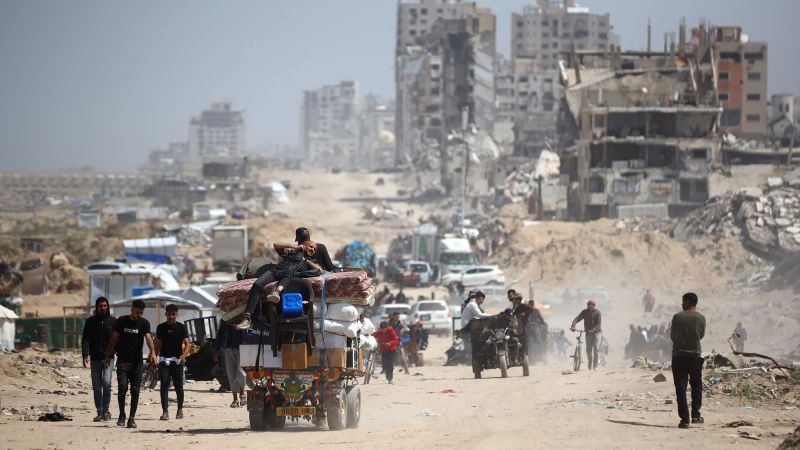
Israel Plans Expansion of Military Control in Gaza Amid Intensifying Conflict
CNN — Following a significant escalation in military operations, Israeli Prime Minister Benjamin Netanyahu has announced a shift in strategy regarding the Gaza Strip, signifying a potential long-term military engagement in the region. This recent development comes as Israel aims to divide and seize more parts of Gaza while exerting increasing pressure on Hamas to agree to new ceasefire terms.
On Wednesday, Netanyahu stated that the Israel Defense Forces (IDF) would “switch gears” in their actions against Hamas, emphasizing the need for control over additional territories. This strategic decision highlights a commitment to intensifying military efforts until the militant group complies with Israel’s demands. Defense Minister officials have vowed to seize “large areas” of the enclave, suggesting a systematic approach aimed at long-term territorial control.
In the past few days, IDF troops have advanced into northern Gaza, signaling a continuation of ground operations that have been marked by intense airstrikes, which the health ministry reports have resulted in over 1,249 casualties since the resurgence of military activities on March 18. These actions prompt a deep humanitarian concern, as the civilian toll mounts amid a humanitarian blockade that has left many Gazans in dire need.
As clashes continue, experts speculate about the implications of Israel’s territorial ambitions, particularly regarding the Morag Corridor—a strategically important area that, if seized, could further solidify Israeli military control over Gaza’s borders. This corridor is considered a potential dividing line within Gaza, reflecting a broader strategy that may create three distinct sections aimed at managing Hamas effectively while protecting Israeli communities.
The military campaign is set against a backdrop of stalled hostage negotiations, with Hamas rejecting Israel’s latest offers involving a possible ceasefire in exchange for the release of hostages. Currently, 24 living hostages are still believed to be held in Gaza, underscoring the urgency of the situation as fears for their lives grow.
In the midst of this ongoing conflict, the humanitarian crisis cannot be overstated. Reports indicate rising desperation among the population as food supplies dwindle critically. The United Nations has voiced concerns over how scarcity is driving individuals to desperate measures, highlighting a tragic cycle of deprivation and violence.
As we contemplate these complex events, the message of compassion found in biblical teachings resonates profoundly. Jesus taught us to love our neighbors and to seek peace—a reminder that in the midst of conflict, the pursuit of understanding, compassion, and reconciliation remains paramount. “Blessed are the peacemakers, for they will be called children of God” (Matthew 5:9).
During these turbulent times, let us reflect on how we can contribute to peace in our own communities and extend empathy to those affected by violence and despair. While the road ahead may be fraught with challenges, may we strive to embody the principles of love, mercy, and forgiveness taught by Jesus, seeking opportunities to be agents of healing in a fractured world. Each small act of kindness can plant seeds of hope, leading us to a better tomorrow.
Explore and dig up answers yourself with our BGodInspired Bible Tools! Be careful – each interaction is like a new treasure hunt… you can get lost for hours 🙂