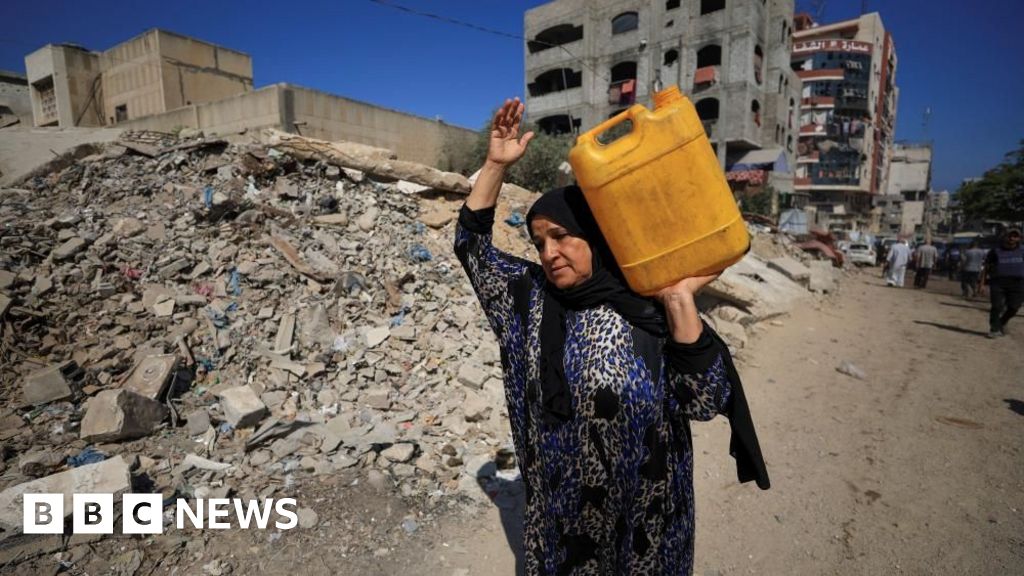
Israel Plans Stricter Control Over Gaza Amid Humanitarian Crisis
By Raffi Berg, BBC News, London
Israeli Prime Minister Benjamin Netanyahu has declared Israel’s intention to take full control of the Gaza Strip following a significant escalation in the ongoing conflict. In an interview with Fox News, Netanyahu stated, “We intend to take control of all of Gaza to ensure our security, remove Hamas, and allow the population to be free from Hamas.” This ambitious plan comes as Israeli military forces currently govern approximately three-quarters of Gaza.
As international scrutiny intensifies, Hamas has responded vehemently, accusing Netanyahu of perpetuating “genocide and displacement” through his military strategy. The United Nations has echoed concerns, warning that a complete takeover could lead to “catastrophic consequences” for Palestinian civilians and Israeli hostages alike. The UK’s ambassador to Israel has labeled the move as "a huge mistake," highlighting the precariousness of the situation.
A Broader Perspective
Netanyahu’s strategy appears to stem from a desire to dismantle Hamas and secure the release of hostages taken during the initial attacks on October 7, 2023, which resulted in around 1,200 Israeli casualties. However, reports from Israeli media indicate that many military leaders within Israel are hesitant about this course of action, suggesting alternative strategies that prioritize the safety of hostages and minimize civilian casualties.
This conflict reveals deep-seated issues that transcend borders—a natural reflection of the biblical principle of peace. Jesus taught in Matthew 5:9, “Blessed are the peacemakers, for they will be called children of God.” In the face of escalating violence, the call for peace resonates profoundly, inviting leaders and citizens alike to seek reconciliation rather than division.
Humanitarian Concerns
The humanitarian crisis in Gaza is dire, with reports indicating acute malnutrition affecting nearly 12,000 children under five years old. The medical charity Médecins Sans Frontières has described the situation as “systemic violence” and has urged Israeli authorities to facilitate humanitarian aid, emphasizing that ongoing military operations only worsen suffering for innocent civilians.
As security cabinet ministers gather to discuss Netanyahu’s plans this week, the ramifications of any intensified military action remain uncertain. Many families of hostages worry that such operations could further endanger their loved ones. The delicate balance between national security and humanitarian obligations weighs heavily on both policymakers and the global community.
Reflection and Hope
In navigating through turmoil, there lies a pivotal opportunity for individuals and nations to embrace the principles of compassion, mercy, and unity. The teachings of Jesus remind us that we are called to strive for peace and understanding, even in the darkest of circumstances.
As this situation continues to unfold, let us reflect on how we can embody the spirit of peacemaking and seek light amidst conflict. The words of Jesus encourage us to pursue paths of reconciliation, reminding us that every action taken in love and understanding contributes to a brighter future.
Encouragement
As we consider the humanitarian implications and the impact of political decisions, let us collectively aspire to be instruments of peace in a world so desperately in need. The path ahead may be fraught with challenges, but through faith and compassion, we can contribute to a future where understanding prevails over discord.
Explore and dig up answers yourself with our BGodInspired App. Be careful – each interaction is like a new treasure hunt… you can get lost for hours 🙂