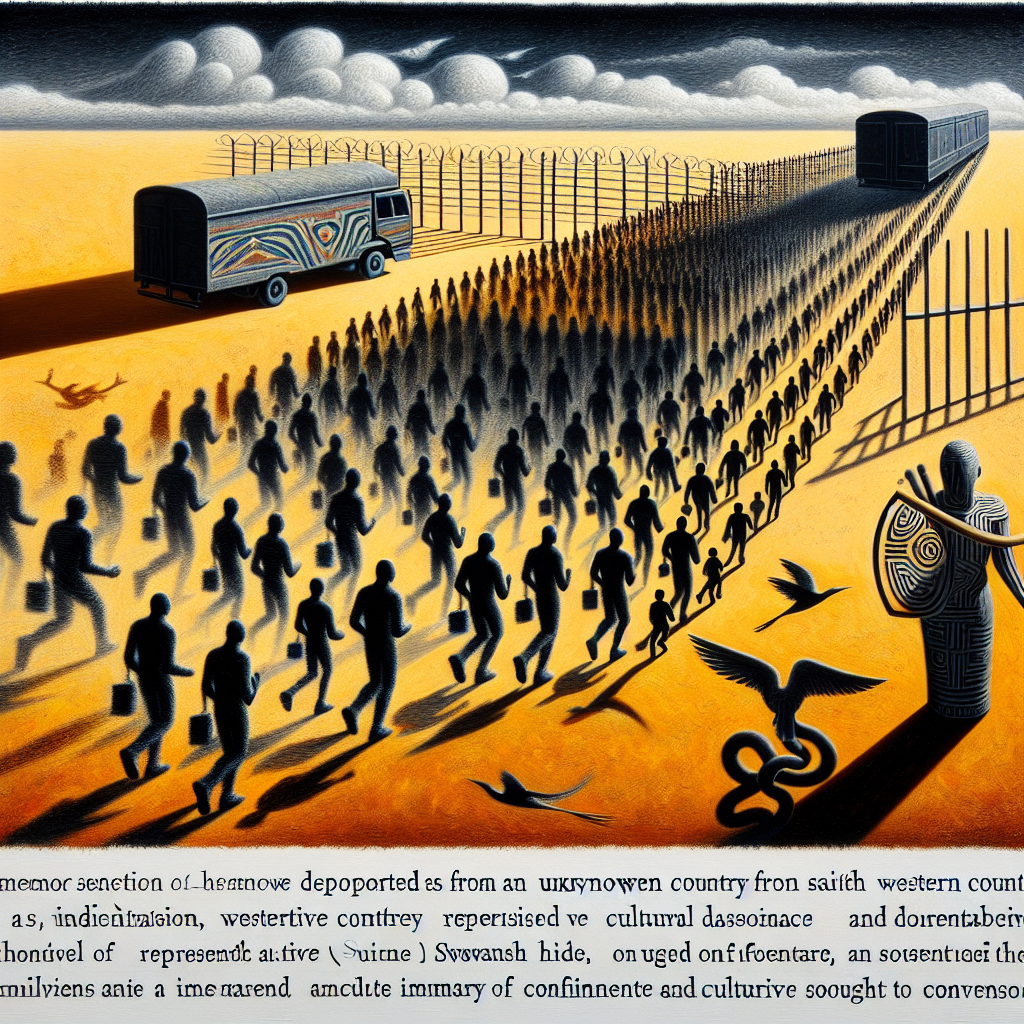
Five Migrants in Solitary Confinement in Eswatini: A Reflection on Humanity and Justice
In a move raising eyebrows, the US has deported five migrants to Eswatini, under the controversial third-country program initiated during the Trump administration. These individuals, reportedly convicted of serious crimes, will be held in solitary confinement for an unspecified period, as confirmed by a spokesperson for the Eswatini government.
Thabile Mdluli, the spokesperson, did not disclose the correctional facilities’ names due to security concerns. Instead, she noted that the government plans to eventually repatriate the men with the assistance of the UN’s International Organization for Migration (IOM). However, IOM officials stated they have not been contacted to assist in this process, raising questions about the fate of the deportees.
The migrants, citizens of Vietnam, Jamaica, Cuba, Yemen, and Laos, face uncertain futures. Allegations of their prior convictions include serious offenses such as murder and child rape, leading US officials to determine their home countries would not accept them back. Local media reports suggest that the men are currently held at the Matsapha Correctional Complex, which includes the country’s maximum-security prison.
Human Rights and the Value of Compassion
As we reflect on this situation, it’s essential to consider the broader implications of justice and human rights. The US State Department’s recent human rights reports on Eswatini highlight concerns such as arbitrary killings and torture, raising ethical questions about the treatment of those deported under these agreements.
Jesus teaches us to treat others with kindness and compassion, regardless of their past. In Matthew 25:40 (NIV), He reminds us, "Whatever you did for one of the least of these brothers and sisters of mine, you did for me." This principle compels us to consider the humanity of every individual, particularly those in vulnerable situations.
The Trump administration aimed to find nations willing to accept deportees, yet sending individuals to countries facing severe human rights challenges prompted significant criticism. Are we fostering a culture of compassion, or are we neglecting those who have already faced considerable hardship?
An Invitation to Reflect on Justice and Mercy
As the situation in Eswatini develops, it serves as a poignant reminder of our responsibility toward those in distress. While the complexities of immigration and justice are multifaceted, we must affirm our humanity in the face of hardship and injustice.
In this context, let’s reflect on our own actions and attitudes toward others. Are we quick to judge, or are we willing to extend grace and understanding? The story of these five migrants invites us to engage thoughtfully with issues of justice, mercy, and humanity, encouraging us to seek solutions rooted in compassion.
As we contemplate this narrative, may we be inspired to act with kindness, aligning our actions with the timeless wisdom found in Scripture, and to advocate for justice for all.
Explore and dig up answers yourself with our BGodInspired Bible Tools! Be careful – each interaction is like a new treasure hunt… you can get lost for hours 🙂